
How to Grow and Care for White Snakeroot
Ageratina altissima
Written by Emilio Marruso · last checked
Toxic to: Horses, Cattle, People · Why
At a glance
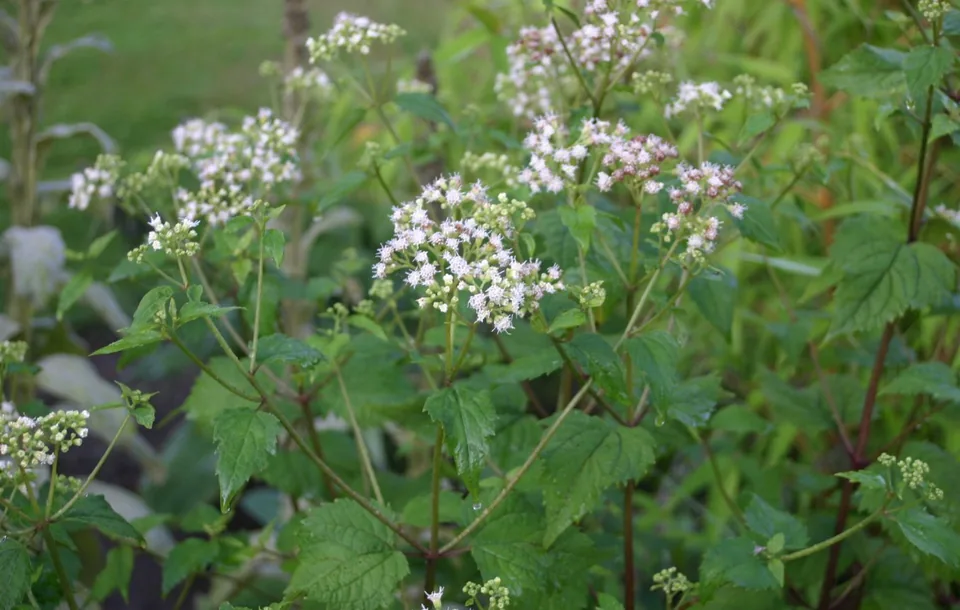
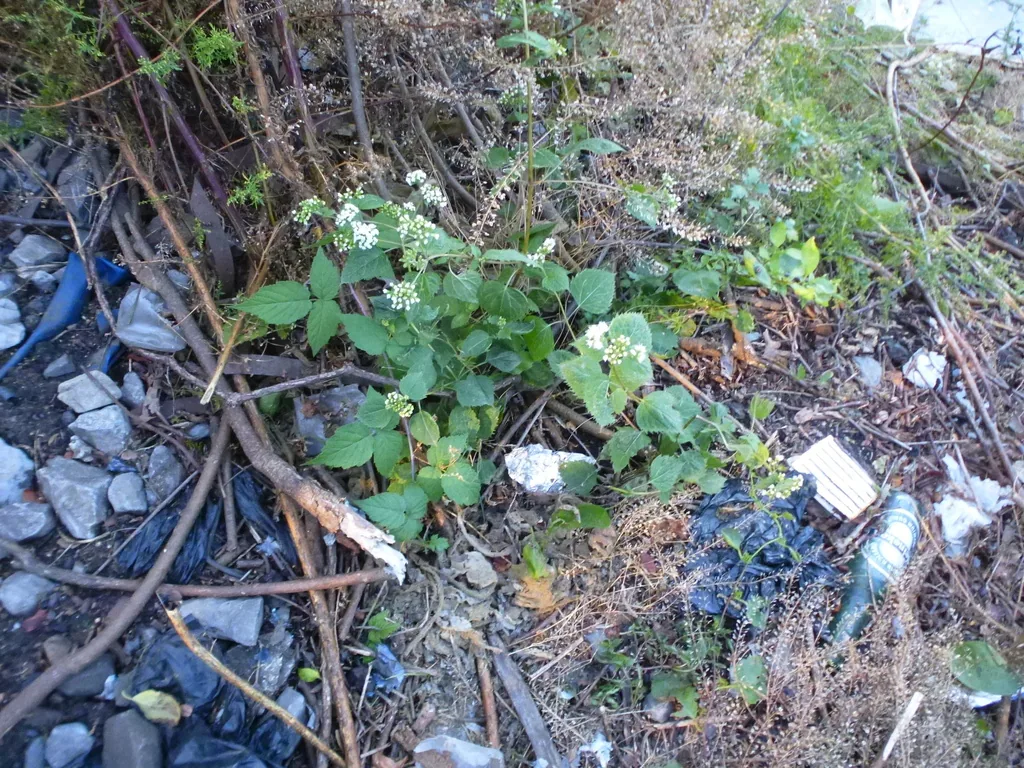
This tough perennial is happy anywhere from full sun to partial shade and fills a space 2–4 feet wide. It is easy to share with friends: divide a clump or sow its seed, and it stands up to deer. Just plant it where no one will nibble it, because it is highly toxic if eaten by people, cattle or horses.
- Sun
Full sun to partial shade
What the sources say (2)
Light: Full sun to partial shade
White Snakeroot is easily grown in average, moist well-drained soils in full sun to partial shade.
— Ageratina altissima (Fall Poison, Richweed, Tremetol, White Sanicle, White Snakeroot) | North Carolina Extension Gardener Plant Toolbox [1] Full sun to partial shade; consistently moist to wet sites.
— White Snakeroot (Eupatorium rugosum (Ageratina altissima))-Hort Answers - University of Illinois Extension [2] - Cold
Survives winters down to −40 °F (−40 °C)
Very hardy · USDA 3a · RHS H7 · Z3
What the sources say (2)
Hardiness, coldest zone: 3a [winter low −40 to −37.2 °C (−40 to −35 °F)]
USDA Plant Hardiness Zone: 3a, 3b, 4a, 4b, 5a, 5b, 6a, 6b, 7a, 7b, 8a, 8b, 9a, 9b
— Ageratina altissima (Fall Poison, Richweed, Tremetol, White Sanicle, White Snakeroot) | North Carolina Extension Gardener Plant Toolbox [1] Hardiness, warmest zone: 9b [winter low −3.9 to −1.1 °C (25 to 30 °F)]
USDA Plant Hardiness Zone: 3a, 3b, 4a, 4b, 5a, 5b, 6a, 6b, 7a, 7b, 8a, 8b, 9a, 9b
— Ageratina altissima (Fall Poison, Richweed, Tremetol, White Sanicle, White Snakeroot) | North Carolina Extension Gardener Plant Toolbox [1] - Pests
Watch for leaf miners and flea beetles
What the sources say (1)
Pests: leaf miners, flea beetles
Diseases, Insects and Other Plant Problems: Susceptible to leaf miners and flea beetles may attack the foliage.
— Ageratina altissima (Fall Poison, Richweed, Tremetol, White Sanicle, White Snakeroot) | North Carolina Extension Gardener Plant Toolbox [1] - Size
Grows 2–4 ft wide
What the sources say (1)
Mature width: 61-122 cm (2-4 ft)
It will grow 2-5 feet tall and 2-4 feet wide. This plant can spread by rhizomes or reseeding.
— Ageratina altissima (Fall Poison, Richweed, Tremetol, White Sanicle, White Snakeroot) | North Carolina Extension Gardener Plant Toolbox [1] - Propagation
Divide the clump or grow it from seed
What the sources say (1)
Propagation: Division; seed
Recommended Propagation Strategy: Division Seed Country Or Region Of Origin:
— Ageratina altissima (Fall Poison, Richweed, Tremetol, White Sanicle, White Snakeroot) | North Carolina Extension Gardener Plant Toolbox [1] - Safety
Highly toxic and can be fatal if eaten; also a danger to cattle and horses
Overview
White snakeroot is a herbaceous perennial in the aster family, native to woodland areas in the Eastern United States. [1] It is easily grown in average, moist, well-drained soils in full sun to partial shade. [1] The plant is described as highly toxic and may be fatal if eaten. [1]
This record is incomplete: the sources we read do not cover every field yet.
Not yet covered by our sources: Pruning
White Snakeroot care
How to water White Snakeroot
The sources give different values depending on region, zone or growing conditions.
What each source says
According to NC State Extension: Average, moist well-drained soils; soil drainage good, moist or occasionally dry
According to University of Illinois Extension: Consistently moist to wet sites
What the sources say (3)
According to NC State Extension: White Snakeroot is easily grown in average, moist well-drained soils in full sun to partial shade.According to University of Illinois Extension: Full sun to partial shade; consistently moist to wet sites.Full sun to partial shade; consistently moist to wet sites.How much light White Snakeroot needs
Full sun to partial shade
What the sources say (2)
White Snakeroot is easily grown in average, moist well-drained soils in full sun to partial shade.Full sun to partial shade; consistently moist to wet sites.How much cold White Snakeroot can take
Hardiness, coldest zone
3a [winter low −40 to −37.2 °C (−40 to −35 °F)]
What the sources say (1)
USDA Plant Hardiness Zone:
3a, 3b, 4a, 4b, 5a, 5b, 6a, 6b, 7a, 7b, 8a, 8b, 9a, 9bHardiness, warmest zone
9b [winter low −3.9 to −1.1 °C (25 to 30 °F)]
What the sources say (1)
USDA Plant Hardiness Zone:
3a, 3b, 4a, 4b, 5a, 5b, 6a, 6b, 7a, 7b, 8a, 8b, 9a, 9bHow to propagate White Snakeroot
Division; seed
What the sources say (1)
Recommended Propagation Strategy:
Division
Seed
Country Or Region Of Origin:How to grow White Snakeroot
The plant
Life cycle
perennial
What the sources say (1)
White Snakeroot is a herbaceous perennial in the aster family (Asteraceae) The plant is native to woodland areas in the Eastern United StatesFamily
Asteraceae
What the sources say (1)
White Snakeroot is a herbaceous perennial in the aster family (Asteraceae) The plant is native to woodland areas in the Eastern United StatesMature height
Mature width
61-122 cm (2-4 ft)
What the sources say (1)
It will grow 2-5 feet tall and 2-4 feet wide. This plant can spread by rhizomes or reseeding.Pests and diseases
Pests
leaf miners, flea beetles
What the sources say (1)
Diseases, Insects and Other Plant Problems: Susceptible to leaf miners and flea beetles may attack the foliage.White Snakeroot pests and problems
Leaf miners and flea beetles
What to do: Not stated in the sources
What the sources say (1)
Diseases, Insects and Other Plant Problems: Susceptible to leaf miners and flea beetles may attack the foliage.
— Ageratina altissima (Fall Poison, Richweed, Tremetol, White Sanicle, White Snakeroot) | North Carolina Extension Gardener Plant Toolbox [1]
Remedies
Each remedy shows what official sources say about it; traditional remedies without an official source are marked as such. Harmful ones are listed so you know to avoid them.
Getting rid of it
weediness
pulling young plants Partly works
However, be sure to wear gloves as the plant can be toxic.
— ask.extension.org [8] How: Pulling young isolated plants is effective, but you may need to do so multiple times; pulling established colonies is not effective because new plants sprout from the rhizomes.
Pulling young isolated plants is effective, but you may need to do so multiple times.
— growitbuildit.com [6] What the evidence says Regularly pulling, hoeing or mowing weeds and encouraging grass to grow and out-compete the weeds is an excellent solution.
— extension.usu.edu [7] repeated mowing Works
How: Repeated mowing close to the ground over an entire growing season starves the plant of sunlight; the most effective time to mow is before the plant goes to seed.
Repeated mowing White Snakeroot close to the ground over an entire growing season can effectively starve White Snakeroot of sunlight, as it expends all it’s energy stored in the roots.
— growitbuildit.com [6] What the evidence says Regularly pulling, hoeing or mowing weeds and encouraging grass to grow and out-compete the weeds is an excellent solution.
— extension.usu.edu [7] digging out the plants by hand Official source, not independently tested
However, be sure to wear gloves as the plant can be toxic.
— ask.extension.org [8] How: Manually pull the plants from the ground or use a shovel, removing as much of the root system as possible to prevent regrowth; dispose of the plants in the trash and do not compost.
Manually pull the plants from the ground. You could also use a shovel. However, be sure to wear gloves as the plant can be toxic. Dispose of the plants in the trash. Do not compost. Be sure to remove as much of the root system as possible to prevent regrowth.
— ask.extension.org [8]
self-seeding
deadheading spent flower heads Official source, not independently tested
How: Deadhead spent flower heads to avoid unwanted self-seeding.
Deadhead spent flower heads to avoid unwanted self-seeding.
— Ageratina altissima (Fall Poison, Richweed, Tremetol, White Sanicle, White Snakeroot) | North Carolina Extension Gardener Plant Toolbox [1]
Is White Snakeroot toxic to pets?
Reported by the source, quoted verbatim. This is not medical or veterinary advice: if a person or an animal may have eaten this plant, contact a poison control centre or a veterinarian.
Animals
It afflicted both humans and cattle, starting with symptoms of trembling, then general weakness, lack of muscle coordination
[4]- Poisonous parts
She tested this theory by feeding a calf on foliage of white snakeroot and was able to reproduce the symptoms.
[4]- Symptoms
It afflicted both humans and cattle, starting with symptoms of trembling, then general weakness, lack of muscle coordination, and in about a third of the time, death.
[4]- Severity
This plant has high severity poison characteristics. See below
[1]
Resistance To Challenges: Deer Problems: Poisonous to Humans Problem for Horses
[1]- Severity
This plant has high severity poison characteristics. See below
[1]
People
The plant is highly toxic and may be fatal if eaten. Toxicity is characterized by weakness, nausea, abdominal pain, vomiting, delirium, cardiac damage, prostration and eventually, coma
[1]- Poisonous parts
Poison Part: Flowers Leaves Roots Sap/Juice Seeds Stems
[1]- Toxic principle
Poison Toxic Principle: Tremetone, a ketone, and glycosides Causes Contact Dermatitis: No
[1]- Symptoms
Toxicity is characterized by weakness, nausea, abdominal pain, vomiting, delirium, cardiac damage, prostration and eventually, coma
[1]- Severity
This plant has high severity poison characteristics. See below
[1]
Calendar
Pruning
Not stated in the sources we read.
Months as given by the sources, which are mostly from the United States (northern hemisphere). In the southern hemisphere they shift by about six months.
Indicative values
Values from a secondary source, not checked word for word like the rest of this page. Use them as a starting point.
- Hours of sun
- 6-8 hoursIndicative value, adapt it to your climate · Secondary source
- Drought tolerant
- yesIndicative value, adapt it to your climate · Secondary source
- Soil pH
- 5.5-7Indicative value, adapt it to your climate · Secondary source
- Care level
- MediumIndicative value, adapt it to your climate · Secondary source
- Growth rate
- LowIndicative value, adapt it to your climate · Secondary source
- Pruning
- February, March, AprilIndicative value, adapt it to your climate · Secondary source
Similar plants
- Small-leaf White Snakeroot Ageratina aromatica
- African Daisy Dimorphotheca pluvialis
- African Marigold Tagetes erecta
- Ageratum Ageratum houstonianum
- Alpine aster Aster alpinus
- Appalachian Blazing Star Liatris squarrulosa
- Appalachian Ironweed Vernonia glauca
- Appalachian Sunflower Helianthus atrorubens
Sources
Every value above is quoted from these documents. Links lead to the original publisher.
- Ageratina altissima (Fall Poison, Richweed, Tremetol, White Sanicle, White Snakeroot) | North Carolina Extension Gardener Plant Toolbox · plants.ces.ncsu.edu, consulted
- White Snakeroot (Eupatorium rugosum (Ageratina altissima))-Hort Answers - University of Illinois Extension · web.extension.illinois.edu, consulted
- White Snakeroot - Ageratina altissima | North Carolina Extension Gardener Plant Toolbox · plants.ces.ncsu.edu, consulted
- Page TitleEupatorium rugosum (Ageratina altissima “Chocolate”); White Snakeroot · uaex.uada.edu, consulted
- Ageratina (Snakeroot, White Snakeroot) | North Carolina Extension Gardener Plant Toolbox · plants.ces.ncsu.edu, consulted
- growitbuildit.com · growitbuildit.com
- extension.usu.edu · extension.usu.edu
- ask.extension.org · ask.extension.org
Written by Emilio Marruso · last checked