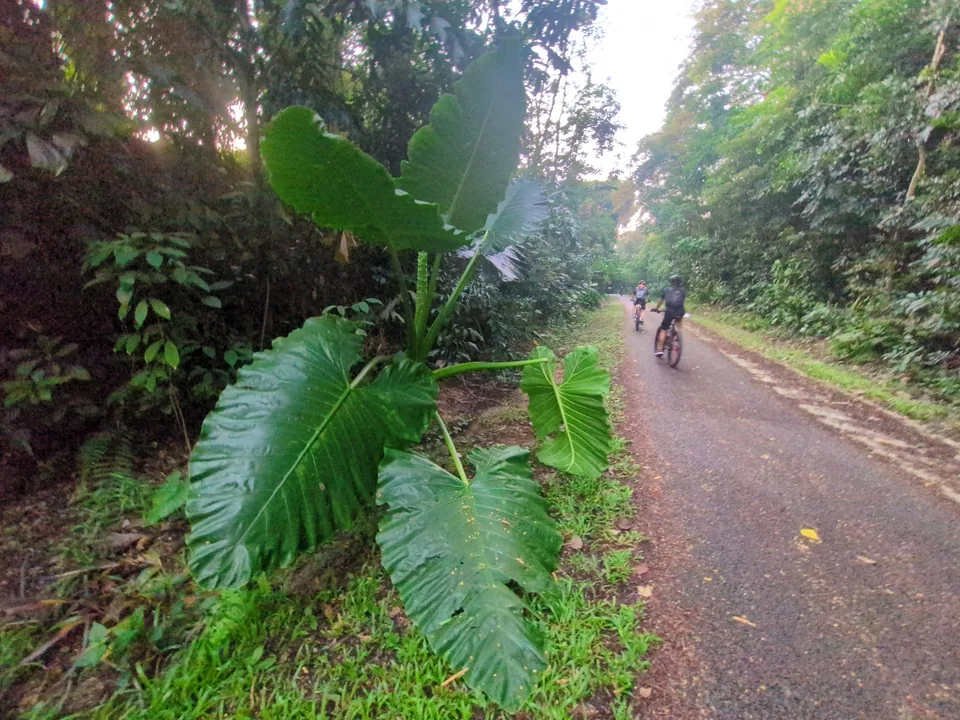
How to Grow and Care for Giant taro
Alocasia macrorrhizos
Written by Emilio Marruso · last checked
Toxic to: People · Why
At a glance
Alocasia is a water lover that happily grows indoors or in a container, reaching 4–6 ft tall inside and up to 15 ft outdoors in ideal conditions. Give it slightly acidic soil, water generously in summer and sparingly in winter, and let the top few inches of soil dry between waterings. Feed it often outside winter: it is a hungry plant that rewards care.
- Water
Water a lot in summer, little in winter; let the top few inches dry first, as soggy soil rots the roots
What the sources say (5)
Watering: Water lover; allow the top few inches of soil to dry out before watering again
Keep in mind that this plant is a water lover. It is important to allow the top few inches of the soil to dry out before watering again.
— Alocasia macrorrhizos-A Plant of Giant Nature! | Under the Solano Sun [6] Frecuente, pero dejando secar ligeramente la superficie entre riego y riego para que no se pudra el rizoma
— Alocasia macrorrhizos - EcuRed [7] Watering notes: Overwatering risks root rot and fungal infections; corms rot in wet, poorly drained soil; water abundantly in summer and sparingly in winter
The plant can get root rot or fungal infections if overwatered
— Alocasia macrorrhizos-A Plant of Giant Nature! | Under the Solano Sun [6] In wet, poorly-drained soil, the corms are prone to rot.
— NParks | Alocasia macrorrhizos [1] Riego abundante en verano y escaso en invierno
— Alocasia macrorrhizos - EcuRed [7] - Soil
Slightly acidic soil, pH 5.5–6.5
What the sources say (2)
Soil pH, minimum: 5.5
Plant your Alocasia in a well-draining, loose peat-based potting mix with a pH that ranges from 5.5 to 6.5.
— Alocasia macrorrhizos-A Plant of Giant Nature! | Under the Solano Sun [6] Soil pH, maximum: 6.5
Plant your Alocasia in a well-draining, loose peat-based potting mix with a pH that ranges from 5.5 to 6.5.
— Alocasia macrorrhizos-A Plant of Giant Nature! | Under the Solano Sun [6] - Feeding
Balanced liquid feed at half strength every 1–2 months; stop feeding in winter
What the sources say (6)
When: Outside winter dormancy; stop fertilizing in the winter months
As with most plants, fertilizing should stop during the winter months of dormancy.
— Alocasia macrorrhizos-A Plant of Giant Nature! | Under the Solano Sun [6] How often: Liquid fertilizer monthly or bi-monthly; slow-release fertilizer every six weeks to two months
They thrive with balanced fertilizers like a 20-20-20 ratio in liquid form, which should either be diluted to half-strength monthly or bi-monthly.
— Alocasia macrorrhizos-A Plant of Giant Nature! | Under the Solano Sun [6] The other alternative is using a slow-release form of fertilizer every six weeks to two months.
— Alocasia macrorrhizos-A Plant of Giant Nature! | Under the Solano Sun [6] Mineral fertilizers: Balanced 20-20-20 liquid fertilizer diluted to half strength, or a slow-release fertilizer; the plant is a heavy feeder
In terms of fertilization, Elephant ears are heavy consumers.
— Alocasia macrorrhizos-A Plant of Giant Nature! | Under the Solano Sun [6] They thrive with balanced fertilizers like a 20-20-20 ratio in liquid form, which should either be diluted to half-strength monthly or bi-monthly.
— Alocasia macrorrhizos-A Plant of Giant Nature! | Under the Solano Sun [6] The other alternative is using a slow-release form of fertilizer every six weeks to two months.
— Alocasia macrorrhizos-A Plant of Giant Nature! | Under the Solano Sun [6] - Harvest
Tuber, leaves and stems are eaten only cooked through; harvest at least 5 months after planting
What the sources say (2)
Harvest: At least five months after planting (food crop); stem harvested at maturity, reached at two years
Para su cosecha, hay que esperar como mínimo cinco meses después de su cultivo, porque la planta tiene que alcanzar un peso y una altura determinados.
— Alocasia macrorrhizos - EcuRed [7] Esta madurez se alcanza a los dos años; es entonces cuando se puede cosechar también su tallo, que habrá alcanzado dos metros de altura y pesará entre 12 y 25 kg.
— Alocasia macrorrhizos - EcuRed [7] - Pests
Spider mites, aphids and mealybugs; check it often and treat with neem or insecticidal soap
What the sources say (1)
Pests: spider mites, aphids, mealybugs
Elephant ears are susceptible to the usual suspects- spider mites, aphids and mealybugs.
— Alocasia macrorrhizos-A Plant of Giant Nature! | Under the Solano Sun [6] - Size
4–6 ft tall indoors, up to 15 ft outdoors in ideal conditions
What the sources say (2)
Mature height: up to 457 cm (15 ft) outdoors in ideal conditions; typically 122-183 cm (4-6 ft) indoors
In ideal conditions, outside, it can reach heights of 15’ with leaves that span several feet across.
— Alocasia macrorrhizos-A Plant of Giant Nature! | Under the Solano Sun [6] Growing the plant indoors keeps the size much more manageable, typically growing between 4 and 6 feet.
— Alocasia macrorrhizos-A Plant of Giant Nature! | Under the Solano Sun [6] - Propagation
Divide the clump, separate the offshoots at the base, or sow seed
What the sources say (3)
Propagation: Clump or rhizome division; seed; pieces of underground stem with at least one bud; separation of basal offshoots
Repotting these plants is easy by clump or rhizome division.
— Alocasia macrorrhizos-A Plant of Giant Nature! | Under the Solano Sun [6] Por un trozo de tallo subterráneo que lleve al menos 1 yema
— Alocasia macrorrhizos - EcuRed [7] También se puede propagar Alocasia por semillas o separando los hijuelos que salen de la base.
— Alocasia macrorrhizos - EcuRed [7] - Containers
Grows well in containers and indoors
What the sources say (2)
In containers: Yes
If living in a pot, remember to pick a pot that is two to four inches larger in diameter than the existing pot.
— Alocasia macrorrhizos-A Plant of Giant Nature! | Under the Solano Sun [6] Indoors: Yes
Growing the plant indoors keeps the size much more manageable, typically growing between 4 and 6 feet.
— Alocasia macrorrhizos-A Plant of Giant Nature! | Under the Solano Sun [6] - Safety
The sap irritates skin, mouth and throat; the plant is toxic if eaten raw
Overview
Giant taro is a large perennial herb that forms a rosette of large, erect leaves. [1] It does best in bright filtered light, with the top few inches of soil allowed to dry between waterings, and overwatering leads to root rot. [6] The sap contains calcium oxalate raphides that irritate skin, mouth and throat, and the corm is eaten only after thorough cooking. [1][2]
This record is incomplete: the sources we read do not cover every field yet.
Not yet covered by our sources: Hardiness, coldest zone, Hardiness, warmest zone, Pruning
Giant taro care
How to water Giant taro
Watering
Water lover; allow the top few inches of soil to dry out before watering again
What the sources say (2)
Keep in mind that this plant is a water lover. It is important to allow the top few inches of the soil to dry out before watering again.Frecuente, pero dejando secar ligeramente la superficie entre riego y riego para que no se pudra el rizomaWatering notes
Overwatering risks root rot and fungal infections; corms rot in wet, poorly drained soil; water abundantly in summer and sparingly in winter
What the sources say (3)
The plant can get root rot or fungal infections if overwateredIn wet, poorly-drained soil, the corms are prone to rot.Riego abundante en verano y escaso en inviernoHow much light Giant taro needs
The sources disagree:
No le gusta el pleno sol , se decolora o quema; plantar a la sombra o semisombra.
[7]
What the sources say (2)
This species grows best in bright light with light shade and moist, but well-drained loamy soil. However, it can tolerate shade to full sun, and sandy to clayey soils.Elephant Ears like bright, filtered light, so an east or west-facing window is perfect for indoor growth. When growing outdoors, find a spot with partial shade.How much cold Giant taro can take
Hardiness, coldest zone
Not stated in the sources we read.
Hardiness, warmest zone
Not stated in the sources we read.
Best soil for Giant taro
Soil pH, minimum
5.5
What the sources say (1)
Plant your Alocasia in a well-draining, loose peat-based potting mix with a pH that ranges from 5.5 to 6.5.Soil pH, maximum
6.5
What the sources say (1)
Plant your Alocasia in a well-draining, loose peat-based potting mix with a pH that ranges from 5.5 to 6.5.Where to grow Giant taro
Indoors
Yes
What the sources say (1)
Growing the plant indoors keeps the size much more manageable, typically growing between 4 and 6 feet.In containers
Yes
What the sources say (1)
If living in a pot, remember to pick a pot that is two to four inches larger in diameter than the existing pot.How to propagate Giant taro
Clump or rhizome division; seed; pieces of underground stem with at least one bud; separation of basal offshoots
What the sources say (3)
Repotting these plants is easy by clump or rhizome division.Por un trozo de tallo subterráneo que lleve al menos 1 yemaTambién se puede propagar Alocasia por semillas o separando los hijuelos que salen de la base.How to grow Giant taro
The plant
Mature height
up to 457 cm (15 ft) outdoors in ideal conditions; typically 122-183 cm (4-6 ft) indoors
What the sources say (2)
In ideal conditions, outside, it can reach heights of 15’ with leaves that span several feet across.Growing the plant indoors keeps the size much more manageable, typically growing between 4 and 6 feet.Pests and diseases
Pests
spider mites, aphids, mealybugs
What the sources say (1)
Elephant ears are susceptible to the usual suspects- spider mites, aphids and mealybugs.Diseases
root rot, fungal infections (when overwatered)
What the sources say (1)
The plant can get root rot or fungal infections if overwatered, so using a moisture meter is highly recommended.Fertilizing
When
Outside winter dormancy; stop fertilizing in the winter months
What the sources say (1)
As with most plants, fertilizing should stop during the winter months of dormancy.How often
Liquid fertilizer monthly or bi-monthly; slow-release fertilizer every six weeks to two months
What the sources say (2)
They thrive with balanced fertilizers like a 20-20-20 ratio in liquid form, which should either be diluted to half-strength monthly or bi-monthly.The other alternative is using a slow-release form of fertilizer every six weeks to two months.Mineral fertilizers
Balanced 20-20-20 liquid fertilizer diluted to half strength, or a slow-release fertilizer; the plant is a heavy feeder
What the sources say (3)
In terms of fertilization, Elephant ears are heavy consumers.They thrive with balanced fertilizers like a 20-20-20 ratio in liquid form, which should either be diluted to half-strength monthly or bi-monthly.The other alternative is using a slow-release form of fertilizer every six weeks to two months.Avoid
Fertilizing during winter dormancy
What the sources say (1)
As with most plants, fertilizing should stop during the winter months of dormancy.Giant taro pests and problems
Root rot and fungal infections
Symptom: Root rot or fungal infections when the plant is overwatered
What to do: Allow the top few inches of soil to dry out before watering again; a moisture meter is recommended
What the sources say (2)
The plant can get root rot or fungal infections if overwatered, so using a moisture meter is highly recommended.
— Alocasia macrorrhizos-A Plant of Giant Nature! | Under the Solano Sun [6] allow the top few inches of the soil to dry out before watering again
— Alocasia macrorrhizos-A Plant of Giant Nature! | Under the Solano Sun [6] Spider mites, aphids and mealybugs
Symptom: Infestation by spider mites, aphids and mealybugs
What to do: Regular inspection and treatment with neem or insecticidal soap if needed
What the sources say (2)
Elephant ears are susceptible to the usual suspects- spider mites, aphids and mealybugs.
— Alocasia macrorrhizos-A Plant of Giant Nature! | Under the Solano Sun [6] These pests can be addressed with regular inspections and treatments with Neem or insecticidal soap if needed.
— Alocasia macrorrhizos-A Plant of Giant Nature! | Under the Solano Sun [6]
Remedies
Each remedy shows what official sources say about it; traditional remedies without an official source are marked as such. Harmful ones are listed so you know to avoid them.
First aid
First aid: not a substitute for a doctor
chewed plant, mouth irritation
rinse and spit with water Official source, not independently tested
Seek urgent medical attention if lips or tongue become swollen or if there is difficulty breathing or swallowing.
— poisonsinfo.health.qld.gov.au [10] How: Gently wipe out the mouth, then rinse and spit with water to remove any visible plant material.
Have them rinse and spit with water to remove any visible plant material from their mouth.
— poison.org [9] ice chips or frozen treats Official source, not independently tested
How: If the mouth is irritated, sucking on ice chips or frozen treats may relieve pain.
If their mouth is irritated, sucking on ice chips or frozen treats may relieve pain.
— poison.org [9]
sap on skin or in eyes, plant eaten
cold wet cloth, wash off sap, rinse eyes Official source, not independently tested
Do not make the person throw up unless poison control or a health care provider tells you to.
— medlineplus.gov [11] How: Wipe out the mouth with a cold, wet cloth. Wash off any plant sap on the skin. Rinse out the eyes.
Wipe out the mouth with a cold, wet cloth. Wash off any plant sap on the skin. Rinse out the eyes.
— medlineplus.gov [11]
Treating the plant
spider mites, aphids and mealybugs
insecticidal soap Works
How: Regular inspections and treatments with neem or insecticidal soap if needed.
These pests can be addressed with regular inspections and treatments with Neem or insecticidal soap if needed.
— Alocasia macrorrhizos-A Plant of Giant Nature! | Under the Solano Sun [6] What the evidence says For example, insecticidal soap is a safe, effective organic insecticide with minimal environmental impact.
— extension.psu.edu [12] neem Official source, not independently tested
How: Regular inspections and treatments with neem or insecticidal soap if needed.
These pests can be addressed with regular inspections and treatments with Neem or insecticidal soap if needed.
— Alocasia macrorrhizos-A Plant of Giant Nature! | Under the Solano Sun [6]
Is Giant taro poisonous?
Reported by the source, quoted verbatim. This is not medical or veterinary advice: if a person or an animal may have eaten this plant, contact a poison control centre or a veterinarian.
Irritant Sap/ Toxic Upon Ingestion: The slightly milky sap contains calcium oxalate raphides, which are needle-shaped crystals that can cause irritation to skin, mouth and throat.
[1]
Calendar
Harvest
At least five months after planting (food crop); stem harvested at maturity, reached at two years
What the sources say (2)
Para su cosecha, hay que esperar como mínimo cinco meses después de su cultivo, porque la planta tiene que alcanzar un peso y una altura determinados.Esta madurez se alcanza a los dos años; es entonces cuando se puede cosechar también su tallo, que habrá alcanzado dos metros de altura y pesará entre 12 y 25 kg.Pruning
Not stated in the sources we read.
Months as given by the sources, which are mostly from the United States (northern hemisphere). In the southern hemisphere they shift by about six months.
Edibility
Reported by the source, quoted verbatim. Do not eat a plant on the basis of this page alone: identification mistakes can be dangerous.
Indicative values
Values from a secondary source, not checked word for word like the rest of this page. Use them as a starting point.
- Life cycle
- PerennialIndicative value, adapt it to your climate · Secondary source
- Hours of sun
- 3-4 hoursIndicative value, adapt it to your climate · Secondary source
- Drought tolerant
- yesIndicative value, adapt it to your climate · Secondary source
- USDA hardiness zones
- 9-11 [winter low −6.7 to 10 °C (20 to 50 °F)]Indicative value, adapt it to your climate · Secondary source
- Growth rate
- HighIndicative value, adapt it to your climate · Secondary source
- Pruning
- March, April, AugustIndicative value, adapt it to your climate · Secondary source
Similar plants
- Aaron's Beard Hypericum calycinum
- Abies grandis Abies grandis
- Abraham Trachystemon orientalis
- Abyssinian banana Ensete ventricosum
- Acacia longifolia Acacia longifolia
- Acacia retinodes Acacia retinodes
- Acanthus hungaricus Acanthus hungaricus
- Achlys triphylla Achlys triphylla
Sources
Every value above is quoted from these documents. Links lead to the original publisher.
- NParks | Alocasia macrorrhizos · nparks.gov.sg, consulted
- Alocasia macrorhiza | Purdue University Famine Foods · purdue.edu, consulted
- Plants of Hawai'i | Bishop Museum · plantsofhawaii.org, consulted
- HortFlora · hortflora.rbg.vic.gov.au, consulted
- Alocasia macrorrhizos — Aroidpedia · aroidpedia.com, consulted
- Alocasia macrorrhizos-A Plant of Giant Nature! | Under the Solano Sun · ucanr.edu, consulted
- Alocasia macrorrhizos - EcuRed · ecured.cu, consulted
- Alocasia macrorrhizos | FarmKnowledge · farmknowledge.info, consulted
- poison.org · poison.org
- poisonsinfo.health.qld.gov.au · poisonsinfo.health.qld.gov.au
- medlineplus.gov · medlineplus.gov
- extension.psu.edu · extension.psu.edu
Written by Emilio Marruso · last checked