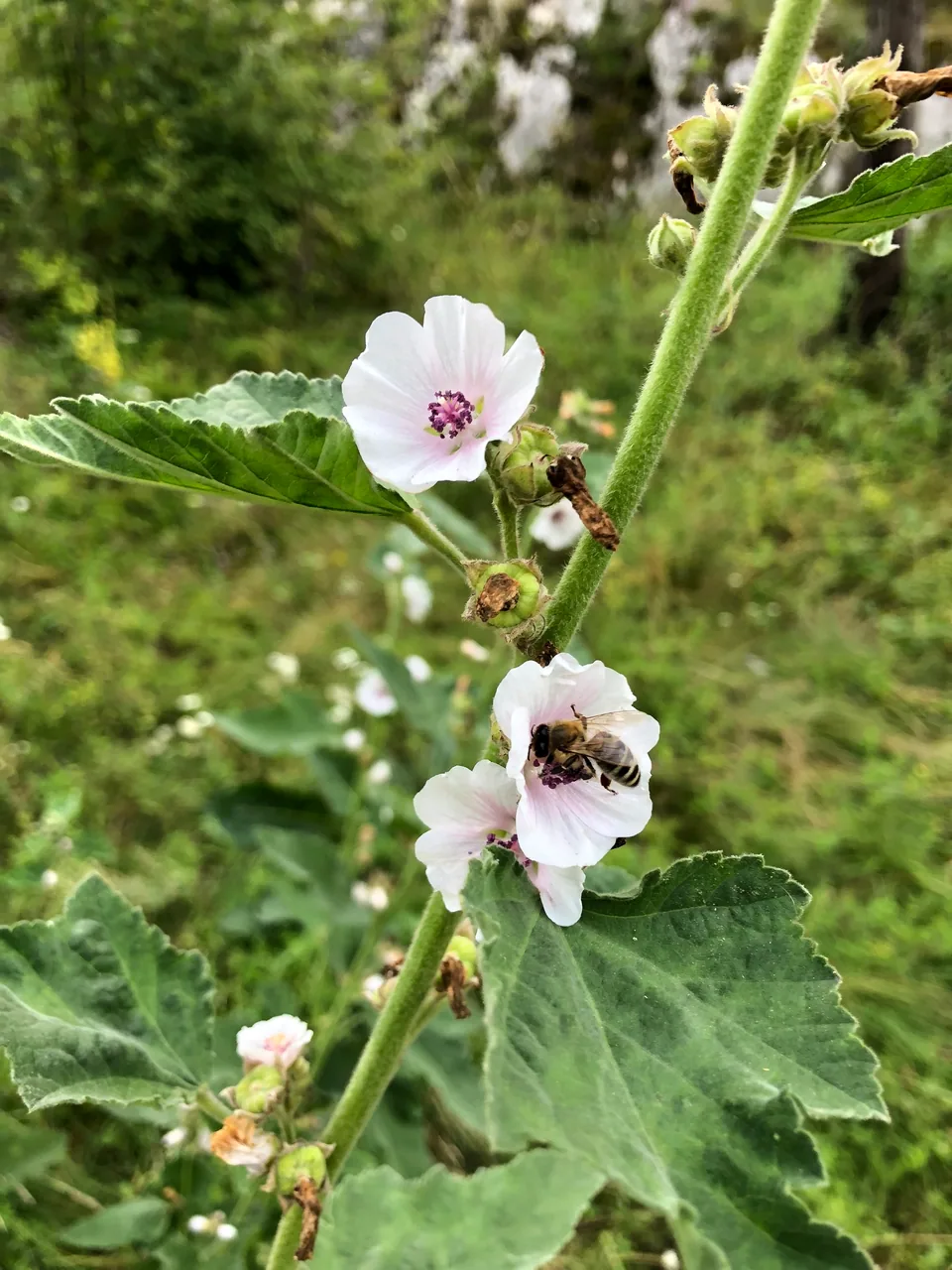
How to Grow and Care for Marshmallow
Althaea officinalis
Written by Emilio Marruso · last checked
At a glance
Marsh mallow is a perennial that loves full sun but also tolerates partial shade. Keep its soil moist and water it well during dry spells, but never leave it in soggy, stagnant ground. Be patient: once the plant is two years old, dig its roots in autumn, a vegetable that has been used in soups and stews.
- Sun
Full sun; also tolerates partial shade
What the sources say (2)
Light: Full sun; tolerates partial shade
it will also grow in well-drained conditions in full sun or partial shade
— Althaea officinalis - Cambridge University Botanic Garden [5] Marsh mallow plant does best in full sun and must be grown in deep, fertile, moisture-retentive or damp soil
— How To Grow And Care For Marsh Mallow | BBC Gardeners World Magazine [4] - Water
Keep soil moist; in long dry spells water deeply twice a week; avoid soggy, stagnant soil
What the sources say (3)
Watering: Keep the soil moist; water thoroughly twice a week during long dry spells
During long dry spells, check that the soil remains moist around the roots, and water thoroughly twice a week if required.
— How To Grow And Care For Marsh Mallow | BBC Gardeners World Magazine [4] Watering notes: Keep watered during dry spells for the first several months until established; does not thrive in permanently boggy, stagnant soil
keep watered during dry spells for the first several months until established
— How To Grow And Care For Marsh Mallow | BBC Gardeners World Magazine [4] although conversely it does not thrive in permanently boggy, stagnant soil
— How To Grow And Care For Marsh Mallow | BBC Gardeners World Magazine [4] - Pruning
Cut back after flowering; remove dead growth any time before spring
What the sources say (2)
Pruning: After flowering; cut back dead growth any time before spring
Being an herbaceous perennial, marsh mallow dies back in the autumn so cut back the dead growth anytime before spring.
— How To Grow And Care For Marsh Mallow | BBC Gardeners World Magazine [4] After flowering, cut back the flowered stem and, if looking tatty, trim the foliage to encourage new, leafy growth.
— How To Grow And Care For Marsh Mallow | BBC Gardeners World Magazine [4] - Harvest
Dig the roots in autumn once the plant is two years old; they have been used in soups and stews
What the sources say (2)
Harvest: Roots in autumn, once the plant is two years old
harvest the roots once the plant is two years old.
— How To Grow And Care For Marsh Mallow | BBC Gardeners World Magazine [4] How to harvest: the root is usually harvested in autumn
It has thick white roots. The root is usually harvested in autumn
— Marshmallow (Althaea officinalis) — UIC Heritage Garden [6] - Pests
Flea beetles may chew small holes in the leaves, but rarely harm the plant
Overview
Marsh mallow is a hardy herbaceous perennial of the mallow family with deep tap roots. [4] It grows in full sun in fertile, moist soil and needs plenty of room. [4] The seed needs a cold period to germinate. [4]
This record is incomplete: the sources we read do not cover every field yet.
Not yet covered by our sources: Hardiness, coldest zone, Hardiness, warmest zone, Propagation
Marshmallow care
Measurements in square brackets are our conversion into the other unit system; the quoted text is unchanged.
How to water Marshmallow
Watering
Keep the soil moist; water thoroughly twice a week during long dry spells
What the sources say (1)
During long dry spells, check that the soil remains moist around the roots, and water thoroughly twice a week if required.Watering notes
Keep watered during dry spells for the first several months until established; does not thrive in permanently boggy, stagnant soil
What the sources say (2)
keep watered during dry spells for the first several months until establishedalthough conversely it does not thrive in permanently boggy, stagnant soilHow much light Marshmallow needs
Full sun; tolerates partial shade
What the sources say (2)
it will also grow in well-drained conditions in full sun or partial shadeMarsh mallow plant does best in full sun and must be grown in deep, fertile, moisture-retentive or damp soilHow much cold Marshmallow can take
Hardiness, coldest zone
Not stated in the sources we read.
Hardiness, warmest zone
Not stated in the sources we read.
Where to grow Marshmallow
The sources give different values depending on region, zone or growing conditions.
What each source says
According to BBC Gardeners World: 45-60 cm [18–24 in]
What the sources say (1)
According to BBC Gardeners World: Space 45-60cm apart and keep watered during dry spells for the first several months until established.How to propagate Marshmallow
Not stated in the sources we read.
How to grow Marshmallow
The plant
Life cycle
perennial
Family
Malvaceae
What the sources say (1)
Family:
MALVACEAE
Genus:
Althaea
Catalan common name:
Altea. Malva blanca.Harvest and storage
How to harvest
the root is usually harvested in autumn
What the sources say (1)
It has thick white roots. The root is usually harvested in autumnFertilizing
Mineral fertilizers
The sources give different values depending on region, zone or growing conditions.
What each source says
field crop grown for the root (trial): Highest root yield on plots not treated with nitrogen fertilizer
What the sources say (1)
field crop grown for the root (trial): In case of both varieties, the maximal yield of natural root, raw peeled root and drug were obtained in both years of cultivation on a control plot, that is, on a plot that was not treated with nitrogen fertilizer.Marshmallow pests and problems
Flea beetles
Symptom: Flea beetles may nibble holes in the leaves but rarely enough to affect the health of the plant.
What to do: No action is described.
What the sources say (1)
Flea beetles may nibble holes in the leaves but rarely enough to affect the health of the plant.
— How To Grow And Care For Marsh Mallow | BBC Gardeners World Magazine [4]
Remedies
The sources we checked give no remedies for this plant.
Calendar
Sowing
The sources give different values depending on region, zone or growing conditions.
What each source says
According to BBC Gardeners World: Autumn
What the sources say (1)
According to BBC Gardeners World: so sow seed in autumn, either direct where it is to grow or in small pots or modular trays placed in a sheltered spot outsideHarvest
Roots in autumn, once the plant is two years old
What the sources say (1)
harvest the roots once the plant is two years old.Pruning
After flowering; cut back dead growth any time before spring
What the sources say (2)
Being an herbaceous perennial, marsh mallow dies back in the autumn so cut back the dead growth anytime before spring.After flowering, cut back the flowered stem and, if looking tatty, trim the foliage to encourage new, leafy growth.Months as given by the sources, which are mostly from the United States (northern hemisphere). In the southern hemisphere they shift by about six months.
Edibility
Reported by the source, quoted verbatim. Do not eat a plant on the basis of this page alone: identification mistakes can be dangerous.
the root has been used as a vegetable, particularly in soups and stews.
[4]
Indicative values
Values from a secondary source, not checked word for word like the rest of this page. Use them as a starting point.
- Soil
- Sand, LoamIndicative value, adapt it to your climate · Secondary source
- Soil pH
- 6-7Indicative value, adapt it to your climate · Secondary source
- USDA hardiness zones
- 3-9 [winter low −40 to −1.1 °C (−40 to 30 °F)]Indicative value, adapt it to your climate · Secondary source
- Care level
- MediumIndicative value, adapt it to your climate · Secondary source
- Growth rate
- LowIndicative value, adapt it to your climate · Secondary source
- Propagation
- Division, Cutting, Seed Propagation, Layering PropagationIndicative value, adapt it to your climate · Secondary source
Similar plants
- African Baobab Adansonia digitata
- Bastardcedar Guazuma ulmifolia
- Bigleaf Linden Tilia platyphyllos
- Brazilian Bellflower Callianthe megapotamica
- Cape Mallow Anisodontea capensis
- Chinese Hibiscus Hibiscus × rosa-sinensis
- Common mallow Malva sylvestris
- Cranberry Hibiscus Hibiscus acetosella
Sources
Every value above is quoted from these documents. Links lead to the original publisher.
- Ethnobotanical Plant Althaea officinalis | Dr. Duke's Phytochemical and Ethnobotanical Databases · phytochem.nal.usda.gov, consulted
- Althaea officinalis L. - Herbari Virtual del Mediterrani Occidental · herbarivirtual.uib.cat, consulted
- How to Grow Althaea - Marsh Mallow · harvesttotable.com, consulted
- How To Grow And Care For Marsh Mallow | BBC Gardeners World Magazine · gardenersworld.com, consulted
- Althaea officinalis - Cambridge University Botanic Garden · botanic.cam.ac.uk, consulted
- Marshmallow (Althaea officinalis) — UIC Heritage Garden · heritagegarden.uic.edu, consulted
- agris.fao.org · agris.fao.org
Written by Emilio Marruso · last checked