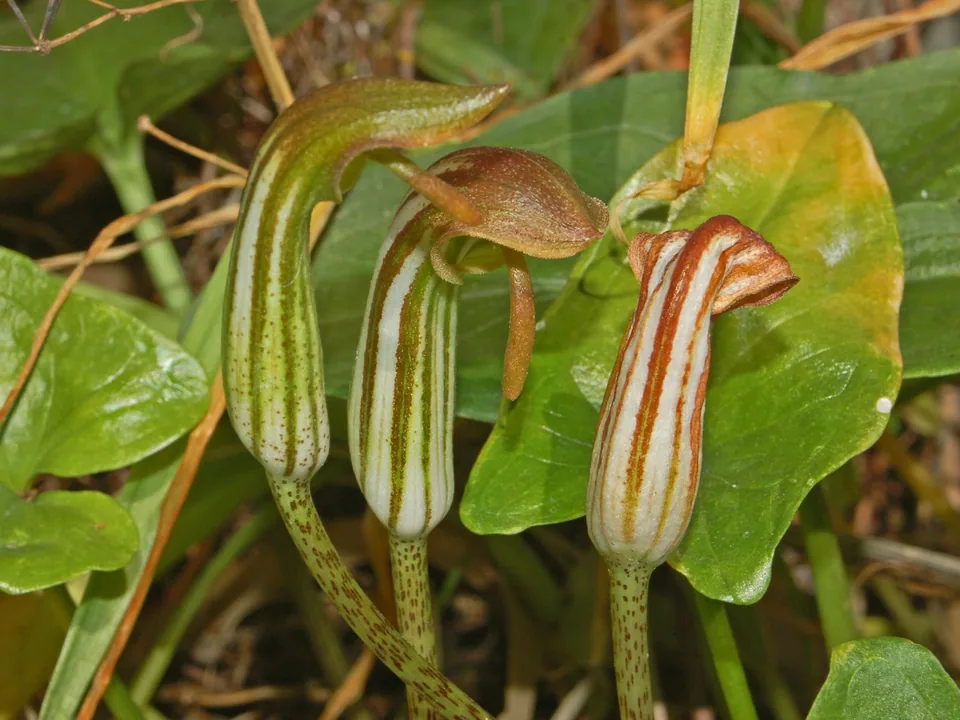

How to Grow and Care for Friar's cowl
Arisarum vulgare
Written by Emilio Marruso · last checked
Classified as poisonous · Why
At a glance
Friar's cowl follows a charming rhythm of its own: it wakes up in autumn, grows through the rainy months, then rests in spring as the rain fades away. It's easy to multiply, from seed or by dividing the clump in spring, and it is happy in a pot too. Just keep an eye out for snails and slugs, and enjoy its quiet, unusual charm.
- Water
Grows with the autumn rains and goes dormant in spring, when the rain stops
What the sources say (1)
Watering notes: Growth starts in autumn and the plant becomes dormant in spring as rainfall virtually ceases
It commences growth in the autumn flowering in the winter and then becoming dormant in the spring as the weather becomes hotter and rainfall virtually ceases.
— Arisarum vulgare - Useful Temperate Plants [2] - Cold
Survives winters down to 0 °F (−17.8 °C)
Hardy in very cold winters · USDA 7 · RHS H6 · Z7
What the sources say (1)
Hardiness, coldest zone: 7 [winter low −17.8 to −12.2 °C (0 to 10 °F)]
Shade tolerance permanent shade Water moderate Hardiness Zone 7+
— Friar's Cowl (Arisarum vulgare) — Practical Plants [3] - Planting
Plant young seedlings in summer, while dormant, once the tuber is a good size
What the sources say (1)
Planting: Summer, when dormant, once the tuber has reached a reasonable size (seedlings)
plant out when dormant in the summer once the tuber has reached a reasonable size.
— Friar's Cowl (Arisarum vulgare) — Practical Plants [3] - Harvest
The root is eaten cooked, only after washing out its sharp juice many times
- Pests
Snails and slugs can attack it
- Propagation
From seed, or divide the clump in spring after the plant dies down
What the sources say (3)
Propagation: Seed; division in spring after the plant dies down (division of rhizomes in spring)
Seed - we have no details for this species but suggest sowing the seed in a shady part of the greenhouse as soon as it is ripe in the spring if this is possible.
— Friar's Cowl (Arisarum vulgare) — Practical Plants [3] Division in spring after the plant dies down
— Friar's Cowl (Arisarum vulgare) — Practical Plants [3] Larus propagates by division of rhizomes in spring.
— Arisarum vulgare or Friar's cowl | Care and Growing [4] - Sowing
Sow fresh seed in spring as soon as it's ripe; stored seed in early spring
What the sources say (1)
Sowing: Spring, as soon as the seed is ripe (fresh seed); early spring (stored seed)
as soon as it is ripe in the spring if this is possible. Sow stored seed in early spring.
— Friar's Cowl (Arisarum vulgare) — Practical Plants [3] - Containers
Grows in containers too
What the sources say (1)
In containers: Yes
is a very reliable pot subject for a shady spot in the Los Angeles area.
— Arisarum | Pacific Bulb Society [5]
Overview
Friar's cowl is a perennial that grows from an irregularly-shaped tuber. [2] Its flowers appear continuously from October to April. [5] The plant contains calcium oxalate crystals that irritate the mouth when it is eaten raw. [2]
This record is incomplete: the sources we read do not cover every field yet.
Not yet covered by our sources: Light, Hardiness, warmest zone, Pruning
Friar's cowl care
How to water Friar's cowl
Watering
The sources give different values depending on region, zone or growing conditions.
What each source says
Los Angeles area (potted plant): Needs a dry summer rest
According to consultaplantas.com: Water regularly so the soil is always moist but not puddled
What the sources say (3)
Los Angeles area (potted plant): It needs a dry summer rest. Dylan's plant grew happily for ten years before finally flowering in 2011.According to consultaplantas.com: Water regularly so that the soil is always moist but not puddled; Before watering wait until the soil surface has dried.Water regularly so that the soil is always moist but not puddled; Before watering wait until the soil surface has dried.Watering notes
Growth starts in autumn and the plant becomes dormant in spring as rainfall virtually ceases
What the sources say (1)
It commences growth in the autumn flowering in the winter and then becoming dormant in the spring as the weather becomes hotter and rainfall virtually ceases.How much light Friar's cowl needs
Not stated in the sources we read.
How much cold Friar's cowl can take
Hardiness, coldest zone
7 [winter low −17.8 to −12.2 °C (0 to 10 °F)]
What the sources say (1)
Shade tolerance
permanent shade
Water
moderate
Hardiness
Zone 7+Hardiness, warmest zone
Not stated in the sources we read.
Where to grow Friar's cowl
Yes
What the sources say (1)
is a very reliable pot subject for a shady spot in the Los Angeles area.How to propagate Friar's cowl
Seed; division in spring after the plant dies down (division of rhizomes in spring)
What the sources say (3)
Seed - we have no details for this species but suggest sowing the seed in a shady part of the greenhouse as soon as it is ripe in the spring if this is possible.Division in spring after the plant dies downLarus propagates by division of rhizomes in spring.How to grow Friar's cowl
The plant
Family
Araceae
What the sources say (1)
Family:
ARACEAE
Genus:
Arisarum
Catalan common name:
ApagallumsFriar's cowl pests and problems
Snails and slugs
Symptom: Can be attacked by snails and slugs
What the sources say (1)
Arisarum vulgare is resistant to pests and diseases but can be attacked by snails and slugs
— Arisarum vulgare or Friar's cowl | Care and Growing [4]
Remedies
The sources we checked give no remedies for this plant.
Calendar
Sowing
Spring, as soon as the seed is ripe (fresh seed); early spring (stored seed)
What the sources say (1)
as soon as it is ripe in the spring if this is possible. Sow stored seed in early spring.Planting
Summer, when dormant, once the tuber has reached a reasonable size (seedlings)
What the sources say (1)
plant out when dormant in the summer once the tuber has reached a reasonable size.Pruning
Not stated in the sources we read.
Months as given by the sources, which are mostly from the United States (northern hemisphere). In the southern hemisphere they shift by about six months.
Edibility
Reported by the source, quoted verbatim. Do not eat a plant on the basis of this page alone: identification mistakes can be dangerous.
Similar plants
- Anthurium Anthurium andraeanum
- Arrowhead Plant Syngonium podophyllum
- Arrowleaf elephant's ear Xanthosoma sagittifolium
- Arum Arum maculatum
- Black Calla Arum palaestinum
- Blushing Philodendron Philodendron erubescens
- Caladium Caladium bicolor
- Calla Lily Zantedeschia aethiopica
Sources
Every value above is quoted from these documents. Links lead to the original publisher.
- Arisarum vulgare Targ.-Tozz. - Herbari Virtual del Mediterrani Occidental · herbarivirtual.uib.cat, consulted
- Arisarum vulgare - Useful Temperate Plants · temperate.theferns.info, consulted
- Friar's Cowl (Arisarum vulgare) — Practical Plants · practicalplants.org, consulted
- Arisarum vulgare or Friar's cowl | Care and Growing · consultaplantas.com, consulted
- Arisarum | Pacific Bulb Society · pacificbulbsociety.org, consulted
- Arisarum vulgare • New Zealand Plant Conservation Network · nzpcn.org.nz, consulted
Written by Emilio Marruso · last checked