
How to Grow and Care for Snowbush
Breynia disticha
Written by Emilio Marruso · last checked
At a glance
This plant is happy in full sun or part shade, and it grows in a pot, indoors or out in the garden. Give it plenty of water, a layer of mulch to keep the roots moist, and regular light feeding. In warm climates you can plant it any time of year, and you can make new plants from cuttings.
- Sun
Full sun to part shade
What the sources say (2)
Light: Full sun to part shade
Prefers organically rich soils with consistent moisture, which is well-drained in full sun to part shade.
— Phyllanthus nivosus (Snowbush) | North Carolina Extension Gardener Plant Toolbox [1] The snow bush plant can live in full to partial sun, but the best color is achieved in a bright location.
— Snow Bush Information: Learn About Growing Snow Bush Shrubs At Home | Gardening Know How [4] - Water
Drinks a lot: water often and mulch around the roots to keep them moist
What the sources say (2)
Watering notes: Heavy drinker; organic mulch around the root zone preserves moisture
This is a heavy feeder and drinker.
— Snow Bush Information: Learn About Growing Snow Bush Shrubs At Home | Gardening Know How [4] Fertilize monthly and use organic mulch around the root zone to preserve moisture.
— Snow Bush Information: Learn About Growing Snow Bush Shrubs At Home | Gardening Know How [4] - Cold
Survives winters down to 30 °F (−1.1 °C)
Half hardy: mild winters or an unheated greenhouse · USDA 10a · RHS H3 · Z10
What the sources say (2)
Hardiness, coldest zone: 10a [winter low −1.1 to 1.7 °C (30 to 35 °F)]
10a, 10b, 11a, 11b
— Phyllanthus nivosus (Snowbush) | North Carolina Extension Gardener Plant Toolbox [1] Hardiness, warmest zone: 11b [winter low 7.2 to 10 °C (45 to 50 °F)]
10a, 10b, 11a, 11b
— Phyllanthus nivosus (Snowbush) | North Carolina Extension Gardener Plant Toolbox [1] - Soil
Soil with pH 6.0–8.0
- Spacing
3–5 ft between plants
What the sources say (1)
Spacing: 91.4-152.4 cm (36 to 60 in)
Plant spacing: 36 to 60 inches
— FPS73/FP073: Breynia disticha Snowbush [2] - Planting
In warm climates, plant any time of year
What the sources say (1)
Planting: Year round (zones 10 and 11)
Planting month for zone 10 and 11: year round
— FPS73/FP073: Breynia disticha Snowbush [2] - Feeding
Feed regularly, a little at a time
What the sources say (1)
How often: Regular, light applications
Vigorous growth with regular, light fertilizer applications allows the new foliage to show it true charm.
— FPS73/FP073: Breynia disticha Snowbush [2] - Pests
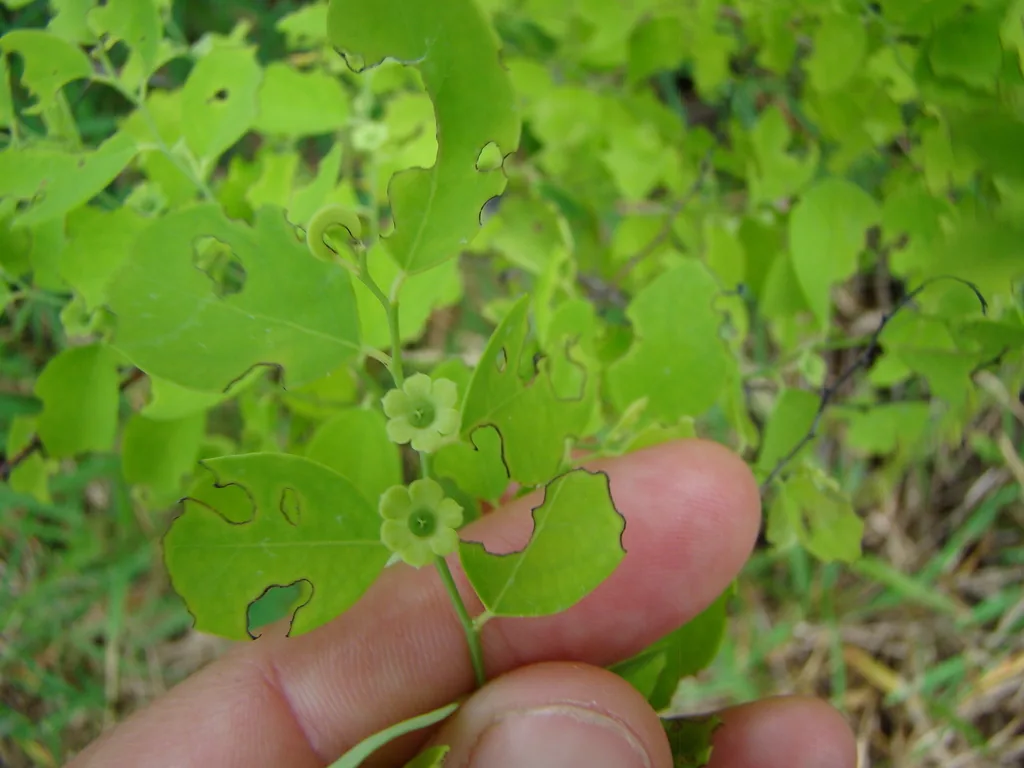
Caterpillars and spider mites can damage the leaves
What the sources say (1)
Pests: caterpillars, spider mites
Insects, Diseases, and Other Plant Problems: Caterpillars and spider mites can damage the foliage.
— Phyllanthus nivosus (Snowbush) | North Carolina Extension Gardener Plant Toolbox [1] - Propagation
From cuttings or by dividing off the suckers
What the sources say (2)
Propagation: Cuttings; sucker divisions
Snowbush may be propagated by cuttings and sucker divisions.
— FPS73/FP073: Breynia disticha Snowbush [2] Root softwood cuttings in summer, and use bottom heat to promote rooting.
— Snow Bush Information: Learn About Growing Snow Bush Shrubs At Home | Gardening Know How [4] - Containers
Grows in containers and indoors too
What the sources say (3)
In containers: Yes
Outside tropical areas, it should be grown in containers and overwintered in humid, cool, frost-free locations.
— Phyllanthus nivosus (Snowbush) | North Carolina Extension Gardener Plant Toolbox [1]
Overview
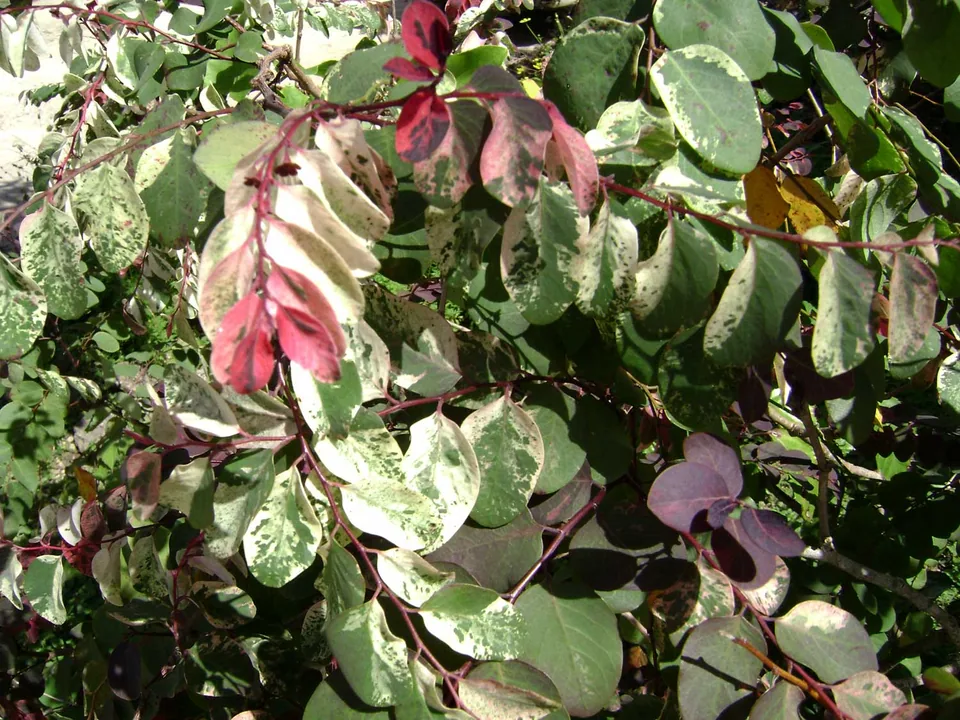
Snowbush is a broadleaf evergreen shrub grown for its mottled white and green foliage. [1] Outside tropical areas it is grown in containers and overwintered in frost-free locations. [1] It does best in full sun to part shade, with consistent moisture and well-drained soil. [1]
Snowbush care
How to water Snowbush
Watering
The sources disagree:
Drought tolerance: moderate
[2]
What the sources say (2)
Soil should be consistently moist and not allowed to dry out.Prefers organically rich soils with consistent moistureWatering notes
Heavy drinker; organic mulch around the root zone preserves moisture
What the sources say (2)
This is a heavy feeder and drinker.Fertilize monthly and use organic mulch around the root zone to preserve moisture.How much light Snowbush needs
Full sun to part shade
What the sources say (2)
Prefers organically rich soils with consistent moisture, which is well-drained in full sun to part shade.The snow bush plant can live in full to partial sun, but the best color is achieved in a bright location.How much cold Snowbush can take
Hardiness, coldest zone
10a [winter low −1.1 to 1.7 °C (30 to 35 °F)]
What the sources say (1)
10a, 10b, 11a, 11bHardiness, warmest zone
11b [winter low 7.2 to 10 °C (45 to 50 °F)]
What the sources say (1)
10a, 10b, 11a, 11bBest soil for Snowbush
Soil pH, minimum
6.0
What the sources say (1)
Neutral (6.0-8.0)Soil pH, maximum
8.0
What the sources say (1)
Neutral (6.0-8.0)Where to grow Snowbush
Indoors
Yes
In containers
Yes
What the sources say (1)
Outside tropical areas, it should be grown in containers and overwintered in humid, cool, frost-free locations.Spacing
91.4-152.4 cm (36 to 60 in)
What the sources say (1)
Plant spacing: 36 to 60 inchesHow to propagate Snowbush
Cuttings; sucker divisions
How to grow Snowbush
The plant
Family
Mature height
Pests and diseases
Pests
caterpillars, spider mites
What the sources say (1)
Insects, Diseases, and Other Plant Problems: Caterpillars and spider mites can damage the foliage.Fertilizing
How often
Regular, light applications
What the sources say (1)
Vigorous growth with regular, light fertilizer applications allows the new foliage to show it true charm.Snowbush pests and problems
Caterpillars and spider mites
Symptom: Damaged foliage
What the sources say (1)
Caterpillars and spider mites can damage the foliage.
— Phyllanthus nivosus (Snowbush) | North Carolina Extension Gardener Plant Toolbox [1]
Remedies
Each remedy shows what official sources say about it; traditional remedies without an official source are marked as such. Harmful ones are listed so you know to avoid them.
Treating the plant
snowbush spanworm caterpillars
hand picking caterpillars Works
How: Hand picking the caterpillars or pruning away the tips of heavily infested branches before the caterpillars disperse throughout the shrub
Hand picking the caterpillars or pruning away the tips of heavily infested branches before the caterpillars disperse throughout the shrub can immediately reduce caterpillar numbers and may effectively control the infestation.
— ask.ifas.ufl.edu [9] What the evidence says Hand picking the caterpillars or pruning away the tips of heavily infested branches before the caterpillars disperse throughout the shrub can immediately reduce caterpillar numbers and may effectively control the infestation.
— ask.ifas.ufl.edu [9] bacillus thuringiensis Works
Insecticides that control caterpillars should not be used in a pollinator garden where desirable caterpillars are present as they will also kill those caterpillars.
— ask.ifas.ufl.edu [9] How: Bacillus thuringiensis, a naturally occurring bacteria commonly sold as an insecticide; apply following label directions
Bacillus thuringiensis , a naturally occurring bacteria commonly sold as an insecticide will effectively control this caterpillar pest.
— ask.ifas.ufl.edu [9] What the evidence says Bacillus thuringiensis , a naturally occurring bacteria commonly sold as an insecticide will effectively control this caterpillar pest.
— ask.ifas.ufl.edu [9]
spider mites
steady stream of water Works
How: spraying affected plants with a steady stream of water twice a week during periods of peak mite activity
Homeowners can reduce mite problems by spraying affected plants with a steady stream of water twice a week during periods of peak mite activity. This has a minimal impact on natural enemies of spidermites.
— extension.entm.purdue.edu [10] What the evidence says Homeowners can reduce mite problems by spraying affected plants with a steady stream of water twice a week during periods of peak mite activity. This has a minimal impact on natural enemies of spidermites.
— extension.entm.purdue.edu [10] insecticidal soap spray Official source, not independently tested
How: insecticidal soap must cover mites to kill them
This is especially important for horticultural oil and insecticidal soap which must cover mites to kill them.
— extension.entm.purdue.edu [10]
Calendar
Planting
Year round (zones 10 and 11)
What the sources say (1)
Planting month for zone 10 and 11: year roundPruning
The sources give different values depending on region, zone or growing conditions.
What each source says
According to Gardening Know How: Winter
According to NC State Extension: Growing season
What the sources say (2)
According to Gardening Know How: Prune annually in winter to keep the bush at the size you require.According to NC State Extension: Light pruning during the growing season will encourage new foliage.Months as given by the sources, which are mostly from the United States (northern hemisphere). In the southern hemisphere they shift by about six months.
Indicative values
Values from a secondary source, not checked word for word like the rest of this page. Use them as a starting point.
- Life cycle
- PerennialIndicative value, adapt it to your climate · Secondary source
- Hours of sun
- 4-6 hoursIndicative value, adapt it to your climate · Secondary source
- Drought tolerant
- yesIndicative value, adapt it to your climate · Secondary source
- Growth rate
- LowIndicative value, adapt it to your climate · Secondary source
Similar plants
- Abies grandis Abies grandis
- Abraham Trachystemon orientalis
- Abyssinian banana Ensete ventricosum
- Acacia longifolia Acacia longifolia
- Acanthus hungaricus Acanthus hungaricus
- Achlys triphylla Achlys triphylla
- Aconite Aconitum napellus
- Adam's Needle Yucca flaccida
Sources
Every value above is quoted from these documents. Links lead to the original publisher.
- Phyllanthus nivosus (Snowbush) | North Carolina Extension Gardener Plant Toolbox · plants.ces.ncsu.edu, consulted
- FPS73/FP073: Breynia disticha Snowbush · ask.ifas.ufl.edu, consulted
- FPS73/FP073: Breynia disticha Snowbush · edis.ifas.ufl.edu, consulted
- Snow Bush Information: Learn About Growing Snow Bush Shrubs At Home | Gardening Know How · gardeningknowhow.com, consulted
- Breynia disticha - Leon Levy Native Plant Preserve · levypreserve.org, consulted
- Breynia disticha - Botany Brisbane · botanybrisbane.com, consulted
- Breynia disticha - Useful Tropical Plants · tropical.theferns.info, consulted
- Breynia - Fine Gardening · finegardening.com, consulted
- ask.ifas.ufl.edu · ask.ifas.ufl.edu
- extension.entm.purdue.edu · extension.entm.purdue.edu
Written by Emilio Marruso · last checked