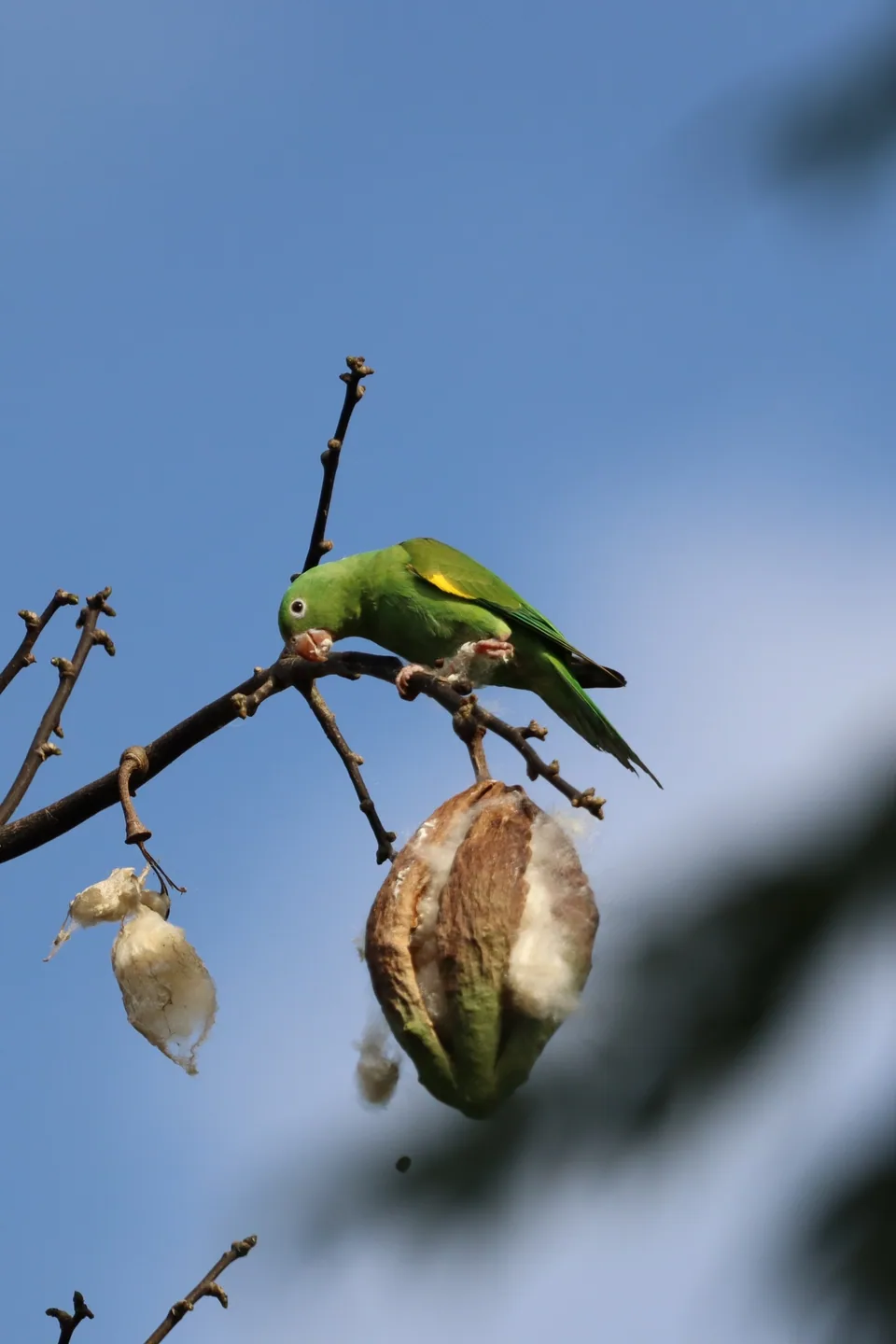
How to Grow and Care for Silk-floss tree
Chorisia speciosa
Written by Emilio Marruso · last checked
Toxic to: People · Why
At a glance
If you have room under a sunny sky, this tree grows into a grand presence, 35 to 50 feet tall and even wider. Once it settles in, it shrugs off dry spells with ease. Sow the seed as soon as it is ripe, shape a single strong trunk while the tree is young, and give its big roots space far from paths and driveways.
- Sun
Full sun
- Water
Once settled in, it handles dry spells very well
What the sources say (1)
Watering: Drought tolerance high; established plants very drought tolerant
Drought tolerance: high Aerosol salt tolerance: low
— ENH321/ST162: Ceiba speciosa: Silk-Floss Tree [1] - Cold
Survives winters down to 30 °F (−1.1 °C)
Half hardy: mild winters or an unheated greenhouse · USDA 10a · RHS H3 · Z10
What the sources say (2)
Hardiness, coldest zone: 10a [winter low −1.1 to 1.7 °C (30 to 35 °F)]
USDA hardiness zones: 10A through 11 (Figure 2) Origin: not native to North America
— ENH321/ST162: Ceiba speciosa: Silk-Floss Tree [1] Hardiness, warmest zone: 11 [winter low 4.4 to 10 °C (40 to 50 °F)]
USDA hardiness zones: 10A through 11 (Figure 2) Origin: not native to North America
— ENH321/ST162: Ceiba speciosa: Silk-Floss Tree [1] - Pruning
Prune while young to grow one central trunk
What the sources say (1)
Pruning: When the tree is young (to develop a single central trunk)
Prune the tree to be sure that only one central trunk develops when the tree is young.
— ENH321/ST162: Ceiba speciosa: Silk-Floss Tree [1] - Watch out
Big roots near the surface: plant 15 ft away from sidewalks, curbs and driveways
- Size
35 to 50 ft tall and 40 to 55 ft wide
What the sources say (2)
Mature height: 1067-1524 cm (35 to 50 ft)
Height: 35 to 50 feet Spread: 40 to 55 feet Crown uniformity: irregular
— ENH321/ST162: Ceiba speciosa: Silk-Floss Tree [1] Mature width: 1219-1676 cm (40 to 55 ft)
Height: 35 to 50 feet Spread: 40 to 55 feet Crown uniformity: irregular
— ENH321/ST162: Ceiba speciosa: Silk-Floss Tree [1] - Propagation
From seed or by grafting
What the sources say (1)
Propagation: Seed; grafting
Propagation is by seed or grafting. ## Pests and Diseases
— ENH321/ST162: Ceiba speciosa: Silk-Floss Tree [1] - Sowing
Sow the seed as soon as it is ripe
What the sources say (1)
Sowing: As soon as the seed is ripe
Seed - best sown as soon as it is ripe.
— Ceiba speciosa - Useful Tropical Plants [3] - Safety
No known hazards for people
Overview
Silk-floss tree is a fast-growing deciduous specimen tree that reaches 35 to 50 feet [10.7–15.2 m] and is used in large landscapes. [1] It needs full sun and well-drained soil, and established plants are very drought tolerant. [1][3]
Silk-floss tree care
Measurements in square brackets are our conversion into the other unit system; the quoted text is unchanged.
How to water Silk-floss tree
Drought tolerance high; established plants very drought tolerant
What the sources say (1)
Drought tolerance: high
Aerosol salt tolerance: lowHow much light Silk-floss tree needs
How much cold Silk-floss tree can take
Hardiness, coldest zone
10a [winter low −1.1 to 1.7 °C (30 to 35 °F)]
What the sources say (1)
USDA hardiness zones: 10A through 11 (Figure 2)
Origin: not native to North AmericaHardiness, warmest zone
11 [winter low 4.4 to 10 °C (40 to 50 °F)]
What the sources say (1)
USDA hardiness zones: 10A through 11 (Figure 2)
Origin: not native to North AmericaHow to propagate Silk-floss tree
Seed; grafting
What the sources say (1)
Propagation is by seed or grafting.
## Pests and DiseasesHow to grow Silk-floss tree
The plant
Family
Malvaceae
What the sources say (1)
Scientific name: Ceiba speciosa
Pronunciation: SAY-buh spee-see-OH-suh
Common name(s): Silk-floss tree
Family: MalvaceaeMature height
1067-1524 cm (35 to 50 ft)
What the sources say (1)
Height: 35 to 50 feet
Spread: 40 to 55 feet
Crown uniformity: irregularMature width
1219-1676 cm (40 to 55 ft)
What the sources say (1)
Height: 35 to 50 feet
Spread: 40 to 55 feet
Crown uniformity: irregularSilk-floss tree pests and problems
Surface roots
Symptom: Large roots often form at the base of the trunk just beneath the soil.
What to do: Do not plant too close to sidewalks or pavement; fifteen feet from curbs, driveways and sidewalks is described as adequate.
What the sources say (1)
Large roots often form at the base of the trunk just beneath the soil, so be careful not to plant the tree too close to sidewalks or pavement.
— ENH321/ST162: Ceiba speciosa: Silk-Floss Tree [1]
Remedies
The sources we checked give no remedies for this plant.
Is Silk-floss tree poisonous?
Reported by the source, quoted verbatim. This is not medical or veterinary advice: if a person or an animal may have eaten this plant, contact a poison control centre or a veterinarian.
## Known Hazards None known ## Botanical References
[3]
Calendar
Sowing
As soon as the seed is ripe
What the sources say (1)
Seed - best sown as soon as it is ripe.Pruning
When the tree is young (to develop a single central trunk)
What the sources say (1)
Prune the tree to be sure that only one central trunk develops when the tree is young.Months as given by the sources, which are mostly from the United States (northern hemisphere). In the southern hemisphere they shift by about six months.
Indicative values
Values from a secondary source, not checked word for word like the rest of this page. Use them as a starting point.
- Life cycle
- PerennialIndicative value, adapt it to your climate · Secondary source
- Drought tolerant
- yesIndicative value, adapt it to your climate · Secondary source
- Soil pH
- 6-7.5Indicative value, adapt it to your climate · Secondary source
- Care level
- MediumIndicative value, adapt it to your climate · Secondary source
- Growth rate
- HighIndicative value, adapt it to your climate · Secondary source
Similar plants
- African Baobab Adansonia digitata
- Bastardcedar Guazuma ulmifolia
- Bigleaf Linden Tilia platyphyllos
- Brazilian Bellflower Callianthe megapotamica
- Cape Mallow Anisodontea capensis
- Chinese Hibiscus Hibiscus × rosa-sinensis
- Common mallow Malva sylvestris
- Cranberry Hibiscus Hibiscus acetosella
Sources
Every value above is quoted from these documents. Links lead to the original publisher.
- ENH321/ST162: Ceiba speciosa: Silk-Floss Tree · edis.ifas.ufl.edu, consulted
- Ceiba speciosa (syn. Chorisia speciosa), floss-silk tree | Trees of Stanford & Environs · trees.stanford.edu, consulted
- Ceiba speciosa - Useful Tropical Plants · tropical.theferns.info, consulted
Written by Emilio Marruso · last checked