
How to Grow and Care for Pinkfairies
Clarkia pulchella
Written by Emilio Marruso · last checked
At a glance
This clarkia asks for very little: full sun, moderate watering and well-drained soil. Skip the rich soil, since it gives lots of leaves and few flowers. In August, when the seed capsules begin to split, you can collect the seeds to sow again, or even grind them into a powder and eat them dry.
- Sun
Full sun
- Water
Moderate watering; it does not tolerate drought
What the sources say (5)
Watering: Moderate
According to Practical Plants (PFAF notes): Shade tolerance no shade Water moderate Soil textures sandy, loamy, clay
— Clarkia pulchella — Practical Plants [5] greenhouse container plug production (USDA NRCS Pullman Plant Materials Center): Plants are watered deeply every other day and fertilized once per week with a water soluble, complete fertilizer containing micronutrients.
— Onagraceae (Clarkia) — Reforestation, Nurseries and Genetics Resources [1] Shade tolerance no shade Water moderate Soil textures sandy, loamy, clay
— Clarkia pulchella — Practical Plants [5] Watering notes: Needs well-drained soil; not drought tolerant; slow-draining media increased disease in greenhouse production
Drainage well drained Tolerates Nutritionally Poor Soil No Drought intolerant
— Clarkia pulchella — Practical Plants [5] Using planting soils with slower drainage has been observed to increase diseases of this species in the Plant Materials Center greenhouse.
— Onagraceae (Clarkia) — Reforestation, Nurseries and Genetics Resources [1] - Soil
Well-drained, not too rich soil: rich soil means lots of leaves and few flowers
What the sources say (2)
Watering notes: Needs well-drained soil; not drought tolerant; slow-draining media increased disease in greenhouse production
Drainage well drained Tolerates Nutritionally Poor Soil No Drought intolerant
— Clarkia pulchella — Practical Plants [5] Using planting soils with slower drainage has been observed to increase diseases of this species in the Plant Materials Center greenhouse.
— Onagraceae (Clarkia) — Reforestation, Nurseries and Genetics Resources [1] - Harvest
Collect seeds in August as the capsules split; they can be ground into a powder and eaten dry
What the sources say (1)
Harvest: Seeds collected in August when capsules begin to split
Wild seeds are collected in August when the capsules begin to split open.
— Plant Propagation Protocol for Clarkia pulchella [2] - Pests
Soil that drains slowly brings disease: use loose, fast-draining soil
What the sources say (2)
Watering notes: Needs well-drained soil; not drought tolerant; slow-draining media increased disease in greenhouse production
Drainage well drained Tolerates Nutritionally Poor Soil No Drought intolerant
— Clarkia pulchella — Practical Plants [5] Using planting soils with slower drainage has been observed to increase diseases of this species in the Plant Materials Center greenhouse.
— Onagraceae (Clarkia) — Reforestation, Nurseries and Genetics Resources [1] - Watch out
It dislikes hot, humid summers
- Propagation
Grows from seed
Overview
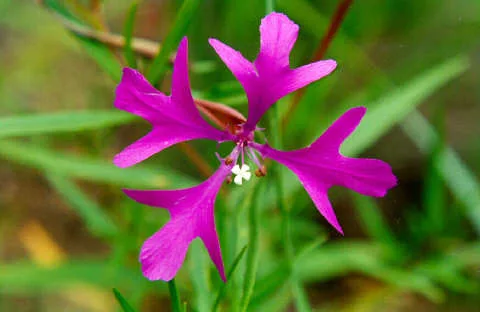
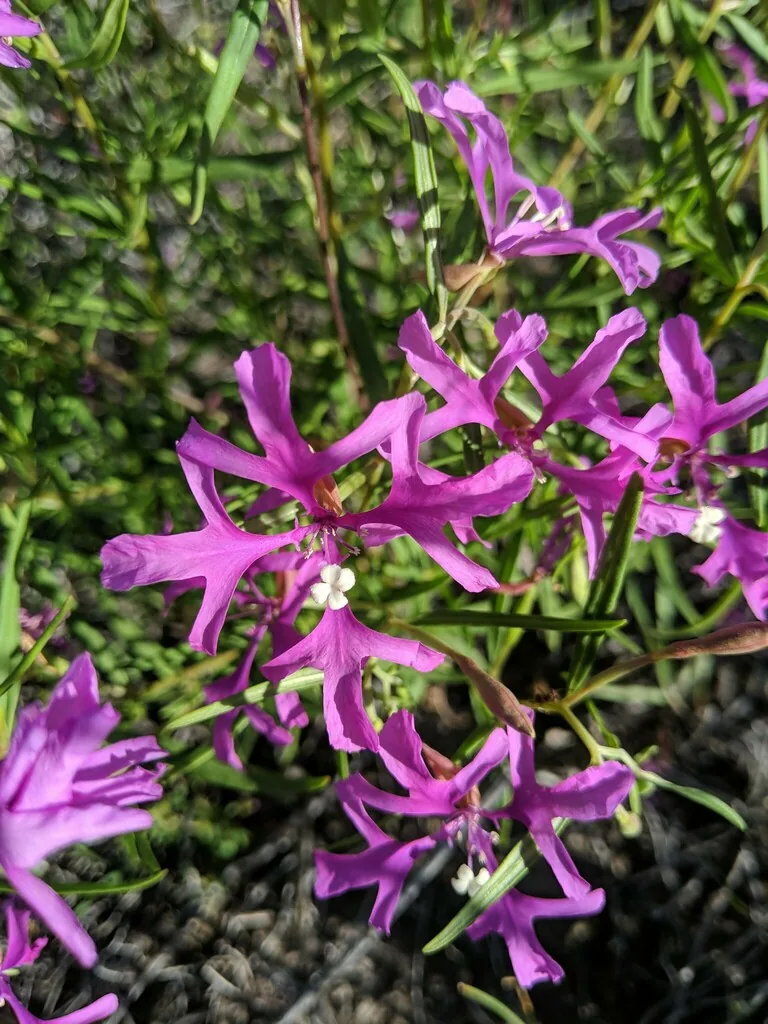
Clarkia pulchella is an annual native to western North America, from British Columbia to Oregon and east to South Dakota. [4][1] In the wild it grows on south slopes in dry, open grassland and open ponderosa pine forest. [1] It is grown from seed in a sunny position and its flowers are very attractive to bees. [5]
This record is incomplete: the sources we read do not cover every field yet.
Not yet covered by our sources: Hardiness, coldest zone, Hardiness, warmest zone, Pruning
Pinkfairies care
How to water Pinkfairies
Watering
Moderate
What each source says
According to Practical Plants (PFAF notes): Moderate
greenhouse container plug production (USDA NRCS Pullman Plant Materials Center): Water deeply every other day during active growth
What the sources say (3)
According to Practical Plants (PFAF notes): Shade tolerance
no shade
Water
moderate
Soil textures
sandy, loamy, claygreenhouse container plug production (USDA NRCS Pullman Plant Materials Center): Plants are watered deeply every other day and fertilized once per week with a water soluble, complete fertilizer containing micronutrients.Shade tolerance
no shade
Water
moderate
Soil textures
sandy, loamy, clayWatering notes
Needs well-drained soil; not drought tolerant; slow-draining media increased disease in greenhouse production
What the sources say (2)
Drainage
well drained
Tolerates Nutritionally Poor Soil
No
Drought
intolerantUsing planting soils with slower drainage has been observed to increase diseases of this species in the Plant Materials Center greenhouse.How much light Pinkfairies needs
How much cold Pinkfairies can take
Hardiness, coldest zone
Not stated in the sources we read.
Hardiness, warmest zone
Not stated in the sources we read.
How to propagate Pinkfairies
Pinkfairies pests and problems
Few flowers on rich soil
Symptom: Lots of leafy growth at the expense of flowers
What to do: Avoid overly rich soil
What the sources say (1)
If the soil is too rich the plants will produce lots of vegetative growth at the expense of flowers [4] .
— Clarkia pulchella — Practical Plants [5] Hot humid summers
Symptom: Plants resent hot, humid continental summers
What the sources say (1)
If the soil is too rich the plants will produce lots of vegetative growth at the expense of flowers [4] . Resents hot, humid continental summers [5] .
— Clarkia pulchella — Practical Plants [5] Disease in slow-draining media
Symptom: Increased disease in greenhouse plants
What to do: Use free-draining planting media
What the sources say (1)
Using planting soils with slower drainage has been observed to increase diseases of this species in the Plant Materials Center greenhouse.
— Onagraceae (Clarkia) — Reforestation, Nurseries and Genetics Resources [1]
Remedies
The sources we checked give no remedies for this plant.
Calendar
The sources give different values depending on region, zone or growing conditions.
What each source says
According to Practical Plants (PFAF notes): Spring in situ; autumn in mild winter areas
field direct seeding trials, Pullman, WA (USDA NRCS): Fall
greenhouse container plug production (USDA NRCS): February
What the sources say (3)
According to Practical Plants (PFAF notes): Seed - sow spring in situ. The seed usually germinates in 2 weeks [1] . Seed can also be sown in situ during the autumn in mild winter areas [1] [5] .field direct seeding trials, Pullman, WA (USDA NRCS): Preliminary results from direct seeding trials in the field suggest that seed sown in the fall establishes at a high rate. Seed field sown in the spring failed to germinate.greenhouse container plug production (USDA NRCS): In February, seeds are sown in 10 cu. in. Ray Leach Supercell conetainers filled with Sunshine #4. Seeds are covered lightly with media.Seeds collected in August when capsules begin to split
What the sources say (1)
Wild seeds are collected in August when the capsules begin to split open.Not stated in the sources we read.
Months as given by the sources, which are mostly from the United States (northern hemisphere). In the southern hemisphere they shift by about six months.
Edibility
Reported by the source, quoted verbatim. Do not eat a plant on the basis of this page alone: identification mistakes can be dangerous.
Seed - ground into a powder and eaten dry [7] . Very small and fiddly to harvest.
[5]
Indicative values
Values from a secondary source, not checked word for word like the rest of this page. Use them as a starting point.
- Mature height
- 0-0 cm [0 in]Indicative value, adapt it to your climate · Secondary source
- Hours of sun
- 4-6 hoursIndicative value, adapt it to your climate · Secondary source
- Soil pH
- 6-7.5Indicative value, adapt it to your climate · Secondary source
- Care level
- MediumIndicative value, adapt it to your climate · Secondary source
- Growth rate
- LowIndicative value, adapt it to your climate · Secondary source
- Pruning
- March, AprilIndicative value, adapt it to your climate · Secondary source
Similar plants
- Farewell to spring Clarkia amoena
- Abies grandis Abies grandis
- Abraham Trachystemon orientalis
- Abyssinian banana Ensete ventricosum
- Acacia longifolia Acacia longifolia
- Acanthus hungaricus Acanthus hungaricus
- Aconite Aconitum napellus
- Adam's Needle Yucca flaccida
Sources
Every value above is quoted from these documents. Links lead to the original publisher.
- Onagraceae (Clarkia) — Reforestation, Nurseries and Genetics Resources · rngr.net, consulted
- Plant Propagation Protocol for Clarkia pulchella · courses.washington.edu, consulted
- Clarkia pulchella | Encyclopedia of Puget Sound · eopugetsound.org, consulted
- Clarkia pulchella - Useful Temperate Plants · temperate.theferns.info, consulted
- Clarkia pulchella — Practical Plants · practicalplants.org, consulted
- Clarkia pulchella | Ragged Robin | Wildflowers of the Pacific Northwest · pnwflowers.com, consulted
Written by Emilio Marruso · last checked