
How to Grow and Care for Bushman's River Cycad
Encephalartos altensteinii
Written by Emilio Marruso · last checked
Toxic to: Animals, People · Why
At a glance
This cycad is easygoing about light, happy anywhere from full sun to light shade, and it grows in containers too. Give it a well-drained spot, water regularly in summer, and let the soil dry out completely between waterings; in winter, water much less. You can start new plants from fresh seeds, or sometimes root the suckers it forms.
- Sun
Full sun to light shade
What the sources say (1)
Light: Full sun to light shade
Thrives in full sun to light shade.
— Eastern Cape Giant Cycad (Encephalartos altensteinii) – African Legacy [1] - Water
Water regularly in summer, letting the soil dry out completely; water much less in winter
What the sources say (1)
Watering: Water regularly during the growing season (summer) but allow the soil to dry out completely between waterings; reduce watering significantly in winter
Water regularly during the growing season (summer) but allow the soil to dry out completely between waterings. Reduce watering significantly in winter.
— Eastern Cape Giant Cycad (Encephalartos altensteinii) – African Legacy [1] - Soil
Needs a well-drained spot; never overwater
What the sources say (1)
Watering notes: Plant in a well-drained position and do not over-water
Trees should be planted in a well-drained position and should not be over-watered.
— Encephalartos altensteinii. | Tree SA [3] - Harvest
The stem pith holds toxins: it must be buried for 2 months before it can be eaten
- Propagation
From fresh seeds; suckers can sometimes be removed and rooted
What the sources say (1)
Propagation: Fresh seeds; suckers can sometimes be removed and rooted
Best propagated from fresh seeds (clean thoroughly after fruit removal and ensure hand-pollination if growing to obtain seeds).
— Eastern Cape Giant Cycad (Encephalartos altensteinii) – African Legacy [1] - Containers
Grows in containers too
What the sources say (1)
In containers: Yes
This tree also makes a good container plant.
— Encephalartos altensteinii. | Tree SA [3] - Safety
The cones may be poisonous to people, and the seeds are usually poisonous
Overview
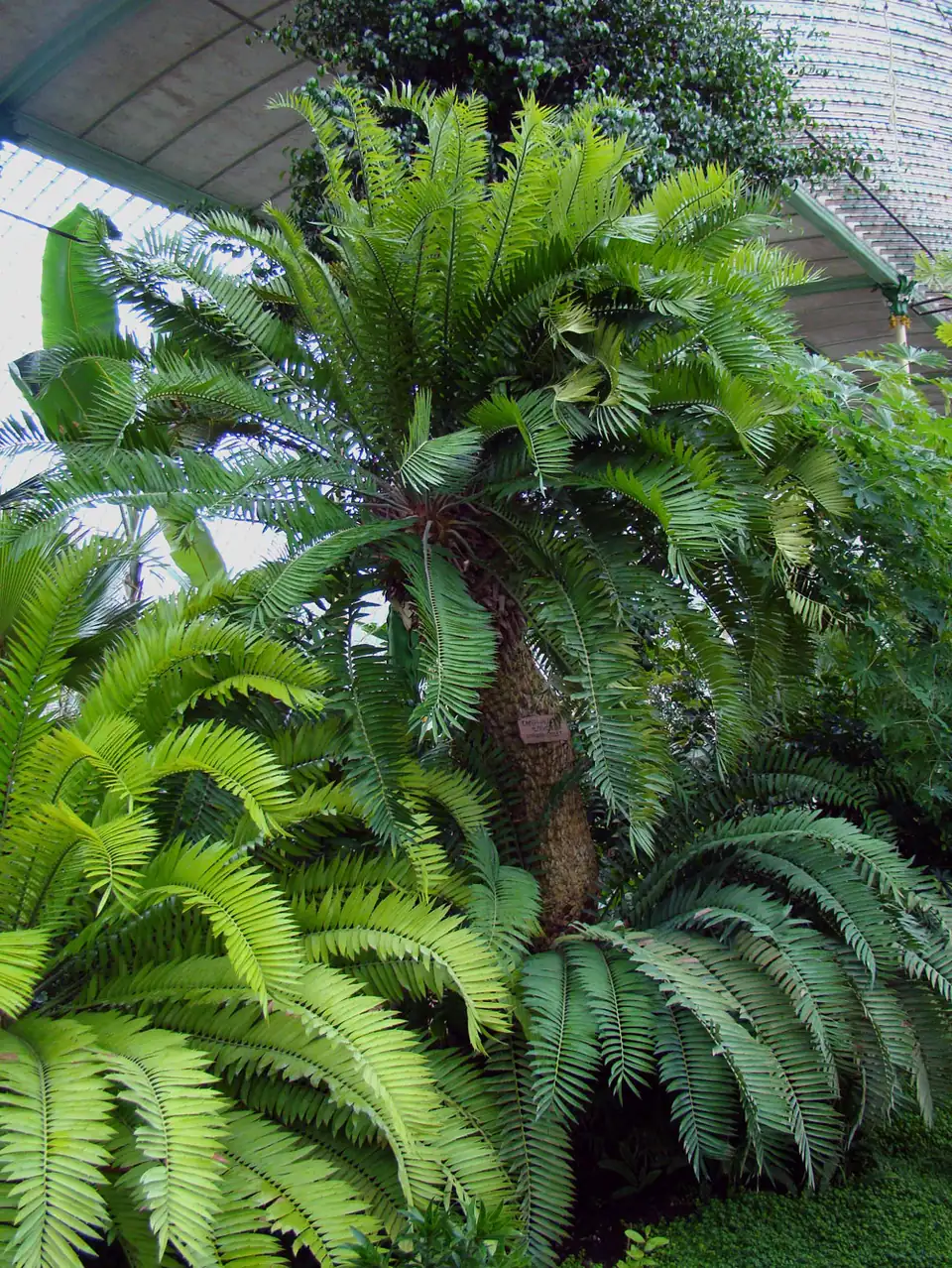
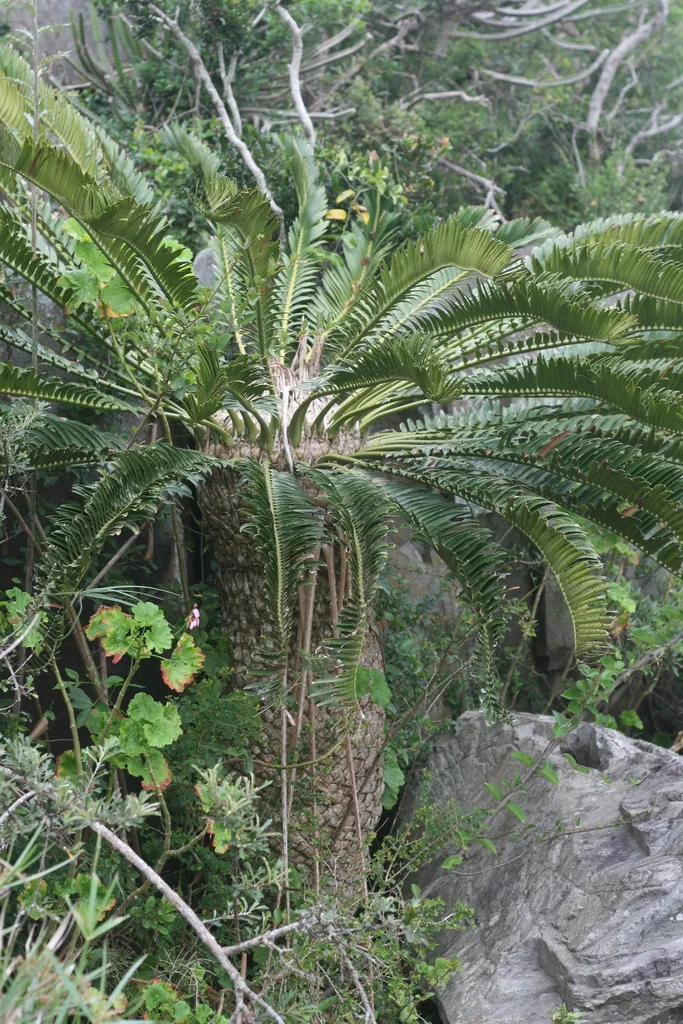
Encephalartos altensteinii is a South African endemic cycad that may reach 7 m [23 ft] high. [3] It thrives in full sun to light shade and needs very well-drained soil. [1]
This record is incomplete: the sources we read do not cover every field yet.
Not yet covered by our sources: Hardiness, coldest zone, Hardiness, warmest zone, Pruning
Bushman's River Cycad care
Measurements in square brackets are our conversion into the other unit system; the quoted text is unchanged.
How to water Bushman's River Cycad
Watering
Water regularly during the growing season (summer) but allow the soil to dry out completely between waterings; reduce watering significantly in winter
What the sources say (1)
Water regularly during the growing season (summer) but allow the soil to dry out completely between waterings. Reduce watering significantly in winter.Watering notes
Plant in a well-drained position and do not over-water
What the sources say (1)
Trees should be planted in a well-drained position and should not be over-watered.How much light Bushman's River Cycad needs
Full sun to light shade
What the sources say (1)
Thrives in full sun to light shade.How much cold Bushman's River Cycad can take
Hardiness, coldest zone
Not stated in the sources we read.
Hardiness, warmest zone
Not stated in the sources we read.
Where to grow Bushman's River Cycad
Yes
What the sources say (1)
This tree also makes a good container plant.How to propagate Bushman's River Cycad
Fresh seeds; suckers can sometimes be removed and rooted
What the sources say (1)
Best propagated from fresh seeds (clean thoroughly after fruit removal and ensure hand-pollination if growing to obtain seeds).Remedies
Each remedy shows what official sources say about it; traditional remedies without an official source are marked as such. Harmful ones are listed so you know to avoid them.
First aid
First aid: not a substitute for a doctor
seed ingestion
removing plant material and wiping the mouth Official source, not independently tested
After following the above steps, always call Poison Help at 1-800-222-1222 . Do not wait for symptoms to appear.
— mnpoison.org [4] How: Remove any remaining plant material, gently wipe the mouth with a wet cloth, give one glass of water if the person is awake and able to swallow.
Remove any remaining plant material or berries. - Gently wipe the mouth with a wet cloth.
— mnpoison.org [4]
Is Bushman's River Cycad toxic to pets?
Reported by the source, quoted verbatim. This is not medical or veterinary advice: if a person or an animal may have eaten this plant, contact a poison control centre or a veterinarian.
Animals
Cycads usually produce poisonous seeds.
[3]- Toxic principle
All seeds produce carcinogenic and neurotoxic glycosides (cycasins).
[3]
People
Calendar
Pruning
Not stated in the sources we read.
Months as given by the sources, which are mostly from the United States (northern hemisphere). In the southern hemisphere they shift by about six months.
Edibility
Reported by the source, quoted verbatim. Do not eat a plant on the basis of this page alone: identification mistakes can be dangerous.
In order to remove toxins present, the pith must be buried for 2 months.
[3]
Indicative values
Values from a secondary source, not checked word for word like the rest of this page. Use them as a starting point.
- Life cycle
- PerennialIndicative value, adapt it to your climate · Secondary source
- Mature height
- 304.8-609.6 cm (10-20 ft)Indicative value, adapt it to your climate · Secondary source
- Hours of sun
- 7-8 hoursIndicative value, adapt it to your climate · Secondary source
- Drought tolerant
- yesIndicative value, adapt it to your climate · Secondary source
- Soil pH
- 6-7.5Indicative value, adapt it to your climate · Secondary source
- USDA hardiness zones
- 10-12 [winter low −1.1 to 15.6 °C (30 to 60 °F)]Indicative value, adapt it to your climate · Secondary source
- Care level
- HighIndicative value, adapt it to your climate · Secondary source
- Growth rate
- LowIndicative value, adapt it to your climate · Secondary source
- Pruning
- December, January, February, March, April, MayIndicative value, adapt it to your climate · Secondary source
Similar plants
- Eastern Cape blue cycad Encephalartos horridus
- Abies grandis Abies grandis
- Abraham Trachystemon orientalis
- Abyssinian banana Ensete ventricosum
- Acacia longifolia Acacia longifolia
- Acanthus hungaricus Acanthus hungaricus
- Aconite Aconitum napellus
- Adam's Needle Yucca flaccida
Sources
Every value above is quoted from these documents. Links lead to the original publisher.
- Eastern Cape Giant Cycad (Encephalartos altensteinii) – African Legacy · africanlegacy.org.za, consulted
- Encephalartos altensteinii · www-archiv.fdm.uni-hamburg.de, consulted
- Encephalartos altensteinii. | Tree SA · treesa.org, consulted
- mnpoison.org · mnpoison.org
Written by Emilio Marruso · last checked