
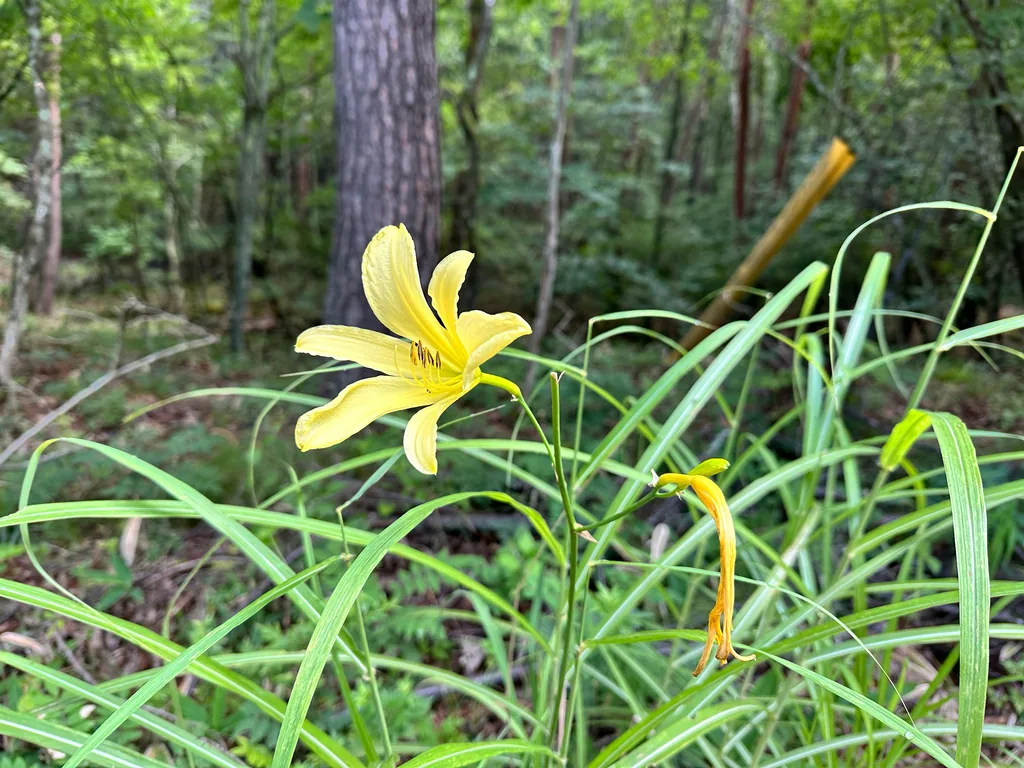

How to Grow and Care for Citron daylily
Hemerocallis citrina
Written by Emilio Marruso · last checked
Classified as poisonous · Why
At a glance
This daylily is as generous in the kitchen as it is in the garden: its flowers and flower buds can be eaten raw or cooked, and so can its roots, while the leaves and young shoots are eaten cooked. Give it full sun or part shade and a rich, moist soil, plant it in spring, and enjoy it.
- Sun
Full sun to part shade
- Water
Likes rich soil that stays moist
What the sources say (1)
Watering: Prefers a rich moist soil
preferring a rich moist soil
— Hemerocallis citrina — Practical Plants [3] - Soil
Slightly acidic to neutral soil, pH 6–7
- Planting
Plant in spring
What the sources say (1)
Planting: Spring
Plant them out in the spring
— Hemerocallis citrina — Practical Plants [3] - Harvest
Flowers, buds and roots are eaten raw or cooked; leaves and young shoots only cooked
- Propagation
Grow new plants from seed or by dividing the clump
- Sowing
Sow in mid-spring in a greenhouse
What the sources say (1)
Sowing: Middle of spring, in a greenhouse
Seed - sow in the middle of spring in a greenhouse.
— Hemerocallis citrina — Practical Plants [3]
Overview
Citron daylily is a night-blooming perennial with lemon-yellow, fragrant flowers. [1] It does well in full sun to part shade. [1] It is widely cultivated in China for its edible flowers. [3]
This record is incomplete: the sources we read do not cover every field yet.
Not yet covered by our sources: Pruning
Citron daylily care
How to water Citron daylily
Prefers a rich moist soil
What the sources say (1)
preferring a rich moist soilHow much light Citron daylily needs
How much cold Citron daylily can take
Hardiness, coldest zone
The sources give different values depending on region, zone or growing conditions.
What each source says
According to Chicago Botanic Garden: 5 [winter low −28.9 to −23.3 °C (−20 to −10 °F)]
According to Garden Gate: 3 [winter low −40 to −34.4 °C (−40 to −30 °F)]
Best soil for Citron daylily
Soil pH, minimum
6
What the sources say (1)
Prefers a pH between 6 and 7Soil pH, maximum
7
What the sources say (1)
Prefers a pH between 6 and 7How to propagate Citron daylily
How to grow Citron daylily
Fertilizing
When
The sources give different values depending on region, zone or growing conditions.
What each source says
Hemerocallis in general: Early spring as new growth begins, and again in midsummer
What the sources say (1)
Hemerocallis in general: Put down fertilizer in the early spring just as new growth commences, and again in midsummer.How often
The sources give different values depending on region, zone or growing conditions.
What each source says
Hemerocallis in general: Twice a year (early spring and midsummer); light feeding is enough
What the sources say (1)
Hemerocallis in general: Daylilies usually grow adequately without fertilizer but grow best when lightly fertilized.Mineral fertilizers
The sources give different values depending on region, zone or growing conditions.
What each source says
Hemerocallis in general: Slow-release fertilizer with moderate nitrogen and higher phosphorus and potash
What the sources say (1)
Hemerocallis in general: They prefer moderate nitrogen and higher rates of phosphorous and potash. Slow-release fertilizers are best for daylilies.Avoid
The sources give different values depending on region, zone or growing conditions.
What each source says
Hemerocallis in general: Applying fertilizer to dry soil
What the sources say (1)
Hemerocallis in general: and again in midsummer. Make sure that the soil is moist whenever applying fertilizer.Remedies
Each remedy shows what official sources say about it; traditional remedies without an official source are marked as such. Harmful ones are listed so you know to avoid them.
Treating the plant
flower thrips
insecticidal soap spray Partly works
Control is very difficult because the thrips feed in areas inaccessible to sprays, and flower thrips have developed resistance to nearly all of the insecticides available to homeowners.
— portal.ct.gov [8] How: sprays of insecticidal soap, registered for use against these pests in Connecticut
Sprays of insecticidal soap or spinosad, which are among the compounds registered for use against these pests in Connecticut, will also suppress thrips.
— portal.ct.gov [8] What the evidence says Sprays of insecticidal soap or spinosad, which are among the compounds registered for use against these pests in Connecticut, will also suppress thrips.
— portal.ct.gov [8]
aphids
insecticidal soap spray Partly works
Avoid unnecessary insecticide applications because contact insecticides may kill beneficial predators.
— hgic.clemson.edu [9] How: insecticidal soap sprays
Insecticidal soap sprays are a less toxic option that can help reduce aphid populations.
— hgic.clemson.edu [9] What the evidence says Insecticidal soap sprays are a less toxic option that can help reduce aphid populations.
— hgic.clemson.edu [9] garlic extract spray Partly works
How: garlic extract, a contact insecticide that only kills the aphids it touches, reapplied every few days
There are some organic, less-toxic options available such as garlic extract, insecticidal soap, and neem oil. However, on daylily, the aphids are feeding very deep in the folded leaves near the ground.
— extension.illinois.edu [10] What the evidence says There are some organic, less-toxic options available such as garlic extract, insecticidal soap, and neem oil. However, on daylily, the aphids are feeding very deep in the folded leaves near the ground.
— extension.illinois.edu [10] neem oil spray Partly works
How: neem oil, a contact insecticide that only kills the aphids it touches, reapplied every few days
There are some organic, less-toxic options available such as garlic extract, insecticidal soap, and neem oil. However, on daylily, the aphids are feeding very deep in the folded leaves near the ground.
— extension.illinois.edu [10] What the evidence says There are some organic, less-toxic options available such as garlic extract, insecticidal soap, and neem oil. However, on daylily, the aphids are feeding very deep in the folded leaves near the ground.
— extension.illinois.edu [10]
slugs and snails
remove mulch and leaf litter Official source, not independently tested
How: Remove mulch and leaf litter near the base of daylilies to eliminate daytime hiding places
Remove mulch and leaf litter near the base of daylilies to eliminate daytime hiding places.
— hgic.clemson.edu [9]
daylily leaf streak
dispose of foliage clippings Official source, not independently tested
How: in the fall, remove dead foliage from around the base of the plants and dispose of the clippings
Dispose of foliage clippings because the fungus can overwinter on senesced foliage and produce spores the following spring.
— hgic.clemson.edu [9]
basal or root rot
removal of infected plants Official source, not independently tested
How: removal of infected plants
Control with fungicides is not reliably effective and may be prohibitively expensive, so removal of infected plants is important.
— portal.ct.gov [8]
stem rot
remove infected parts and topsoil Official source, not independently tested
How: removing and destroying all infected plant parts and removal of top soil around the plant; new soil may replace sclerotia-filled soil
Control may include removing and destroying all infected plant parts and removal of top soil around the plant. New soil may replace sclerotia-filled soil.
— portal.ct.gov [8]
Calendar
Sowing
Middle of spring, in a greenhouse
What the sources say (1)
Seed - sow in the middle of spring in a greenhouse.Planting
Spring
What the sources say (1)
Plant them out in the springPruning
Not stated in the sources we read.
Months as given by the sources, which are mostly from the United States (northern hemisphere). In the southern hemisphere they shift by about six months.
Edibility
Reported by the source, quoted verbatim. Do not eat a plant on the basis of this page alone: identification mistakes can be dangerous.
Indicative values
Values from a secondary source, not checked word for word like the rest of this page. Use them as a starting point.
- Life cycle
- Herbaceous PerennialIndicative value, adapt it to your climate · Secondary source
- Mature height
- 91.4-121.9 cm (3-4 ft)Indicative value, adapt it to your climate · Secondary source
- Drought tolerant
- yesIndicative value, adapt it to your climate · Secondary source
- Care level
- MediumIndicative value, adapt it to your climate · Secondary source
- Growth rate
- LowIndicative value, adapt it to your climate · Secondary source
- Pruning
- February, March, April, August, February, March, April, June, July, August, August, December, January, February, December, January, FebruaryIndicative value, adapt it to your climate · Secondary source
Similar plants
- Daylily Hemerocallis fulva
- Daylily Hemerocallis minor
- Lemon day-lily Hemerocallis lilioasphodelus
- Abies grandis Abies grandis
- Abraham Trachystemon orientalis
- Abyssinian banana Ensete ventricosum
- Acacia longifolia Acacia longifolia
- Acanthus hungaricus Acanthus hungaricus
Sources
Every value above is quoted from these documents. Links lead to the original publisher.
- Hemerocallis citrina | Chicago Botanic Garden · chicagobotanic.org, consulted
- Hemerocallis citrina - Useful Temperate Plants · temperate.theferns.info, consulted
- Hemerocallis citrina — Practical Plants · practicalplants.org, consulted
- Brighten your night with the citron daylily | Garden Gate · gardengatemagazine.com, consulted
- Brighten your night with the citron daylily | Garden Gate · gardengatemagazine.com, consulted
- A new day dawning: Hemerocallis (daylily) as a future model organism - PMC · pmc.ncbi.nlm.nih.gov, consulted
- hgic.clemson.edu · hgic.clemson.edu
- portal.ct.gov · portal.ct.gov
- hgic.clemson.edu · hgic.clemson.edu
- extension.illinois.edu · extension.illinois.edu
Written by Emilio Marruso · last checked