
How to Grow and Care for Lemon day-lily
Hemerocallis lilioasphodelus
Written by Emilio Marruso · last checked
Toxic to: Cats · Why
At a glance
This lemon daylily is as generous in the kitchen as in the garden: its young leaves and shoots cook like asparagus, and its flower buds taste like green beans. Give it full sun and soil that never gets too dry, and it will bloom longer. Start it from seed in a greenhouse, or simply divide a clump in spring.
- Sun
Full sun; takes light shade but blooms less
What the sources say (3)
Light: Full sun; tolerates partial (light) shade, with fewer flowers in shade
Succeeds in most soils [1] , including dry ones, preferring a rich moist soil and a sunny position [3] but tolerating partial shade
— Yellow Day Lily (Hemerocallis lilioasphodelus) — Practical Plants [5] Light full sun Shade tolerance light shade Water moderate Hardiness Zone 4+
— Yellow Day Lily (Hemerocallis lilioasphodelus) — Practical Plants [5] It grows in a variety of soils but flowering will be much reduced if not in sun most of the day.
— Yellow Day Lily, Hemerocallis lilioasphodelus L. [1] - Water
Don't let it dry out too much: drought shortens flowering and can make buds drop
What the sources say (4)
Watering notes: Very dry conditions shorten the flowering period; in short grass it succeeds only if the soil is moist
flowering will be much reduced if not in sun most of the day. Very dry conditions will shorten the flowering period.
— Yellow Day Lily, Hemerocallis lilioasphodelus L. [1] Grows well in heavy clay soils. Succeeds in short grass if the soil is moist
— Yellow Day Lily (Hemerocallis lilioasphodelus) — Practical Plants [5] Drought: Grows in both wet and dry soils, but excessive dryness injures the plants and may cause some cultivars to drop their buds
Daylilies prefer good drainage and moderate moisture, but are able to grow under both wet and dry soil conditions.
— [10] However, excessive dryness does injure the plants and may cause some cultivars to drop their buds.
— [10] - Cold
Survives winters down to −30 °F (−34.4 °C)
Very hardy · USDA 4 · RHS H7 · Z4
What the sources say (1)
Hardiness, coldest zone: 4 [winter low −34.4 to −28.9 °C (−30 to −20 °F)]
Light full sun Shade tolerance light shade Water moderate Hardiness Zone 4+
— Yellow Day Lily (Hemerocallis lilioasphodelus) — Practical Plants [5] - Spacing
18 in apart as ground cover; set the crown no deeper than 1 inch
What the sources say (3)
Spacing: 45 cm [18 in] (as ground cover)
Plants form a spreading clump and are suitable for ground cover when spaced about 45cm apart each way
— Yellow Day Lily (Hemerocallis lilioasphodelus) — Practical Plants [5] - Planting
Plant divisions in spring; seedlings in late spring, after their first winter under glass
What the sources say (2)
Planting: Late spring (seedlings after their first winter under glass); spring (small divisions)
Grow the plants on for their first winter in a greenhouse and plant out in late spring
— Yellow Day Lily (Hemerocallis lilioasphodelus) — Practical Plants [5] grow them on in a cold frame until they are rooting well. Plant them out in the spring.
— Yellow Day Lily (Hemerocallis lilioasphodelus) — Practical Plants [5] - Harvest
Very young leaves and shoots, cooked like asparagus; flower buds taste like green beans
What the sources say (2)
Harvest: Leaves and young shoots when very young; flowers just as they start to wither for use as a condiment
Leaves and young shoots - raw or cooked like asparagus or celery [15] [2] [5] . They must be consumed when very young or else they become fibrous
— Yellow Day Lily (Hemerocallis lilioasphodelus) — Practical Plants [5] If the flowers are picked just as they start to wither they can be used as a condiment
— Yellow Day Lily (Hemerocallis lilioasphodelus) — Practical Plants [5] - Pests
Slugs and snails chew the young growth in spring
- Propagation
By seed or by dividing the clump
What the sources say (2)
Propagation: Seed, division
Seed - sow in the middle of spring in a greenhouse.
— Yellow Day Lily (Hemerocallis lilioasphodelus) — Practical Plants [5] Division in spring or after flowering in late summer or autumn [7] . Division is very quick and easy
— Yellow Day Lily (Hemerocallis lilioasphodelus) — Practical Plants [5] - Sowing
Sow in mid-spring in a greenhouse
What the sources say (1)
Sowing: Mid-spring, in a greenhouse
Seed - sow in the middle of spring in a greenhouse. Germination is usually fairly rapid and good.
— Yellow Day Lily (Hemerocallis lilioasphodelus) — Practical Plants [5] - Safety
Toxic to cats: it can cause vomiting and kidney failure
Overview
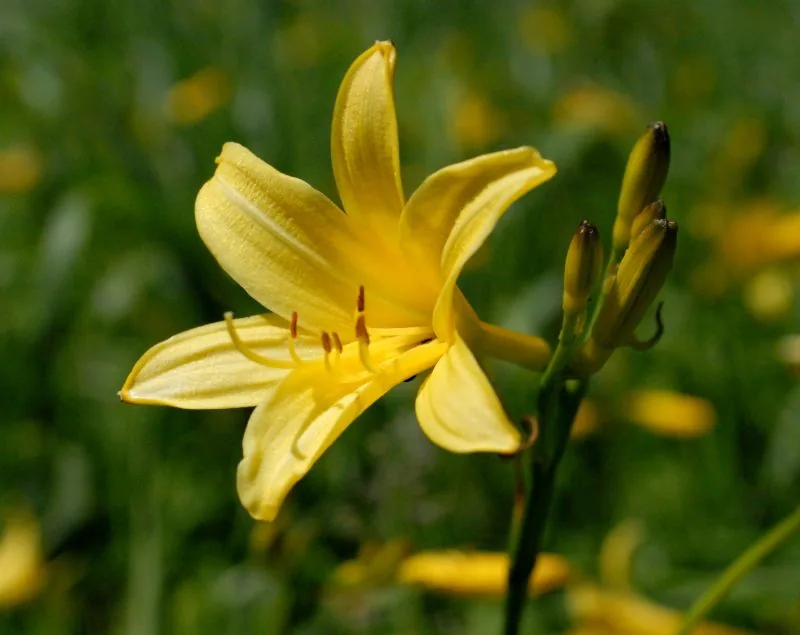
Hemerocallis lilioasphodelus, the yellow day lily, is an erect perennial 2 to 4 feet [0.6–1.2 m] tall with very fragrant lemon-yellow flowers. [1] It prefers a rich, moist soil and a sunny position but tolerates partial shade, flowering less freely in shade. [5] Leaves, young shoots, flower buds, flowers and roots are reported as edible, and the plant is grown as a food crop in Japan. [4][5]
This record is incomplete: the sources we read do not cover every field yet.
Not yet covered by our sources: Hardiness, warmest zone, Pruning
Lemon day-lily care
Measurements in square brackets are our conversion into the other unit system; the quoted text is unchanged.
How to water Lemon day-lily
Watering
The sources disagree:
Succeeds in most soils [1] , including dry ones, preferring a rich moist soil and a sunny position
[5]
What the sources say (2)
Shade tolerance
light shade
Water
moderate
Hardiness
Zone 4+Soil pH
acid, neutral, alkaline
Tolerates Nutritionally Poor Soil
No
Drought
intolerantWatering notes
Very dry conditions shorten the flowering period; in short grass it succeeds only if the soil is moist
What the sources say (2)
flowering will be much reduced if not in sun most of the day. Very dry conditions will shorten the flowering period.Grows well in heavy clay soils. Succeeds in short grass if the soil is moistHow much light Lemon day-lily needs
Full sun; tolerates partial (light) shade, with fewer flowers in shade
What the sources say (3)
Succeeds in most soils [1] , including dry ones, preferring a rich moist soil and a sunny position [3] but tolerating partial shadeLight
full sun
Shade tolerance
light shade
Water
moderate
Hardiness
Zone 4+It grows in a variety of soils but flowering will be much reduced if not in sun most of the day.How much cold Lemon day-lily can take
Hardiness, coldest zone
4 [winter low −34.4 to −28.9 °C (−30 to −20 °F)]
What the sources say (1)
Light
full sun
Shade tolerance
light shade
Water
moderate
Hardiness
Zone 4+Hardiness, warmest zone
Not stated in the sources we read.
Where to grow Lemon day-lily
45 cm [18 in] (as ground cover)
What the sources say (1)
Plants form a spreading clump and are suitable for ground cover when spaced about 45cm apart each wayHow to propagate Lemon day-lily
Seed, division
What the sources say (2)
Seed - sow in the middle of spring in a greenhouse.Division in spring or after flowering in late summer or autumn [7] . Division is very quick and easyHow to grow Lemon day-lily
Fertilizing
When
The sources give different values depending on region, zone or growing conditions.
What each source says
Hemerocallis in general: Early spring as new growth begins, and again in midsummer
Hemerocallis in general, average garden soil: In spring, when new growth starts
What the sources say (2)
Hemerocallis in general: Put down fertilizer in the early spring just as new growth commences, and again in midsummer.Hemerocallis in general, average garden soil: In average garden loams the application of a complete fertilizer such as 5-10-5 in the spring of the year when new growth starts usually is adequate.How often
The sources give different values depending on region, zone or growing conditions.
What each source says
Hemerocallis in general: Twice a year, early spring and midsummer; light feeding is enough
Hemerocallis in general, very poor or fast-leaching soils: A follow-up application after the spring one
What the sources say (2)
Hemerocallis in general: Daylilies usually grow adequately without fertilizer but grow best when lightly fertilized.Hemerocallis in general, very poor or fast-leaching soils: In extremely poor soils or soils that leach easily, a follow-up application of fertilizer might be warranted.Natural fertilizers
The sources give different values depending on region, zone or growing conditions.
What each source says
Hemerocallis in general: Well-rotted manure or compost worked into the soil before planting
What the sources say (1)
Hemerocallis in general: Soil of any texture should be improved by incorporating liberal amounts of organic matter in the form of well-rotted manure, compost or peat moss before planting.Mineral fertilizers
The sources give different values depending on region, zone or growing conditions.
What each source says
Hemerocallis in general: Slow-release fertilizer with moderate nitrogen and higher phosphorus and potash
Hemerocallis in general, average garden soil: Complete fertilizer such as 5-10-5 in spring
What the sources say (2)
Hemerocallis in general: They prefer moderate nitrogen and higher rates of phosphorous and potash. Slow-release fertilizers are best for daylilies.Hemerocallis in general, average garden soil: In average garden loams the application of a complete fertilizer such as 5-10-5 in the spring of the year when new growth starts usually is adequate.Avoid
The sources give different values depending on region, zone or growing conditions.
What each source says
Hemerocallis in general: Too much nitrogen; fertilizer on very rich soils
Hemerocallis in general: Fertilizer spread on the leaves
Hemerocallis in general: Applying fertilizer to dry soil
What the sources say (3)
Hemerocallis in general: Like any plant, daylily requires nutrients but additional fertilizer should be applied sparingly since too much nitrogen can be detrimental. Daylilies growing in very rich soils require little (if any) additional fertilizer.Hemerocallis in general: When applying fertilizer, avoid spreading it on the leaves of the plant. This can lead to the accumulation of fertilizer at the base of the leaf and result in tissue burn when the fertilizer is wetted.Hemerocallis in general: and again in midsummer. Make sure that the soil is moist whenever applying fertilizer.Signs of excess
The sources give different values depending on region, zone or growing conditions.
What each source says
Hemerocallis in general: Tissue burn at the base of the leaves where fertilizer has collected
What the sources say (1)
Hemerocallis in general: This can lead to the accumulation of fertilizer at the base of the leaf and result in tissue burn when the fertilizer is wetted.Spacing
Heat and drought
Drought
Grows in both wet and dry soils, but excessive dryness injures the plants and may cause some cultivars to drop their buds
Lemon day-lily pests and problems
Slugs and snails
Symptom: Damage to young growth in spring
What the sources say (1)
The plants are very susceptible to slug and snail damage, the young growth in spring is especially at risk
— Yellow Day Lily (Hemerocallis lilioasphodelus) — Practical Plants [5]
Remedies
The sources we checked give no remedies for this plant.
Is Lemon day-lily toxic to pets?
Reported by the source, quoted verbatim. This is not medical or veterinary advice: if a person or an animal may have eaten this plant, contact a poison control centre or a veterinarian.
These plants are toxic to cats, which may show signs of vomiting, inappetence, lethargy, kidney failure, and even death after eating.
[7]Genus-level warning: refers to the whole genus, not documented for this species
The source flags the risk for this animal but does not explain why.
Calendar
Sowing
Mid-spring, in a greenhouse
What the sources say (1)
Seed - sow in the middle of spring in a greenhouse. Germination is usually fairly rapid and good.Planting
Late spring (seedlings after their first winter under glass); spring (small divisions)
What the sources say (2)
Grow the plants on for their first winter in a greenhouse and plant out in late springgrow them on in a cold frame until they are rooting well. Plant them out in the spring.Harvest
Leaves and young shoots when very young; flowers just as they start to wither for use as a condiment
What the sources say (2)
Leaves and young shoots - raw or cooked like asparagus or celery [15] [2] [5] . They must be consumed when very young or else they become fibrousIf the flowers are picked just as they start to wither they can be used as a condimentPruning
Not stated in the sources we read.
Months as given by the sources, which are mostly from the United States (northern hemisphere). In the southern hemisphere they shift by about six months.
Edibility
Reported by the source, quoted verbatim. Do not eat a plant on the basis of this page alone: identification mistakes can be dangerous.
Leaves and young shoots - raw or cooked like asparagus or celery [15] [2] [5] . They must be consumed when very young or else they become fibrous
[5]Flower buds - raw or cooked. They taste somewhat like green beans
[5]Flowers - raw or cooked[85, K]. They can be dried and used as a thickener in soups etc
[5]Root - cooked [15] [2] . They taste like a blend of sweet corn and salsify
[5]The flowers, flower buds and enlarged roots are considered edible if properly prepared. The enlarged roots must be properly cooked
[1]
Similar plants
- Citron daylily Hemerocallis citrina
- Daylily Hemerocallis fulva
- Daylily Hemerocallis minor
- Abies grandis Abies grandis
- Abraham Trachystemon orientalis
- Abyssinian banana Ensete ventricosum
- Acacia longifolia Acacia longifolia
- Acanthus hungaricus Acanthus hungaricus
Sources
Every value above is quoted from these documents. Links lead to the original publisher.
- Yellow Day Lily, Hemerocallis lilioasphodelus L. · friendsofeloisebutler.org, consulted
- Hemerocallis lilioasphodelus (yellow day-lily): Go Botany · gobotany.nativeplanttrust.org, consulted
- Hemerocallis lilioasphodelus | Henriette's Herbal Homepage · henriettes-herb.com, consulted
- Hemerocallis lilioasphodelus - Useful Temperate Plants · temperate.theferns.info, consulted
- Yellow Day Lily (Hemerocallis lilioasphodelus) — Practical Plants · practicalplants.org, consulted
- Orange Daylily | Missouri Department of Conservation · mdc.mo.gov, consulted
- Hemerocallis (Day Lilies, Daylily, Day Lily) | North Carolina Extension Gardener Plant Toolbox · plants.ces.ncsu.edu, consulted
- hgic.clemson.edu · hgic.clemson.edu
- ipm.missouri.edu · ipm.missouri.edu
- ag.purdue.edu · ag.purdue.edu
Written by Emilio Marruso · last checked