
How to Grow and Care for Common Bluebell
Hyacinthoides non-scripta
Written by Emilio Marruso · last checked
Toxic to: Cats, Dogs, People · Why
At a glance
English bluebells thrive in partial or dappled shade, though they also tolerate full sun. Water when the soil is dry two inches down, keeping it moist but never wet. This perennial bulb spreads by seed and bulb offsets until it forms dense clumps, and it grows happily in containers too, so even a small garden can enjoy it.
- Sun
Partial or dappled shade; it also tolerates full sun
What the sources say (3)
Light: Partial or dappled shade; tolerates full sun
H. non-scripta prefers dappled shade, but will grow in full sun as well.
— How to Plant and Grow English Bluebells | Gardener’s Path [5] Grow Hyacinthoides non-scripta in moist but well-drained soil in sun to partial shade.
— Hyacinthoides non-scripta (English Bluebell) | BBC Gardeners World Magazine [4] bluebells thrive in partial shade, under deciduous trees or shrubs and need moist but well-drained soil.
— How to Grow Native Bluebells in Your Garden - Woodland Trust [3] - Water
Water well after planting, then when the soil is dry 2 inches down; moist, never wet
What the sources say (3)
Watering: Water when the soil is dry to a depth of two inches [5.1 cm]; keep soil moist but not wet
They tolerate a pH range of 5.5 to 7.5 but do best in slightly acidic soils. Water when the soil is dry to a depth of two inches.
— How to Plant and Grow English Bluebells | Gardener’s Path [5] Watering notes: Water well after planting; moist but well-drained soil; containers dry out faster and may need more frequent watering
Choose partial shade and moist but well-drained soil. Enrich soil with leaf mould, manure or garden compost. - Water well after planting.
— How to Grow Native Bluebells in Your Garden - Woodland Trust [3] Containers tend to dry out more quickly than garden soil, so you may need to water more frequently.
— How to Plant and Grow English Bluebells | Gardener’s Path [5] - Soil
Moist, well-drained soil, pH 5.5–7.5
What the sources say (4)
Soil pH, minimum: 5.5
They tolerate a pH range of 5.5 to 7.5 but do best in slightly acidic soils.
— How to Plant and Grow English Bluebells | Gardener’s Path [5] Soil pH, maximum: 7.5
They tolerate a pH range of 5.5 to 7.5 but do best in slightly acidic soils.
— How to Plant and Grow English Bluebells | Gardener’s Path [5] Watering notes: Water well after planting; moist but well-drained soil; containers dry out faster and may need more frequent watering
Choose partial shade and moist but well-drained soil. Enrich soil with leaf mould, manure or garden compost. - Water well after planting.
— How to Grow Native Bluebells in Your Garden - Woodland Trust [3] Containers tend to dry out more quickly than garden soil, so you may need to water more frequently.
— How to Plant and Grow English Bluebells | Gardener’s Path [5] - Pests
Slugs and snails in wet springs; rust spots on the leaves do little harm
- Watch out
Spreads into dense clumps that smother small plants; remove spent flowers to stop self-seeding
What the sources say (3)
Root system: Bulbous perennial; most bulbs lie in the top 20 cm [7.9 in] of soil; spreads by seed and bulb offsets
Bluebells are bulbous perennials, flowering in mid- to late-spring
— Bluebells in Gardens | RHS Advice [1] Most bulbs will be in the top 20cm (8in) of soil but it is worth checking a bit deeper.
— Bluebells in Gardens | RHS Advice [1] However, bluebells spread readily by seed and bulb offsets
— Bluebells in Gardens | RHS Advice [1] - Propagation
By seed, bulb offsets, or dividing clumps while still green after flowering
What the sources say (2)
Propagation: Seed, bulb offsets, division of clumps 'in the green' after flowering
English bluebell can be propagated by seed or bulb offsets.
— How to Plant and Grow English Bluebells | Gardener’s Path [5] Grow Hyacinthoides non-scripta in moist but well-drained soil in sun to partial shade. Divide and transplant clumps 'in the green' after flowering.
— Hyacinthoides non-scripta (English Bluebell) | BBC Gardeners World Magazine [4] - Sowing
Sow in summer (June), as soon as you collect the seed
What the sources say (2)
Sowing: Summer, as soon as the seed is collected (June)
Sow the seeds as soon as you collect them in the summer. Broadcast over rich loam that’s high in organic matter
— How to Plant and Grow English Bluebells | Gardener’s Path [5] | | Jan | Feb | Mar | Apr | May | Jun | Jul | Aug | Sep | Oct | Nov | Dec | Sow | | | | | | yes |
— Hyacinthoides non-scripta (English Bluebell) | BBC Gardeners World Magazine [4] - Containers
Grows in containers too; pots dry out faster, so water more often
What the sources say (3)
In containers: Yes
Why not try growing them in containers? As long as the pots have drainage holes and the medium is high in organic matter
— How to Plant and Grow English Bluebells | Gardener’s Path [5] Watering notes: Water well after planting; moist but well-drained soil; containers dry out faster and may need more frequent watering
Choose partial shade and moist but well-drained soil. Enrich soil with leaf mould, manure or garden compost. - Water well after planting.
— How to Grow Native Bluebells in Your Garden - Woodland Trust [3] Containers tend to dry out more quickly than garden soil, so you may need to water more frequently.
— How to Plant and Grow English Bluebells | Gardener’s Path [5] - Safety
Every part is poisonous to people and pets; it upsets the stomach of cats and dogs
Overview
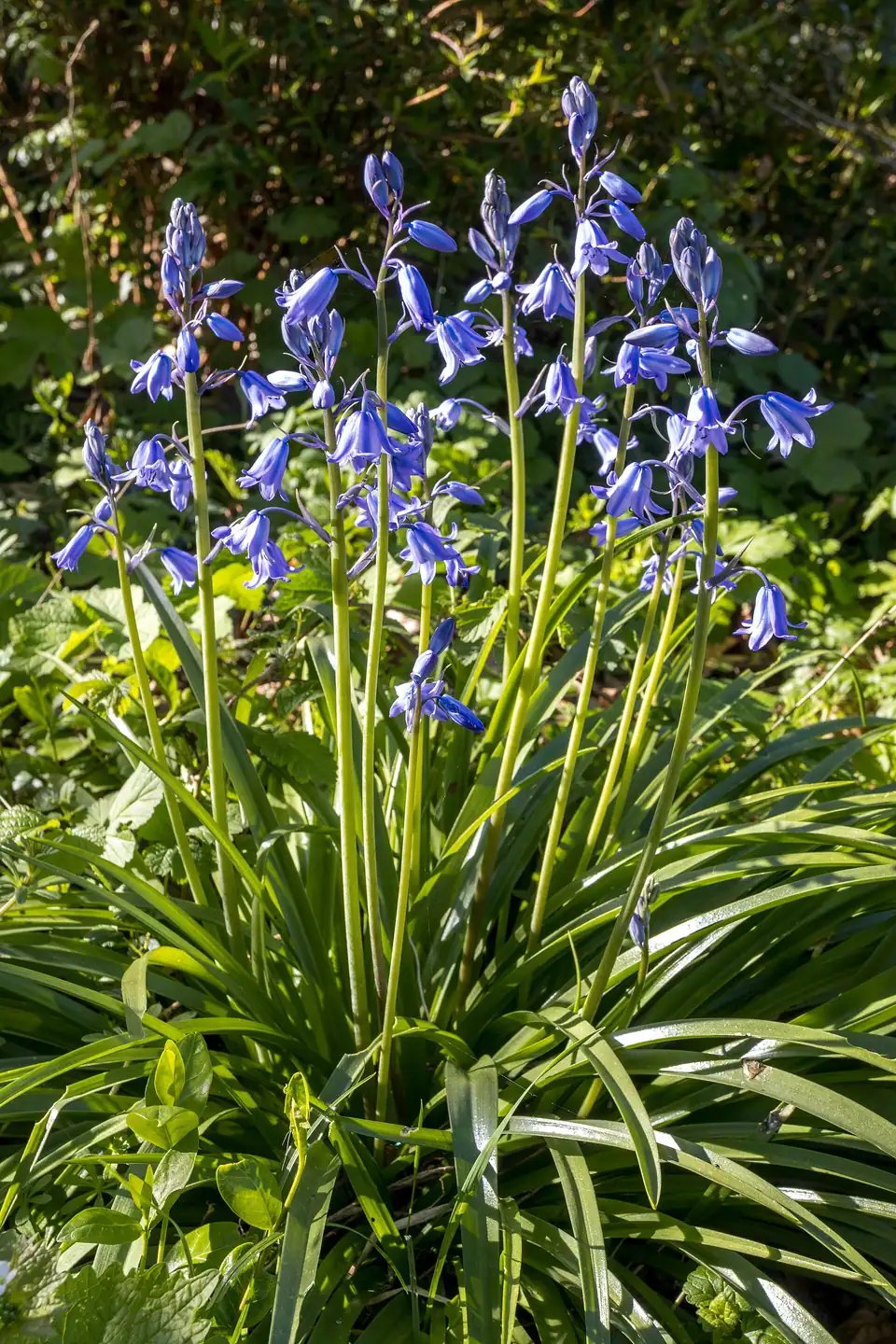
Hyacinthoides non-scripta (English bluebell) is a bulbous perennial native to western Europe that flowers in mid- to late spring with fragrant, nodding violet-blue bells on one side of the stem. [1][5] It suits woodland gardens and shady spots under deciduous trees, and it spreads readily to form dense clumps. [3] Wild plants are legally protected in the UK, and it can hybridise with the Spanish bluebell, so cultivated, non-wild-collected bulbs should be used. [3]
This record is incomplete: the sources we read do not cover every field yet.
Not yet covered by our sources: Pruning
Common Bluebell care
Measurements in square brackets are our conversion into the other unit system; the quoted text is unchanged.
How to water Common Bluebell
Watering
Water when the soil is dry to a depth of two inches [5.1 cm]; keep soil moist but not wet
What the sources say (1)
They tolerate a pH range of 5.5 to 7.5 but do best in slightly acidic soils.
Water when the soil is dry to a depth of two inches.Watering notes
Water well after planting; moist but well-drained soil; containers dry out faster and may need more frequent watering
What the sources say (2)
Choose partial shade and moist but well-drained soil. Enrich soil with leaf mould, manure or garden compost.
- Water well after planting.Containers tend to dry out more quickly than garden soil, so you may need to water more frequently.How much light Common Bluebell needs
Partial or dappled shade; tolerates full sun
What the sources say (3)
H. non-scripta prefers dappled shade, but will grow in full sun as well.Grow Hyacinthoides non-scripta in moist but well-drained soil in sun to partial shade.bluebells thrive in partial shade, under deciduous trees or shrubs and need moist but well-drained soil.How much cold Common Bluebell can take
Hardiness, coldest zone
The sources give different values depending on region, zone or growing conditions.
What each source says
According to Kwantlen Polytechnic University: 4 [winter low −34.4 to −28.9 °C (−30 to −20 °F)]
According to Gardener's Path: 5 [winter low −28.9 to −23.3 °C (−20 to −10 °F)]
What the sources say (2)
According to Kwantlen Polytechnic University: | Hardiness Zone:
| Zone 4: (-34 to -29 °C)
| Plant Type:
| Herbaceous perennialAccording to Gardener's Path: These classic spring bloomers are suitable for cultivation in USDA Hardiness Zones 5 to 8, and will transform any shady gardenHardiness, warmest zone
8 [winter low −12.2 to −6.7 °C (10 to 20 °F)]
What the sources say (1)
These classic spring bloomers are suitable for cultivation in USDA Hardiness Zones 5 to 8, and will transform any shady gardenBest soil for Common Bluebell
Soil pH, minimum
5.5
What the sources say (1)
They tolerate a pH range of 5.5 to 7.5 but do best in slightly acidic soils.Soil pH, maximum
7.5
What the sources say (1)
They tolerate a pH range of 5.5 to 7.5 but do best in slightly acidic soils.Where to grow Common Bluebell
In containers
Yes
What the sources say (1)
Why not try growing them in containers? As long as the pots have drainage holes and the medium is high in organic matterSpacing
The sources give different values depending on region, zone or growing conditions.
What each source says
According to Woodland Trust (dry bulbs): 10 cm [3.9 in]
According to Gardener's Path (bulb offsets and bulbs): 10.2-15.2 cm (4-6 in)
What the sources say (3)
According to Woodland Trust (dry bulbs): Plant dry bulbs at least 10cm deep and space 10cm apart; ensure the pointed growing tip is facing upwards.According to Gardener's Path (bulb offsets and bulbs): Make sure you plant the offsets root side down, three to four inches deep, and spaced four to six inches apart.Plant dry bulbs at least 10cm deep and space 10cm apart; ensure the pointed growing tip is facing upwards.How to propagate Common Bluebell
Seed, bulb offsets, division of clumps 'in the green' after flowering
What the sources say (2)
English bluebell can be propagated by seed or bulb offsets.Grow Hyacinthoides non-scripta in moist but well-drained soil in sun to partial shade. Divide and transplant clumps 'in the green' after flowering.How to grow Common Bluebell
The plant
Life cycle
perennial (bulbous)
What the sources say (1)
Bluebells are bulbous perennials, flowering in mid- to late-springFamily
Asparagaceae
What the sources say (1)
Checklist: 1023880
- Asparagaceae
- Hyacinthoides
- Hyacinthoides non-scripta (L.) Rothm.Roots
Root system
Bulbous perennial; most bulbs lie in the top 20 cm [7.9 in] of soil; spreads by seed and bulb offsets
What the sources say (3)
Bluebells are bulbous perennials, flowering in mid- to late-springMost bulbs will be in the top 20cm (8in) of soil but it is worth checking a bit deeper.However, bluebells spread readily by seed and bulb offsetsCommon Bluebell pests and problems
Slugs and snails
Symptom: Damage during wet springs
What to do: Protect plants from slugs and snails
What the sources say (1)
Slugs and snails can become an issue during wet springs.
— How to Plant and Grow English Bluebells | Gardener’s Path [5] Bluebell rust (Uromyces muscari)
Symptom: Small yellowed areas on the leaves with dark specks forming a circle or oval in the middle
What to do: Does not seriously affect plant health
What the sources say (1)
If you notice small yellowed areas on the leaves, with dark colored specks forming a circle or oval in the middle, that’s rust.
— How to Plant and Grow English Bluebells | Gardener’s Path [5] Hybridisation with Spanish bluebell
Symptom: Hybrid plants threatening native populations near woodland
What to do: Do not plant non-native bluebells near woodland; remove spent flowers if Spanish bluebells are nearby
What the sources say (2)
Don’t buy or plant non-native bluebells, particularly if you live near a local woodland to prevent hybridisation.
— How to Grow Native Bluebells in Your Garden - Woodland Trust [3] Remove spent flowers to avoid self seeding of hybrids if Spanish bluebells are situated nearby.
— How to Plant and Grow English Bluebells | Gardener’s Path [5] Spread
Symptom: Dense clumps that can smother smaller plants
What to do: Deadhead to prevent self-seeding; dig out unwanted bulbs; weedkillers are not effective
What the sources say (2)
Picking and deadheading some of the flowers from your garden will prevent self-seeding and help control their spread.
— Bluebells in Gardens | RHS Advice [1] No – bluebells are strongly resistant to weedkillers and it appears that no garden weedkiller is effective at controlling them.
— Bluebells in Gardens | RHS Advice [1]
Remedies
Each remedy shows what official sources say about it; traditional remedies without an official source are marked as such. Harmful ones are listed so you know to avoid them.
First aid
First aid: not a substitute for a doctor
ingestion
removing plant pieces from the mouth Official source, not independently tested
Give them a few sips of water or milk. - Call the poison center at 1-800-222-1222.
— nnepc.org [8] How: Take all pieces of the plant out of the person’s mouth and give a few sips of water or milk.
What should I do if someone has swallowed part of a harmful plant? - Take all pieces of the plant out of the person’s mouth.
— nnepc.org [8]
skin contact with sap
washing the skin with soap and water Official source, not independently tested
Wash the person’s skin gently with soap and water. - Call the poison center at 1-800-222-1222.
— nnepc.org [8] How: Wash the person’s skin gently with soap and water.
What should I do if someone has touched a plant that may be harmful? - Wash the person’s skin gently with soap and water.
— nnepc.org [8]
Getting rid of it
unwanted spread
digging out whole clumps Official source, not independently tested
All parts of the plant are toxic and the sap can cause skin irritation, so it is advisable to wear gloves when handling bluebells.
— Bluebells in Gardens | RHS Advice [1] How: Use a spade or garden fork to dig up clumps and remove all the bulbs and underground parts, looking closely for small offset bulbs; most bulbs are in the top 20 cm (8 in) of soil. Among other plants, mark where the bluebells grow and remove the bulbs in autumn or winter when dormant.
Dig out whole clumps – use a spade or garden fork to dig up clumps and remove all the bulbs
— Bluebells in Gardens | RHS Advice [1] forking out individual plants Official source, not independently tested
All parts of the plant are toxic and the sap can cause skin irritation, so it is advisable to wear gloves when handling bluebells.
— Bluebells in Gardens | RHS Advice [1] How: Insert a hand fork to its full depth close to the shoot, work the handle to loosen the bulb, then grasp the shoot and gently ease it out of the soil.
Work the handle of the fork to loosen the bulb then, grasping the shoot, gently ease it out of the soil.
— Bluebells in Gardens | RHS Advice [1] turfing and regular mowing Official source, not independently tested
How: Regularly mow lawns containing bluebells in spring and summer to weaken the bulbs and prevent flowering and self-seeding; laying turf over an area with many bulbs and mowing regularly for several years minimises soil disturbance.
regularly mow lawns containing bluebells in spring and summer to weaken bulbs, prevent flowering and self-seeding, and eventually eradicate them.
— Bluebells in Gardens | RHS Advice [1] disposing of bulbs in green waste Official source, not independently tested
How: Put dug-up bulbs in the green waste collection bin or take them to the local garden waste site, not in the home compost bin, where they can take many years to rot down and be spread with the compost.
Dispose of bluebell bulbs by adding them to your green waste collection bin or taking them to your local garden waste site.
— Bluebells in Gardens | RHS Advice [1]
self-seeding
picking and deadheading flowers Official source, not independently tested
How: Pick bluebells for indoor display and deadhead spent flowers to prevent self-seeding; plants grown in a container and deadheaded do not spread by seed.
Picking and deadheading some of the flowers from your garden will prevent self-seeding and help control their spread.
— Bluebells in Gardens | RHS Advice [1]
Is Common Bluebell toxic to pets?
Reported by the source, quoted verbatim. This is not medical or veterinary advice: if a person or an animal may have eaten this plant, contact a poison control centre or a veterinarian.
Animals
Hyacinthoides ‘Non-scripta’ causes an upset stomach and is harmful if ingested. Toxic to: Is known to attract Cats
[4]- Symptoms
Hyacinthoides ‘Non-scripta’ causes an upset stomach and is harmful if ingested. Toxic to: Is known to attract Cats
[4]
Hyacinthoides ‘Non-scripta’ causes an upset stomach and is harmful if ingested. Toxic to: Is known to attract Cats Cats Is known to attract Dogs
[4]- Symptoms
Hyacinthoides ‘Non-scripta’ causes an upset stomach and is harmful if ingested. Toxic to: Is known to attract Cats Cats Is known to attract Dogs
[4]
People
Every part of the plant is poisonous, thanks to the presence of cardiac glycosides, and they are toxic to humans and animals.
[5]
Calendar
Summer, as soon as the seed is collected (June)
What the sources say (2)
Sow the seeds as soon as you collect them in the summer. Broadcast over rich loam that’s high in organic matter| | Jan | Feb | Mar | Apr | May | Jun | Jul | Aug | Sep | Oct | Nov | Dec
| Sow | | | | | | yes |The sources give different values depending on region, zone or growing conditions.
What each source says
According to Woodland Trust: Dry bulbs in autumn; 'in the green' bulbs in spring
According to BBC Gardeners' World: June, September, October
bulb offsets (fonte: Gardener's Path): Mid to late summer, as soon as the leaves have died
What the sources say (5)
According to Woodland Trust: Ensure bulbs are sourced and grown in the UK to reduce the risk of pests and diseases.
- Plant dry bulbs in autumn and ‘in the green’ bulbs in spring.According to BBC Gardeners' World: | Sow | | | | | | yes | | | | | |
| Plant | | | | | | yes | | | yes | yes | |bulb offsets (fonte: Gardener's Path): Remove bulb offsets in mid to late summer, as soon as the leaves have died. Carefully dig up the bulb and remove the offsets with your hands.Ensure bulbs are sourced and grown in the UK to reduce the risk of pests and diseases.
- Plant dry bulbs in autumn and ‘in the green’ bulbs in spring.Plant purchased bulbs and potted plants in the garden in the fall.Not stated in the sources we read.
Months as given by the sources, which are mostly from the United States (northern hemisphere). In the southern hemisphere they shift by about six months.
Similar plants
- Spanish Bluebell Hyacinthoides hispanica
- Adam's Needle Yucca flaccida
- American Agave Agave virginica
- Asparagus Asparagus officinalis
- Asparagus Fern Asparagus setaceus
- Beaked Yucca Yucca rostrata
- Beschorneria Beschorneria yuccoides
- Brodiaea Triteleia laxa
Sources
Every value above is quoted from these documents. Links lead to the original publisher.
- Bluebells in Gardens | RHS Advice · rhs.org.uk, consulted
- Hyacinthoides non-scripta (L.) Rothm. · infoflora.ch, consulted
- How to Grow Native Bluebells in Your Garden - Woodland Trust · woodlandtrust.org.uk, consulted
- Hyacinthoides non-scripta (English Bluebell) | BBC Gardeners World Magazine · gardenersworld.com, consulted
- How to Plant and Grow English Bluebells | Gardener’s Path · gardenerspath.com, consulted
- Hyacinthoides non-scripta - Kwantlen Polytechnic University, School of Horticulture - Plant Database · plantdatabase.kpu.ca, consulted
- Bluebell - Plantlife · plantlife.org.uk, consulted
- nnepc.org · nnepc.org
Written by Emilio Marruso · last checked