
How to Grow and Care for Limbarda crithmoides
Limbarda crithmoides
Written by Emilio Marruso · last checked
Toxic to: People · Why
At a glance
Golden samphire is gathered from the wild as a food, and you can grow your own. Its young leaves are eaten raw or cooked, and sometimes cooked like greens. Sow the seeds in spring or autumn in a cold frame, plant out in summer, and water often, adding a little salt now and then. It is a fun, tasty plant to try.
- Water
Water often, and add a little salt to the water now and then
What the sources say (1)
Watering: Water frequently, with some salt given occasionally
The plant needs to be watered frequently and given some salt occasionally
— Inula crithmoides - Useful Temperate Plants [5] - Planting
Plant out in summer
What the sources say (1)
Planting: Summer
When they are large enough to handle, prick the seedlings out into individual pots and plant them out in the summer.
— Inula crithmoides - Useful Temperate Plants [5] - Harvest
Pick the young leaves to eat raw or cooked
- Propagation
Grows from seed, sown in a cold frame or right where it will grow
What the sources say (2)
Propagation: Seed (sown in a cold frame, or in situ); in vitro micropropagation from nodal explants
Seed - sow spring or autumn in a cold frame. When they are large enough to handle, prick the seedlings out into individual pots and plant them out in the summer.
— Inula crithmoides - Useful Temperate Plants [5] a complete regeneration protocol was developed by improving shoot multiplication from nodal explants, rooting, and acclimatization methodologies
— A First Approach for the Micropropagation of the Edible and Medicinal Halophyte Inula crithmoides L. [8] - Sowing
Sow in spring or autumn in a cold frame
What the sources say (1)
Sowing: Spring or autumn (in a cold frame)
Seed - sow spring or autumn in a cold frame.
— Inula crithmoides - Useful Temperate Plants [5] - Safety
No known hazards to people; it is eaten as food
Overview
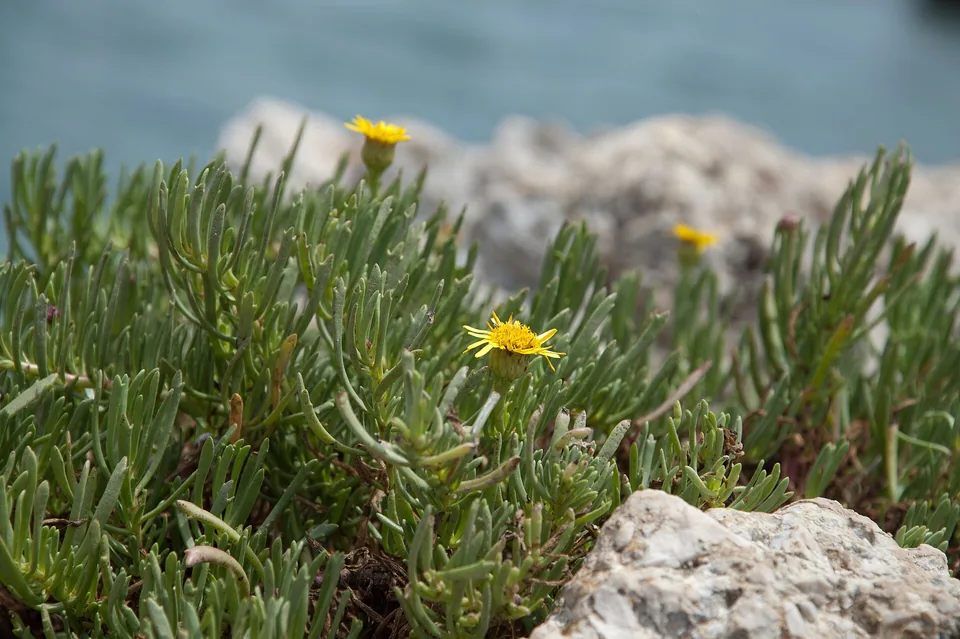
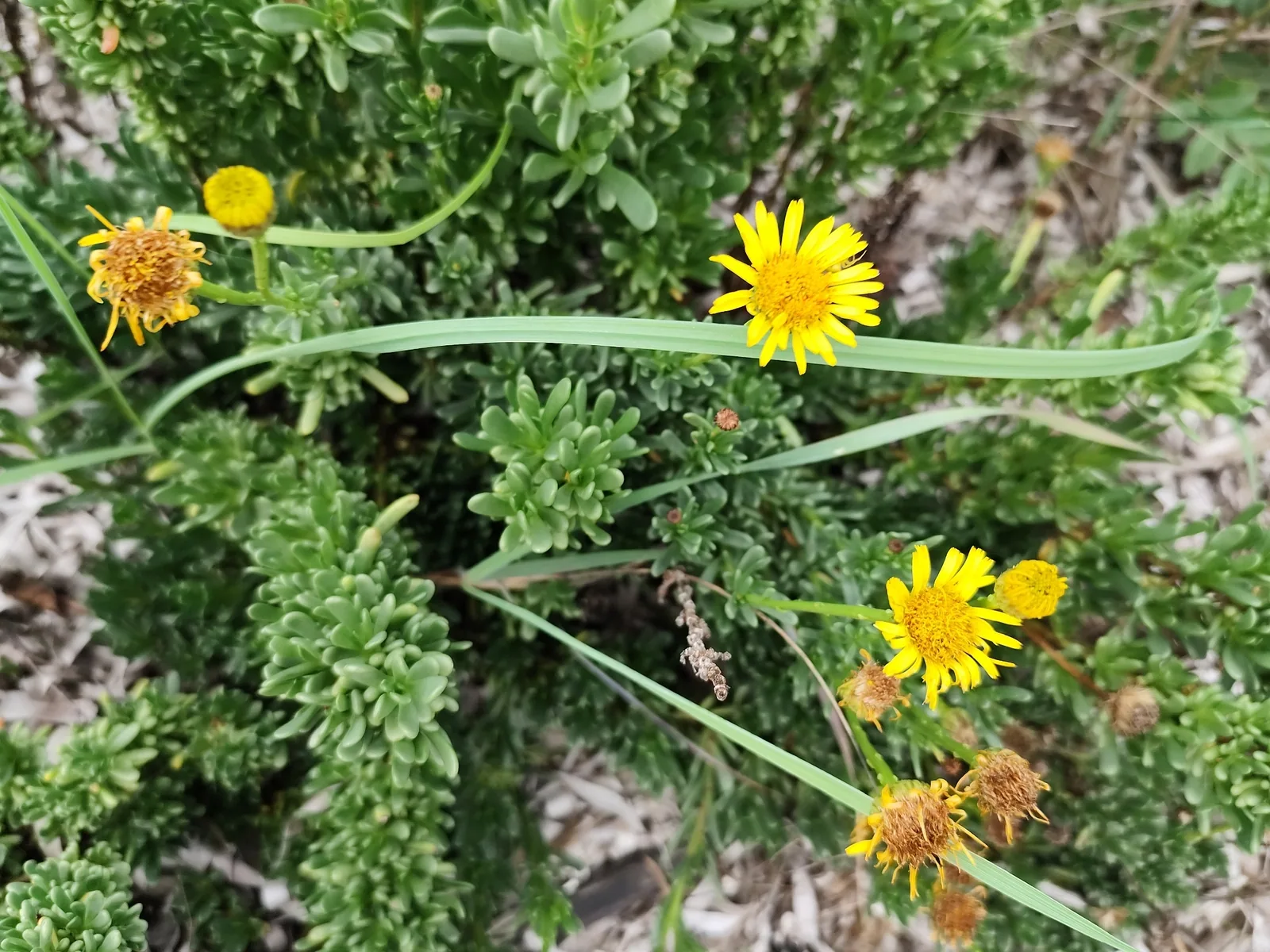
Golden samphire is a small halophytic shrub of Mediterranean and Atlantic coasts with potential ornamental value. [3] It succeeds in ordinary garden soil in a sunny position and needs frequent watering with occasional salt. [5] It is propagated from seed sown in spring or autumn and by in vitro micropropagation. [5][8]
This record is incomplete: the sources we read do not cover every field yet.
Not yet covered by our sources: Light, Hardiness, coldest zone, Hardiness, warmest zone, Pruning
Limbarda crithmoides care
How to water Limbarda crithmoides
Water frequently, with some salt given occasionally
What the sources say (1)
The plant needs to be watered frequently and given some salt occasionallyHow much light Limbarda crithmoides needs
Not stated in the sources we read.
How much cold Limbarda crithmoides can take
Hardiness, coldest zone
Not stated in the sources we read.
Hardiness, warmest zone
Not stated in the sources we read.
How to propagate Limbarda crithmoides
Seed (sown in a cold frame, or in situ); in vitro micropropagation from nodal explants
What the sources say (2)
Seed - sow spring or autumn in a cold frame. When they are large enough to handle, prick the seedlings out into individual pots and plant them out in the summer.a complete regeneration protocol was developed by improving shoot multiplication from nodal explants, rooting, and acclimatization methodologiesHow to grow Limbarda crithmoides
The plant
Family
Asteraceae
What the sources say (1)
Family:
COMPOSITAE (ASTERACEAE)
Genus:
Limbarda
Sinònims:
Inula crithmoides L. subsp. longifolia Arcang.Remedies
The sources we checked give no remedies for this plant.
Is Limbarda crithmoides poisonous?
Reported by the source, quoted verbatim. This is not medical or veterinary advice: if a person or an animal may have eaten this plant, contact a poison control centre or a veterinarian.
It is harvested from the wild for local use as a food. ## Known Hazards None known
[5]
Calendar
Sowing
Spring or autumn (in a cold frame)
What the sources say (1)
Seed - sow spring or autumn in a cold frame.Planting
Summer
What the sources say (1)
When they are large enough to handle, prick the seedlings out into individual pots and plant them out in the summer.Pruning
Not stated in the sources we read.
Months as given by the sources, which are mostly from the United States (northern hemisphere). In the southern hemisphere they shift by about six months.
Edibility
Reported by the source, quoted verbatim. Do not eat a plant on the basis of this page alone: identification mistakes can be dangerous.
Young leaves are eaten raw or cooked [61, 105, 177] . They are occasionally used as a potherb [183] .
[4]
Similar plants
- African Daisy Dimorphotheca pluvialis
- African Marigold Tagetes erecta
- Ageratum Ageratum houstonianum
- Alpine aster Aster alpinus
- Appalachian Blazing Star Liatris squarrulosa
- Appalachian Ironweed Vernonia glauca
- Appalachian Sunflower Helianthus atrorubens
- Aromatic Aster Symphyotrichum oblongifolium
Sources
Every value above is quoted from these documents. Links lead to the original publisher.
- Limbarda crithmoides (L.) Dumort. subsp. longifolia (Arcang.) Greuter - Herbari Virtual del Mediterrani Occidental · herbarivirtual.uib.cat, consulted
- In vitro propagation of Limbarda crithmoides (L.) Dumort. and the effect of NaCl - ishs · ishs.org, consulted
- Micropropagation of Limbarda crithmoides (L.) Dumort. and the effect of sodium chloride - ishs · ishs.org, consulted
- Online Flora of the Maltese Islands - Plant Family Index · maltawildplants.com, consulted
- Inula crithmoides - Useful Temperate Plants · temperate.theferns.info, consulted
- · cretanflora.com, consulted
- British Wild Plant: Inula crithmoides Golden Samphire · ukwildflowers.com, consulted
- A First Approach for the Micropropagation of the Edible and Medicinal Halophyte Inula crithmoides L. · mdpi.com, consulted
Written by Emilio Marruso · last checked