
How to Grow and Care for Common Bird's-foot-trefoil
Lotus corniculatus
Written by Emilio Marruso · last checked
Toxic to: Livestock, People · Why
At a glance
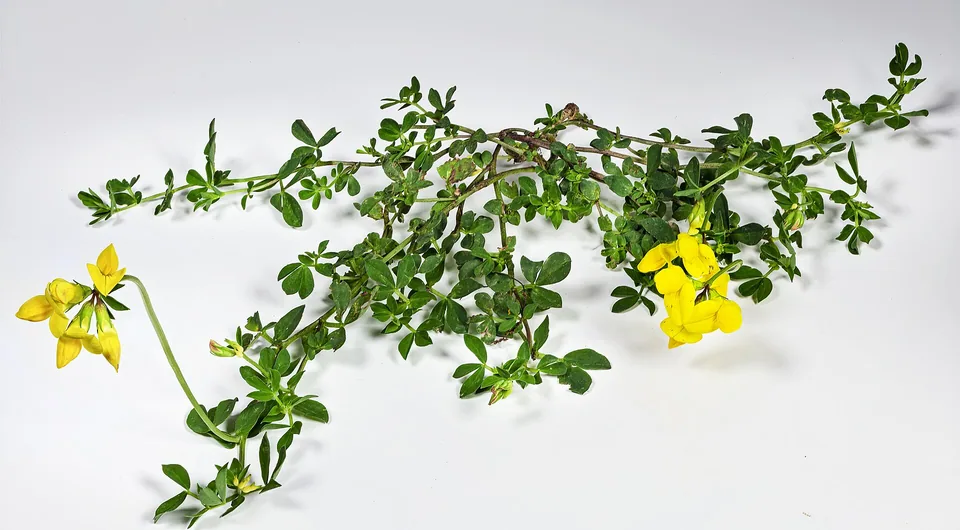
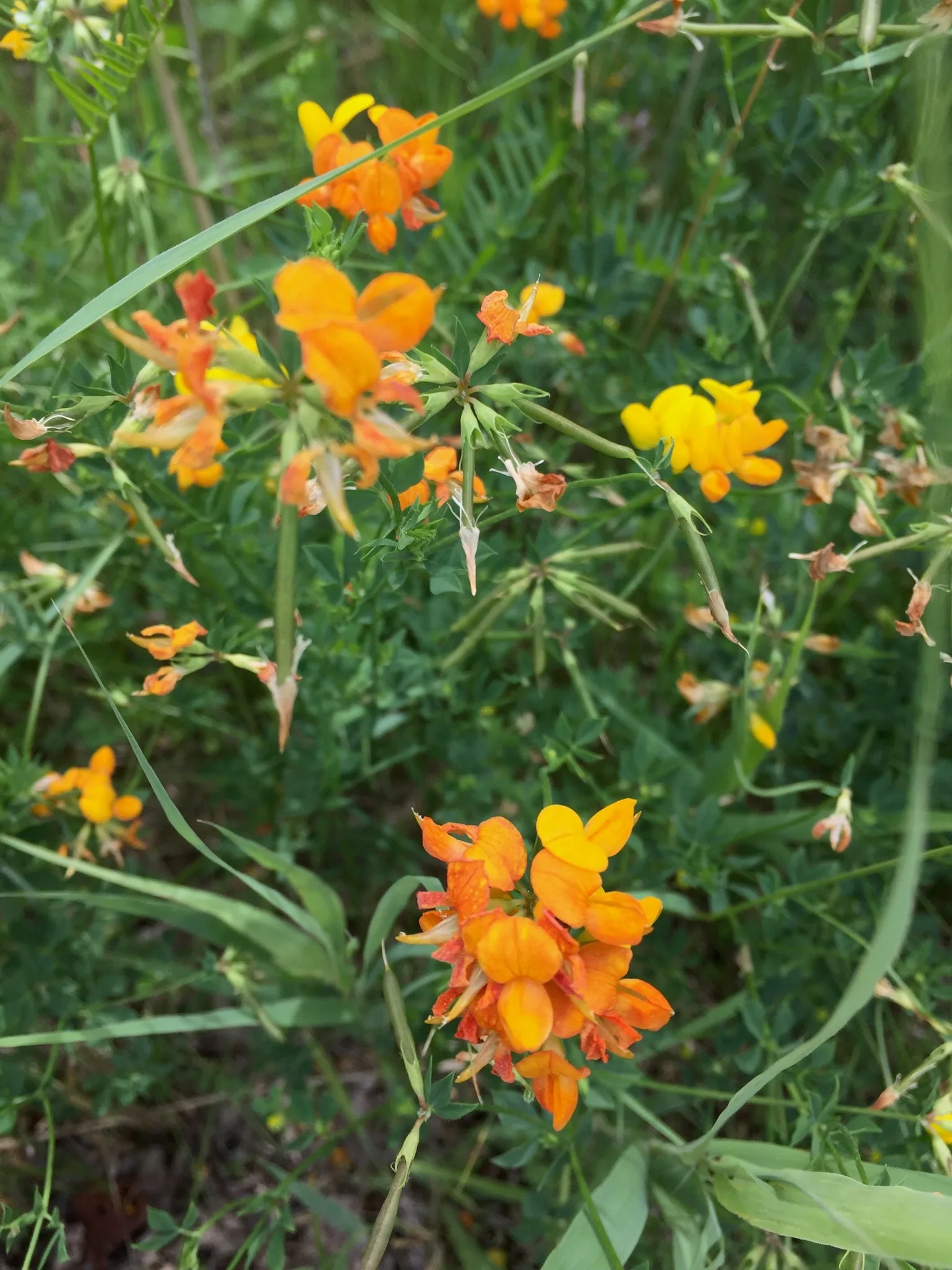
Bird's-foot trefoil is a tough perennial that loves a sunny spot and shrugs off drought. It grows in soils from quite acidic to alkaline, pH 4.5 to 8.2, and reaches 12–24 inches tall. Sow the seeds no deeper than ¼ inch, and under the best conditions they can sprout in just 1–2 days.
- Sun
Full sun; it dislikes shade
- Water
Drought tolerant, but it won't survive standing water in summer
What the sources say (4)
Watering: Drought tolerant
Birdsfoot trefoil is also drought and salt tolerant.
— Control of Birdsfoot Trefoil in the Lawn | Yard and Garden [8] Drought tolerant. Planting should occur between from August
— Birdsfoot Trefoil (Lotus corniculatus) | Mississippi State University Extension Service [5] Watering notes: Tolerates poorly drained soils but does not survive where standing water persists in summer; grows best with 20 inches [51 cm] or more of precipitation
Trefoil tolerates poorly drained soils but will not survive in areas where standing water persists in summer
— North Central Regional [2] Bird’s-foot trefoil grows best in areas that receive 20 inches or more of precipitation.
— BIRD’S-FOOT TREFOIL [3] - Soil
Acidic to alkaline soil, pH 4.5–8.2
- Feeding
Lime, phosphorus and potassium before sowing; no nitrogen once the plants are established
What the sources say (5)
When: Lime 6 to 12 months before seeding (two years before when no-till seeding into sod); phosphorus and potassium fertilizer before seeding, worked in with tillage; established stands according to soil tests
When lime is needed, apply 6 to 12 months before seeding and work it into the soil. If no-till seed-ing trefoil into sod, apply lime two years before seeding.
— North Central Regional [2] Where soil nutrient levels are low, especially for phosphorus, apply fertilizer before seeding and incor-porate the fertilizer with tillage.
— North Central Regional [2] Soil testing is the best guide for determining fertilizer requirements of established stands of trefoil.
— Birdsfoot Trefoil [6] Avoid: Nitrogen fertilizer on established stands: it reduces nitrogen fixation and makes grasses and weeds more competitive; no nitrogen is needed when trefoil is over 30% of a mixed stand
Nitrogen fertilization of a trefoil stand with fertilizer N or manure will reduce the N fixing ability of trefoil and increase the competitiveness of grass or weeds that also may be in the stand.
— Birdsfoot Trefoil [6] When the trefoil makes up more than 30 percent of a mixed trefoil and grass stand, no nitrogen (N) fertilizer should be needed.
— Birdsfoot Trefoil [6] - Harvest
For hay, cut at early bloom and again in mid to late August
What the sources say (2)
Harvest: First hay cutting at early bloom, second in mid to late August
the first cutting should be taken at early bloom and a second cutting in mid to late August
— Birdsfoot Trefoil (Lotus corniculatus) | Mississippi State University Extension Service [5] How to harvest: For hay, take the first cutting at early bloom and a second cutting in mid to late August
When harvesting trefoil for hay, the first cutting should be taken at early bloom and a second cutting in mid to late August.
— Birdsfoot Trefoil (Lotus corniculatus) | Mississippi State University Extension Service [5] - Pests
Spittlebugs and leafhoppers; crown and root rots and wilt
What the sources say (4)
Pests: spittlebugs, leafhoppers, trefoil seed chalcid
Control pests, especially spittlebugs and leafhoppers. To protect the life of the stand, bird’s-foot trefoil requires careful management.
— BIRD’S-FOOT TREFOIL [3] The trefoil seed chalcid, Bruchophagus kolobovae Fed., is a small, black, wasp-like insect that can be destructive in seed fields
— BIRD’S-FOOT TREFOIL [3] Diseases: crown and root rots, Fusarium wilt
Crown and root rots are the most significant diseases of bird’s-foot trefoil, particularly in wet conditions
— BIRD’S-FOOT TREFOIL [3] Fusarium wilt has caused significant decline of bird’s-foot trefoil, but there have been efforts to breed higher resistance to this disease
— BIRD’S-FOOT TREFOIL [3] - Watch out
Seedlings are weak and weeds easily outgrow them; it can also linger in lawns
- Size
12–24 inches tall
What the sources say (1)
Mature height: 30-61 cm (12-24 inches)
Birdsfoot trefoil ( Lotus corniculatus ) is a perennial herbaceous forb, 12–24 inches tall.
— Birdsfoot trefoil [1] - Propagation
Grows from seed
- Sowing
Sow no deeper than ¼ inch; seeds can sprout in 1–2 days
What the sources say (3)
Sowing depth: no deeper than 0.6 (¼ inch)
Seed placement should be no deeper than ¼ inch into a clean and firm seedbed.
— BIRD’S-FOOT TREFOIL [3] Planting should occur between from August 20 to September 15 using a cultipacker seeder at a rate 6 to 8 lbs/ac and a 1/4-inch depth.
— Birdsfoot Trefoil (Lotus corniculatus) | Mississippi State University Extension Service [5] Days to germination: 1-2 (24-48 hours under optimal conditions; significant amount of hard seed)
Germination occurs within 24-48 hours under optimal conditions, though there is a significant amount of hard seed
— BIRD’S-FOOT TREFOIL [3] - Safety
All parts are poisonous to people: don't eat it
Overview
Birdsfoot trefoil is a perennial forage legume that can become invasive in natural areas and is an occasional lawn weed. [1][3][8] It tolerates poorly drained soils but does not survive where standing water persists in summer, and it is drought tolerant. [2][8] One reference states that all parts of the plant are poisonous because of cyanogenic glycosides, while grazed trefoil does not cause bloat in animals. [4][6]
This record is incomplete: the sources we read do not cover every field yet.
Not yet covered by our sources: Hardiness, coldest zone, Hardiness, warmest zone
Common Bird's-foot-trefoil care
Measurements in square brackets are our conversion into the other unit system; the quoted text is unchanged.
How to water Common Bird's-foot-trefoil
Watering
Drought tolerant
Watering notes
Tolerates poorly drained soils but does not survive where standing water persists in summer; grows best with 20 inches [51 cm] or more of precipitation
How much light Common Bird's-foot-trefoil needs
How much cold Common Bird's-foot-trefoil can take
Hardiness, coldest zone
Not stated in the sources we read.
Hardiness, warmest zone
Not stated in the sources we read.
Best soil for Common Bird's-foot-trefoil
Soil pH, minimum
4.5
What the sources say (1)
Prefers a pH in the range 6 - 7, tolerating 4.5 - 8.2Soil pH, maximum
8.2
What the sources say (1)
Prefers a pH in the range 6 - 7, tolerating 4.5 - 8.2How to propagate Common Bird's-foot-trefoil
How to grow Common Bird's-foot-trefoil
The plant
Life cycle
perennial
What the sources say (1)
Birdsfoot trefoil ( Lotus corniculatus ) is a perennial herbaceous forb, 12–24 inches tall.Mature height
30-61 cm (12-24 inches)
What the sources say (1)
Birdsfoot trefoil ( Lotus corniculatus ) is a perennial herbaceous forb, 12–24 inches tall.Sowing and growth
Days to germination
1-2 (24-48 hours under optimal conditions; significant amount of hard seed)
What the sources say (1)
Germination occurs within 24-48 hours under optimal conditions, though there is a significant amount of hard seedSowing depth
no deeper than 0.6 (¼ inch)
What the sources say (2)
Seed placement should be no deeper than ¼ inch into a clean and firm seedbed.Planting should occur between from August 20 to September 15 using a cultipacker seeder at a rate 6 to 8 lbs/ac and a 1/4-inch depth.Harvest and storage
How to harvest
For hay, take the first cutting at early bloom and a second cutting in mid to late August
What the sources say (1)
When harvesting trefoil for hay, the first cutting should be taken at early bloom and a second cutting in mid to late August.Saving seeds
To avoid seed loss from shattering, cut the crop just before maturity in the morning while the plants are still moist with dew, then dry the plants before threshing
What the sources say (1)
To avoid seed loss from shattering, researchers suggest cutting the crop just before maturity in the morning while the plants are still moist with dew and then drying the plants before threshing them laterPests and diseases
Pests
spittlebugs, leafhoppers, trefoil seed chalcid
What the sources say (2)
Control pests, especially spittlebugs and leafhoppers. To protect the life of the stand, bird’s-foot trefoil requires careful management.The trefoil seed chalcid, Bruchophagus kolobovae Fed., is a small, black, wasp-like insect that can be destructive in seed fieldsDiseases
crown and root rots, Fusarium wilt
What the sources say (2)
Crown and root rots are the most significant diseases of bird’s-foot trefoil, particularly in wet conditionsFusarium wilt has caused significant decline of bird’s-foot trefoil, but there have been efforts to breed higher resistance to this diseaseFertilizing
When
Lime 6 to 12 months before seeding (two years before when no-till seeding into sod); phosphorus and potassium fertilizer before seeding, worked in with tillage; established stands according to soil tests
What the sources say (3)
When lime is needed, apply 6 to 12 months before seeding and work it into the soil. If no-till seed-ing trefoil into sod, apply lime two years before seeding.Where soil nutrient levels are low, especially for phosphorus, apply fertilizer before seeding and incor-porate the fertilizer with tillage.Soil testing is the best guide for determining fertilizer requirements of established stands of trefoil.How often
Once a year (broadcast phosphate and/or potash) where soil tests show phosphorus below 15 ppm and potassium below 90 ppm
What the sources say (2)
Research shows that soil test phos-phorus of about 15 ppm (parts per million) and potassium of about 90 ppm appear adequate for aver-age yield levels (2 to 3 t/a dry mat-ter).These levels are lower than recommended for alfalfa but are similar to those for red clover. Where soil tests are below these levels annual broadcast applica-tion with phosphate and/or potash is recommended.Natural fertilizers
The sources disagree:
Manure can be used to fertilize trefoil and will reduce the need for adding commercial fertilizer.
[2]Nitrogen fertilization of a trefoil stand with fertilizer N or manure will reduce the N fixing ability of trefoil and increase the competitiveness of grass or weeds that also may be in the stand.
[6]
Mineral fertilizers
Based on a soil test; without one, on a medium-fertility soil: N-P₂O₅-K₂O at 0, 50.4 and 151 kg [111.1–332.9 lb]/ha plowed down, plus 22.4, 67.3 and 22.4 kg [148.4–49.4 lb]/ha in the row at seeding, banded if possible; on phosphorus-poor soils band it 3.8-5.1 cm [1.5–2 in] directly below the seed
What each source says
soils with less than 2% organic matter, at planting: 33.6 kg [74 lb]/ha nitrogen
What the sources say (4)
soils with less than 2% organic matter, at planting: Research on trefoil fertility has not shown responses to broadcast or banded fertilizers at planting except for a small amount of nitro-gen (about 30 lb/a) on soils with less than 2% organic matter.In the absence of a soil test, assuming a medium-fertility soil, plow down 0-45-135 lb per acre and apply 20-60-20 lb per acre in the row at seeding (banded if possible).In the absence of a soil test, assuming a medium-fertility soil level, plow down 0-45-135 lb/ac and apply 20-60-20 lb/ac in the row at seeding (banded if possible).Use soil tests for appropriate fertilizer and lime recommendations. In soils low in phosphorous, place in bands 1½ - 2” directly below the seed for best utilization.Micronutrients
High boron requirement; molybdenum, essential for nitrogen fixation, can become deficient when the crop is established on soils below pH 5.6
What the sources say (2)
It also has a high requirement for boron, often showing deficiency symp-toms when alfalfa does not.Trefoil establishment in soils with a pH less than 5.6 may result in molybdenum (Mo) deficiencies. Molybdenum is an essential nutrient for nitrogen fixation.Avoid
Nitrogen fertilizer on established stands: it reduces nitrogen fixation and makes grasses and weeds more competitive; no nitrogen is needed when trefoil is over 30% of a mixed stand
What the sources say (2)
Nitrogen fertilization of a trefoil stand with fertilizer N or manure will reduce the N fixing ability of trefoil and increase the competitiveness of grass or weeds that also may be in the stand.When the trefoil makes up more than 30 percent of a mixed trefoil and grass stand, no nitrogen (N) fertilizer should be needed.Common Bird's-foot-trefoil pests and problems
Poor seedling vigor
Symptom: Weeds grow faster and are more competitive than trefoil.
What to do: Careful management at seeding; chemical weed control is generally necessary for pure seedings.
What the sources say (1)
For pure seedings of trefoil, chemical weed control is generally necessary because most weeds grow faster and are more competitive than trefoil.
— Birdsfoot Trefoil [6] Lawn weed
Symptom: Birdsfoot trefoil persists in lawns under mowing.
What to do: Broadleaf herbicides control it in lawns.
What the sources say (1)
Birdsfoot trefoil in lawns can be controlled with broadleaf herbicides.
— Control of Birdsfoot Trefoil in the Lawn | Yard and Garden [8]
Remedies
Each remedy shows what official sources say about it; traditional remedies without an official source are marked as such. Harmful ones are listed so you know to avoid them.
Getting rid of it
invasive spread in lawn and garden
hand removal Partly works
How: Remove all parts of the roots and shoots to prevent regrowth.
Hand removal is effective for removing small patches but may need to be repeated.
— extension.umn.edu [9] What the evidence says Hand removal is effective for removing small patches but may need to be repeated.
— extension.umn.edu [9] regular mowing Partly works
How: Regular mowing at a height of 3 inches or higher.
Regular mowing at a height of 3 inches or higher helps to manage birdsfoot trefoil.
— extension.umn.edu [9] What the evidence says Regular mowing at a height of 3 inches or higher helps to manage birdsfoot trefoil.
— extension.umn.edu [9]
invasive spread in lawn
nitrogen fertilization of the turf Partly works
How: Improve turf density through good establishment procedures, fertilization, and well-adapted turfgrasses.
Infestations of birdsfoot trefoil can be reduced by improving turf density through good establishment procedures, fertilization, and use of turfgrasses well-adapted to site conditions.
— extension.psu.edu [10] What the evidence says Infestations of birdsfoot trefoil can be reduced by improving turf density through good establishment procedures, fertilization, and use of turfgrasses well-adapted to site conditions.
— extension.psu.edu [10]
invasive spread in natural areas
Is Common Bird's-foot-trefoil toxic to pets?
Reported by the source, quoted verbatim. This is not medical or veterinary advice: if a person or an animal may have eaten this plant, contact a poison control centre or a veterinarian.
Animals
Unlike alfalfa, grazed trefoil does not cause animals to bloat.
[6]The source flags the risk for this animal but does not explain why.
People
All parts of the plant are poisonous, containing cyanogenic glycosides(hydrogen cyanide)
[4]
Calendar
The sources give different values depending on region, zone or growing conditions.
What each source says
According to USDA NRCS: Early spring
According to Penn State Extension: Early spring
Mississippi (Mississippi State University Extension): August 20 - September 15
According to University of Wisconsin Extension: When soil reaches 50°F (10°C) at a 4-inch [10 cm] depth
According to Useful Temperate Plants: Spring or autumn
What the sources say (6)
According to USDA NRCS: Seedings are more successful in early spring than in late summer or fallAccording to Penn State Extension: Early spring seedings are generally more successful than late summer seedings.Mississippi (Mississippi State University Extension): Planting should occur between from August 20 to September 15According to University of Wisconsin Extension: Plant when soil temperatures reach 50°F at a 4-inch depth.According to Useful Temperate Plants: sow in the spring or autumn in situSeedings are more successful in early spring than in late summer or fallFirst hay cutting at early bloom, second in mid to late August
What the sources say (1)
the first cutting should be taken at early bloom and a second cutting in mid to late AugustMonths as given by the sources, which are mostly from the United States (northern hemisphere). In the southern hemisphere they shift by about six months.
Edibility
Reported by the source, quoted verbatim. Do not eat a plant on the basis of this page alone: identification mistakes can be dangerous.
Similar plants
- Parrot's Beak Lotus berthelotii
- Winged Pea Lotus tetragonolobus
- Aaron's Beard Hypericum calycinum
- Abraham Trachystemon orientalis
- Acacia longifolia Acacia longifolia
- Aconite Aconitum napellus
- Adam's Needle Yucca flaccida
- Afghan Cherry Prunus jacquemontii
Sources
Every value above is quoted from these documents. Links lead to the original publisher.
- Birdsfoot trefoil · extension.umn.edu, consulted
- North Central Regional · cropsandsoils.extension.wisc.edu, consulted
- BIRD’S-FOOT TREFOIL · nrcs.usda.gov, consulted
- Lotus corniculatus - Useful Temperate Plants · temperate.theferns.info, consulted
- Birdsfoot Trefoil (Lotus corniculatus) | Mississippi State University Extension Service · extension.msstate.edu, consulted
- Birdsfoot Trefoil · extension.psu.edu, consulted
- Lotus corniculatus, Birdsfoot Trefoil: identification, distribution, habitat · first-nature.com, consulted
- Control of Birdsfoot Trefoil in the Lawn | Yard and Garden · hortnews.extension.iastate.edu, consulted
- extension.umn.edu · extension.umn.edu
- extension.psu.edu · extension.psu.edu
Written by Emilio Marruso · last checked