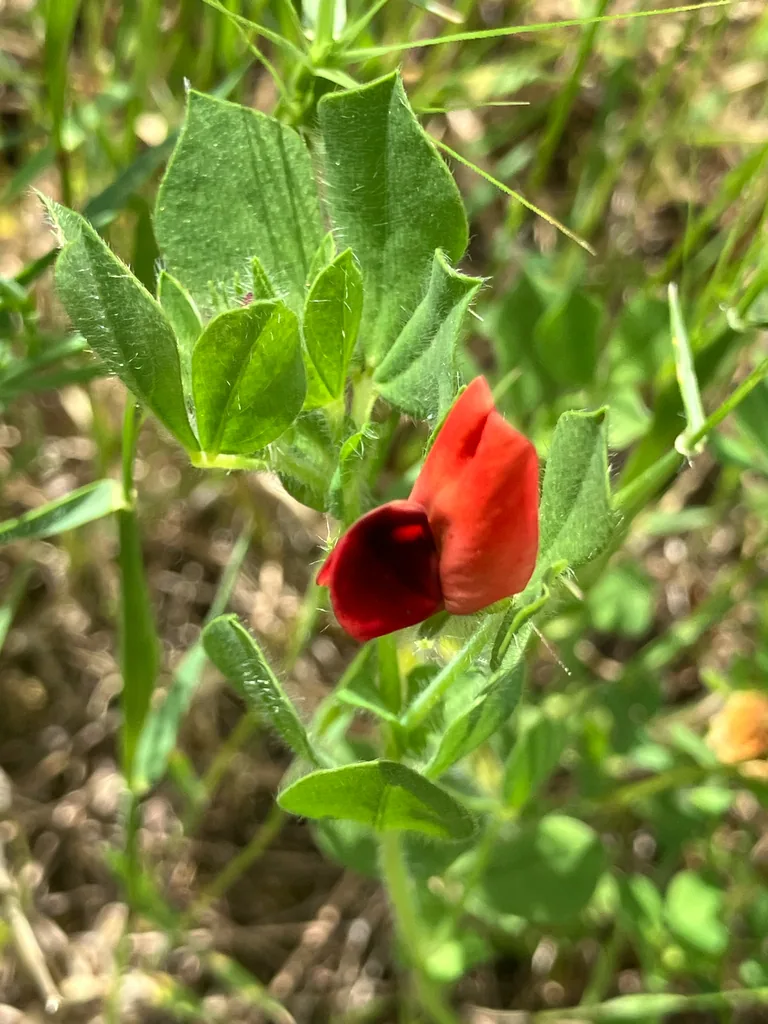
How to Grow and Care for Winged Pea
Lotus tetragonolobus
Written by Emilio Marruso · last checked
At a glance
Asparagus pea is a charming, easy crop for sunny spots, and it even tolerates dry, worn-out ground. Sow it indoors in March or April, plant it out in May or June once frost is over, and in July and August you can pick tender young pods with the mild flavor of asparagus. Pick them small, under 1 inch, and steam them.
- Sun
Full sun
What the sources say (3)
Light: Full sun
## Position | Sun Exposure: Full sun | Aspect: South facing, west facing
— Lotus tetragonolobus | BBC Gardeners World Magazine [2] preferring a rich light well-drained soil in a sunny position
— Lotus tetragonolobus - Useful Temperate Plants [3] | Sun Requirements: | Full Sun | Water Preferences: | Mesic Dry Mesic Dry | Flowers:
— Asparagus Pea (Lotus tetragonolobus) - Garden.org [6] - Water
Likes soil from evenly moist to dry; don't overwater
What the sources say (1)
Watering: Mesic to dry
| Sun Requirements: | Full Sun | Water Preferences: | Mesic Dry Mesic Dry | Flowers:
— Asparagus Pea (Lotus tetragonolobus) - Garden.org [6] - Soil
Copes even with dry, worn-out ground
What the sources say (1)
Watering notes: Tolerates arid, worn-out ground
It is so easy to grow that I wonder I do not see it in more gardens, for it will tolerate the same sort of arid, worn-out ground preferred by nasturtiums.
— Heirloom Asparagus Pea Varieties – Mother Earth News [4] - Spacing
1 ft between plants
What the sources say (1)
Spacing: 30.5 cm (1 ft)
The plants spread laterally and close to the ground. They should be planted about 1 foot apart.
— Heirloom Asparagus Pea Varieties – Mother Earth News [4] - Planting
Plant out in May or June, once all risk of frost has passed
What the sources say (5)
Planting: After all risk of frost has passed (May-June)
According to Gardeners' World: | Sow | | | yes | yes | | | | | | | | | Plant | | | | | yes | yes |
— Lotus tetragonolobus | BBC Gardeners World Magazine [2] According to Mother Earth News: Asparagus pea seeds can be started indoors in April and the seedlings thinned to small pots. They may be transplanted to the garden in May or after all threat of frost has passed.
— Heirloom Asparagus Pea Varieties – Mother Earth News [4] For best results grow Lotus tetragonolobus in moist but well-drained soil in full sun. Raise plants from seed indoors in spring and plant out after all risk of frost has passed.
— Lotus tetragonolobus | BBC Gardeners World Magazine [2] | Sow | | | yes | yes | | | | | | | | | Plant | | | | | yes | yes |
— Lotus tetragonolobus | BBC Gardeners World Magazine [2] Asparagus pea seeds can be started indoors in April and the seedlings thinned to small pots. They may be transplanted to the garden in May or after all threat of frost has passed.
— Heirloom Asparagus Pea Varieties – Mother Earth News [4] - Harvest
Pick pods in July and August while under 1 inch; steam them for 15 minutes
- Propagation
Grows from seed, sown right in the garden or started indoors
What the sources say (2)
Propagation: Seed (sown in situ, or raised indoors)
| Propagation: Seeds: | Sow in situ Other info: Pre-soak the seed for 24 hours in warm water
— Asparagus Pea (Lotus tetragonolobus) - Garden.org [6] For best results grow Lotus tetragonolobus in moist but well-drained soil in full sun. Raise plants from seed indoors in spring and plant out after all risk of frost has passed.
— Lotus tetragonolobus | BBC Gardeners World Magazine [2] - Sowing
Sow indoors in spring, in March or April
What the sources say (5)
Sowing: Spring, indoors (March-April)
According to Gardeners' World: | Sow | | | yes | yes | | | | | | | | | Plant | | | | | yes | yes |
— Lotus tetragonolobus | BBC Gardeners World Magazine [2] According to Mother Earth News: Asparagus pea seeds can be started indoors in April and the seedlings thinned to small pots. They may be transplanted to the garden in May or after all threat of frost has passed.
— Heirloom Asparagus Pea Varieties – Mother Earth News [4] For best results grow Lotus tetragonolobus in moist but well-drained soil in full sun. Raise plants from seed indoors in spring and plant out after all risk of frost has passed.
— Lotus tetragonolobus | BBC Gardeners World Magazine [2] | Sow | | | yes | yes | | | | | | | | | Plant | | | | | yes | yes |
— Lotus tetragonolobus | BBC Gardeners World Magazine [2] Asparagus pea seeds can be started indoors in April and the seedlings thinned to small pots. They may be transplanted to the garden in May or after all threat of frost has passed.
— Heirloom Asparagus Pea Varieties – Mother Earth News [4]
Overview
Asparagus pea is a sprawling, bushy Mediterranean annual grown for its red flowers and edible four-winged pods. [2] It grows best in moist but well-drained soil in full sun, raised from seed indoors in spring and planted out after the last frost. [2] Only very young pods should be eaten, as older pods quickly turn fibrous. [3]
Winged Pea care
How to water Winged Pea
Watering
Mesic to dry
What the sources say (1)
| Sun Requirements: | Full Sun
| Water Preferences: | Mesic
Dry Mesic
Dry
| Flowers:Watering notes
Tolerates arid, worn-out ground
What the sources say (1)
It is so easy to grow that I wonder I do not see it in more gardens, for it will tolerate the same sort of arid, worn-out ground preferred by nasturtiums.How much light Winged Pea needs
Full sun
What the sources say (3)
## Position
|
Sun Exposure:
Full sun
|
Aspect:
South facing, west facingpreferring a rich light well-drained soil in a sunny position| Sun Requirements: | Full Sun
| Water Preferences: | Mesic
Dry Mesic
Dry
| Flowers:Where to grow Winged Pea
30.5 cm (1 ft)
What the sources say (1)
The plants spread laterally and close to the ground. They should be planted about 1 foot apart.How to propagate Winged Pea
Seed (sown in situ, or raised indoors)
What the sources say (2)
| Propagation: Seeds: | Sow in situ
Other info: Pre-soak the seed for 24 hours in warm waterFor best results grow Lotus tetragonolobus in moist but well-drained soil in full sun. Raise plants from seed indoors in spring and plant out after all risk of frost has passed.Remedies
Each remedy shows what official sources say about it; traditional remedies without an official source are marked as such. Harmful ones are listed so you know to avoid them.
Treating the plant
slugs
crushed eggshells Not verified
Traditional remedy, not verified by an official source.
How: Put crushed eggshells around the plants.
coffee grounds Not verified
Traditional remedy, not verified by an official source.
Adding too thick of a coffee ground layer can decrease water infiltration and cause a water-repellant layer to form.
— extension.illinois.edu [7] How: Put coffee grounds around the plants.
aphids
water spray Not verified
Traditional remedy, not verified by an official source.
How: Spray the aphids off the plants with water.
insecticidal soap Works
How: Use insecticidal soap if the infestation gets bad.
Aphids like to cluster on new growth. I spray them off with water or use insecticidal soap if it gets bad. For bigger pests like caterpillars, I pick them off by hand.
— thegrow.net [8] What the evidence says For example, insecticidal soap is a safe, effective organic insecticide with minimal environmental impact.
— extension.psu.edu [9]
caterpillars
hand-picking Works
How: Pick caterpillars off the plants by hand.
Aphids like to cluster on new growth. I spray them off with water or use insecticidal soap if it gets bad. For bigger pests like caterpillars, I pick them off by hand.
— thegrow.net [8] What the evidence says Many insect and disease issues can be solved in the home garden by hand-picking insects or clipping and disposing of diseased plant parts.
— extension.unh.edu [10]
leaf spot
removing diseased leaves Works
How: Remove yellowing or spotted leaves right away to stop diseases from spreading.
Good airflow helps prevent many diseases. I space my plants properly and avoid watering the leaves. Wet leaves can lead to fungal problems. If I see yellowing or spotted leaves, I remove them right away. This stops diseases from spreading.
— thegrow.net [8] What the evidence says Many insect and disease issues can be solved in the home garden by hand-picking insects or clipping and disposing of diseased plant parts.
— extension.unh.edu [10]
Calendar
Spring, indoors (March-April)
What each source says
According to Gardeners' World: March-April
According to Mother Earth News: April (indoors)
What the sources say (5)
According to Gardeners' World: | Sow | | | yes | yes | | | | | | | |
| Plant | | | | | yes | yes |According to Mother Earth News: Asparagus pea seeds can be started indoors in April and the seedlings thinned to small pots. They may be transplanted to the garden in May or after all threat of frost has passed.For best results grow Lotus tetragonolobus in moist but well-drained soil in full sun. Raise plants from seed indoors in spring and plant out after all risk of frost has passed.| Sow | | | yes | yes | | | | | | | |
| Plant | | | | | yes | yes |Asparagus pea seeds can be started indoors in April and the seedlings thinned to small pots. They may be transplanted to the garden in May or after all threat of frost has passed.After all risk of frost has passed (May-June)
What each source says
According to Gardeners' World: May-June, after all risk of frost has passed
According to Mother Earth News: May or after all threat of frost has passed
What the sources say (5)
According to Gardeners' World: | Sow | | | yes | yes | | | | | | | |
| Plant | | | | | yes | yes |According to Mother Earth News: Asparagus pea seeds can be started indoors in April and the seedlings thinned to small pots. They may be transplanted to the garden in May or after all threat of frost has passed.For best results grow Lotus tetragonolobus in moist but well-drained soil in full sun. Raise plants from seed indoors in spring and plant out after all risk of frost has passed.| Sow | | | yes | yes | | | | | | | |
| Plant | | | | | yes | yes |Asparagus pea seeds can be started indoors in April and the seedlings thinned to small pots. They may be transplanted to the garden in May or after all threat of frost has passed.The sources give different values depending on region, zone or growing conditions.
What each source says
According to Gardeners' World (testo): July/August
According to Gardeners' World (calendario): August-September
According to Mother Earth News: About two and a half months after planting
What the sources say (6)
According to Gardeners' World (testo): The young pods ripen in July/August and have the mild flavour and consistency of asparagus. Don't eat pods larger than 2.5cm, which are tough and unpalatable.According to Gardeners' World (calendario): | Harvest | | | | | | | | yes | yes |According to Mother Earth News: The plant is annual and comes to crop very quickly in the course of two-and-a-half months. Thus if planted in mid-May, it will begin blooming in June and peak by July 4.The young pods ripen in July/August and have the mild flavour and consistency of asparagus. Don't eat pods larger than 2.5cm, which are tough and unpalatable.| Harvest | | | | | | | | yes | yes |The plant is annual and comes to crop very quickly in the course of two-and-a-half months. Thus if planted in mid-May, it will begin blooming in June and peak by July 4.Months as given by the sources, which are mostly from the United States (northern hemisphere). In the southern hemisphere they shift by about six months.
Edibility
Reported by the source, quoted verbatim. Do not eat a plant on the basis of this page alone: identification mistakes can be dangerous.
Only the very young pods, when less than 25mm long, should be used, since the older pods quickly turn fibrous
[3]The young pods ripen in July/August and have the mild flavour and consistency of asparagus. Don't eat pods larger than 2.5cm, which are tough and unpalatable.
[2]The pods retain their color when cooked and are best blanched or steamed for about 15 minutes
[4]Cultivated for its edible fruits, recorded twice in Victoria at St. Albans in 1898 (Willis 1973)
[1]
Similar plants
- Parrot's Beak Lotus berthelotii
- Common Bird's-foot-trefoil Lotus corniculatus
- Abies grandis Abies grandis
- Abraham Trachystemon orientalis
- Abyssinian banana Ensete ventricosum
- Acacia longifolia Acacia longifolia
- Acanthus hungaricus Acanthus hungaricus
- Aconite Aconitum napellus
Sources
Every value above is quoted from these documents. Links lead to the original publisher.
- VicFlora: Lotus tetragonolobus · vicflora.rbg.vic.gov.au, consulted
- Lotus tetragonolobus | BBC Gardeners World Magazine · gardenersworld.com, consulted
- Lotus tetragonolobus - Useful Temperate Plants · temperate.theferns.info, consulted
- Heirloom Asparagus Pea Varieties – Mother Earth News · motherearthnews.com, consulted
- Lotus tetragonolobus | Euro+Med-Plantbase · europlusmed.org, consulted
- Asparagus Pea (Lotus tetragonolobus) - Garden.org · garden.org, consulted
- extension.illinois.edu · extension.illinois.edu
- thegrow.net · thegrow.net
- extension.psu.edu · extension.psu.edu
- extension.unh.edu · extension.unh.edu
Written by Emilio Marruso · last checked