
How to Grow and Care for Chinese desert-thorn
Lycium chinense
Written by Emilio Marruso · last checked
Toxic to: People · Why
At a glance
Chinese wolfberry is a generous plant for a sunny spot: its fruit can be eaten raw, cooked in soups or dried for later, and its leaves and young shoots go in the kitchen too. Give it full sun and moderate, steady water, since it does not tolerate drought. It adapts to a wide range of soils and grows from seed, cuttings or suckers.
- Sun
Full sun
- Water
Moderate water; do not let it dry out, it does not tolerate drought
What the sources say (2)
- Cold
Survives winters down to −10 °F (−23.3 °C)
Very hardy · USDA 6 · RHS H7 · Z6
What the sources say (3)
Hardiness, coldest zone: 6 [winter low −23.3 to −17.8 °C (−10 to 0 °F)]
Hardiness Zone 6+ Soil textures sandy, loamy, clay
— Chinese Boxthorn (Lycium chinense) — Practical Plants [5] it is currently cultivated in USDA Hardiness Zones 6–9
— HS1391/HS1391: Goji Berry—a Novel Nutraceutical "Superfruit" for Florida Master Gardeners [1] Hardiness, warmest zone: 9 [winter low −6.7 to −1.1 °C (20 to 30 °F)]
it is currently cultivated in USDA Hardiness Zones 6–9
— HS1391/HS1391: Goji Berry—a Novel Nutraceutical "Superfruit" for Florida Master Gardeners [1] - Soil
Grows in soil with pH 5.0–8.0, best at pH 5.5–7.5
- Planting
Plant seedlings in late spring or early summer; suckers in late winter, straight into place
- Feeding
Feed in spring; compost and organic matter help the soil hold water and food
What the sources say (2)
When: In spring
Fertilizers have the greatest impact on goji berry growth when applied in springtime.
— HS1391/HS1391: Goji Berry—a Novel Nutraceutical "Superfruit" for Florida Master Gardeners [1] Natural fertilizers: Organic materials and compost on sandy and loam soils, which hold moisture and nutrients and reduce the need for chemical fertilizers
Adding organic materials and compost to sandy and loam soils may help the soil better retain moisture and nutrients and improve the soil environment by reducing the need for the excessive application of chemical fertilizers.
— HS1391/HS1391: Goji Berry—a Novel Nutraceutical "Superfruit" for Florida Master Gardeners [1] - Harvest
Eat the fruit raw, cooked or dried; leaves and young shoots raw or cooked
- Propagation
From seed, cuttings, layering or by dividing suckers
What the sources say (5)
Propagation: Seed; cuttings of half-ripe wood; cuttings of mature wood; division of suckers; layering
Seed - sow early spring in a greenhouse.
— Lycium chinense - Useful Temperate Plants [4] Cuttings of half-ripe wood, 5 - 10cm with a heel if possible
— Lycium chinense - Useful Temperate Plants [4] Cuttings of mature wood of the current season's growth, autumn to late winter in a cold frame.
— Lycium chinense - Useful Temperate Plants [4] Division of suckers in late winter. Very easy,
— Lycium chinense - Useful Temperate Plants [4] Layering. Cite as: Temperate Plants Database, Ken Fern.
— Lycium chinense - Useful Temperate Plants [4] - Sowing
Sow in early spring in a greenhouse
What the sources say (1)
Sowing: Early spring (in a greenhouse)
Seed - sow early spring in a greenhouse.
— Lycium chinense - Useful Temperate Plants [4] - Safety
Take some care with the leaves: it belongs to a plant family that often contains toxins
Overview
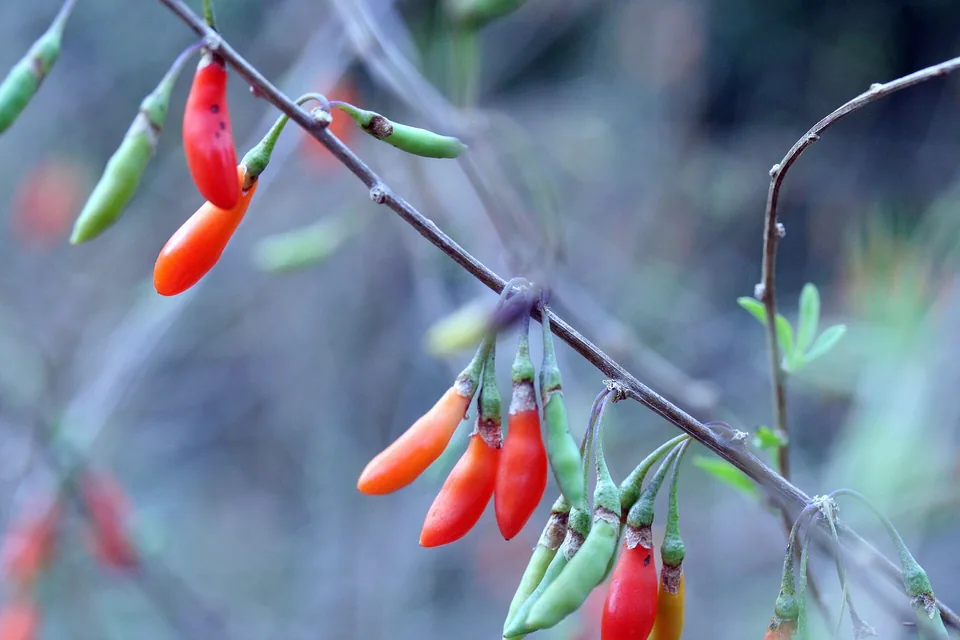
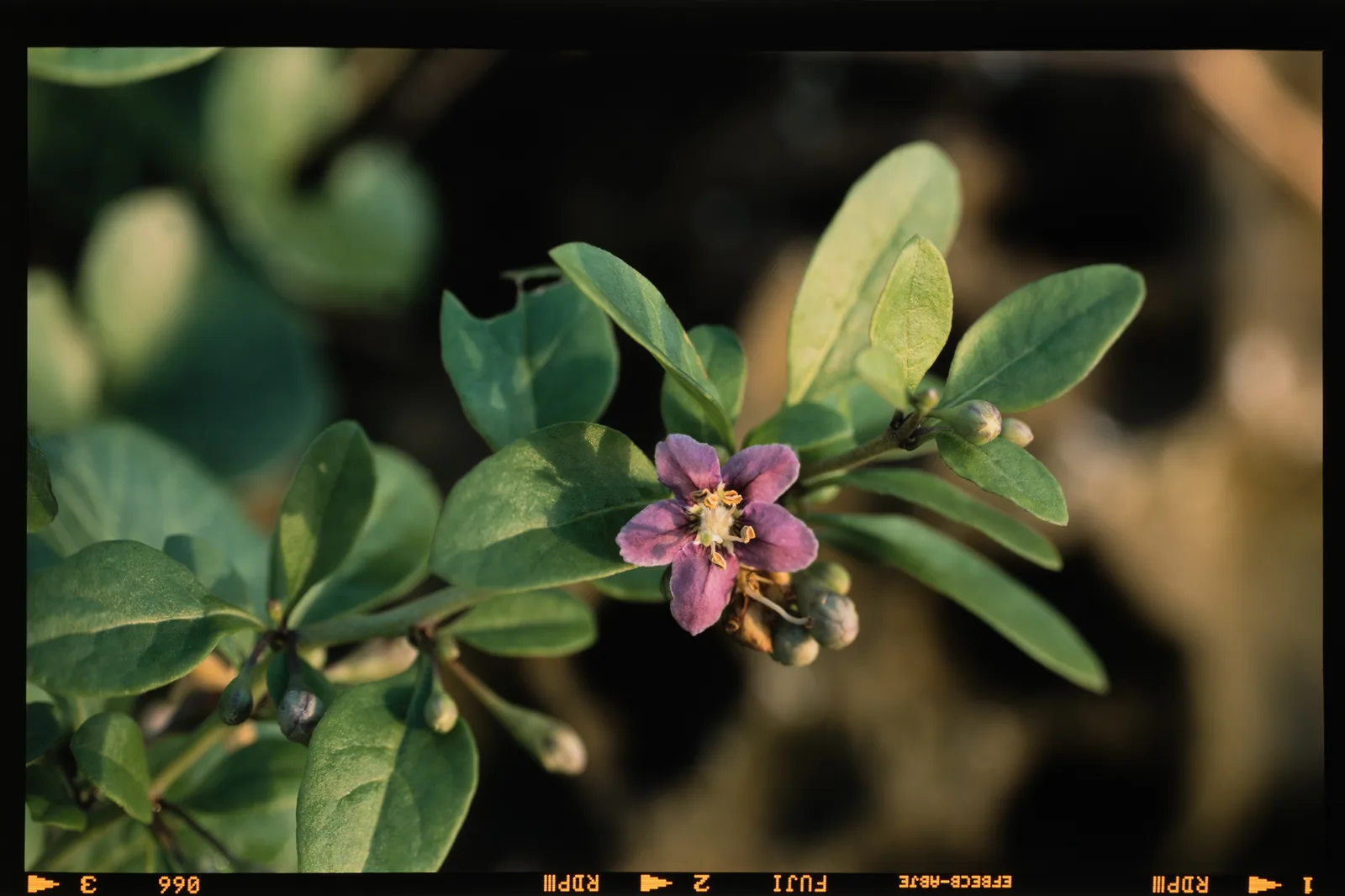
Lycium chinense is an erect or sprawling, much-branched deciduous shrub from East Asia. [4] It requires a sunny position and does not need a rich soil. [4] Its fruit and young leaves are eaten, and caution is advised because the plant belongs to a family that often contains toxins. [4]
This record is incomplete: the sources we read do not cover every field yet.
Not yet covered by our sources: Harvest, Spacing
Chinese desert-thorn care
How to water Chinese desert-thorn
How much light Chinese desert-thorn needs
How much cold Chinese desert-thorn can take
Hardiness, coldest zone
6 [winter low −23.3 to −17.8 °C (−10 to 0 °F)]
Hardiness, warmest zone
9 [winter low −6.7 to −1.1 °C (20 to 30 °F)]
What the sources say (1)
it is currently cultivated in USDA Hardiness Zones 6–9Best soil for Chinese desert-thorn
Soil pH, minimum
5.0
What each source says
preferred range: 5.5
Soil pH, maximum
8.0
What each source says
preferred range: 7.5
Where to grow Chinese desert-thorn
Not stated in the sources we read.
How to propagate Chinese desert-thorn
Seed; cuttings of half-ripe wood; cuttings of mature wood; division of suckers; layering
What the sources say (5)
Seed - sow early spring in a greenhouse.Cuttings of half-ripe wood, 5 - 10cm with a heel if possibleCuttings of mature wood of the current season's growth, autumn to late winter in a cold frame.Division of suckers in late winter. Very easy,Layering.
Cite as: Temperate Plants Database, Ken Fern.How to grow Chinese desert-thorn
Fertilizing
When
In spring
What the sources say (1)
Fertilizers have the greatest impact on goji berry growth when applied in springtime.Natural fertilizers
Organic materials and compost on sandy and loam soils, which hold moisture and nutrients and reduce the need for chemical fertilizers
What the sources say (1)
Adding organic materials and compost to sandy and loam soils may help the soil better retain moisture and nutrients and improve the soil environment by reducing the need for the excessive application of chemical fertilizers.Mineral fertilizers
Nitrogen fertilizer first, then phosphate and potassium: urea, ammonium sulfate, ammonium nitrate or UAN-32 for nitrogen; triple or double superphosphate for phosphate; potassium sulfate or potassium chloride for potassium; soil-test recommendations for Solanaceae crops apply
What the sources say (4)
Especially beneficial is nitrogen fertilizer, followed by phosphate and potassium.Recommended nitrogen fertilizers include urea, ammonium sulfate, ammonium nitrate, and UAN-32 (50% urea and 50% ammonium nitrate).Recommended phosphate fertilizers include triple superphosphate and double superphosphate. Recommended potassium fertilizers include potassium sulfate and potassium chloride.In addition, the Solanaceae fertilizer recommendations based on soil testing for other Solanaceae crops are likely to work well for goji berry.Remedies
The sources we checked give no remedies for this plant.
Is Chinese desert-thorn poisonous?
Reported by the source, quoted verbatim. This is not medical or veterinary advice: if a person or an animal may have eaten this plant, contact a poison control centre or a veterinarian.
Some caution should be exercised with this species, particularly with regard to its edible leaves, since it belongs to a family that often contains toxins.
[4]
Calendar
Sowing
Early spring (in a greenhouse)
What the sources say (1)
Seed - sow early spring in a greenhouse.Planting
Late spring or early summer (seedlings)
What each source says
division of suckers: Late winter (planted directly into permanent positions)
Harvest
Not stated in the sources we read.
Months as given by the sources, which are mostly from the United States (northern hemisphere). In the southern hemisphere they shift by about six months.
Edibility
Reported by the source, quoted verbatim. Do not eat a plant on the basis of this page alone: identification mistakes can be dangerous.
Similar plants
- Goji berry Lycium barbarum
- Abies grandis Abies grandis
- Abraham Trachystemon orientalis
- Abyssinian banana Ensete ventricosum
- Acacia longifolia Acacia longifolia
- Acanthus hungaricus Acanthus hungaricus
- Aconite Aconitum napellus
- Adam's Needle Yucca flaccida
Sources
Every value above is quoted from these documents. Links lead to the original publisher.
- HS1391/HS1391: Goji Berry—a Novel Nutraceutical "Superfruit" for Florida Master Gardeners · ask.ifas.ufl.edu, consulted
- The Value-Added Development of Lycium chinense in Miaoli-葉用枸杞主題館-農業知識入口網 · kmweb.moa.gov.tw, consulted
- Gogi (Wolfberry) – Uncommon Fruit · uncommonfruit.cias.wisc.edu, consulted
- Lycium chinense - Useful Temperate Plants · temperate.theferns.info, consulted
- Chinese Boxthorn (Lycium chinense) — Practical Plants · practicalplants.org, consulted
- Chinese Matrimony Vine (Lycium chinense) · illinoiswildflowers.info, consulted
- Lycium chinense (Chinese matrimony-vine): Go Botany · gobotany.nativeplanttrust.org, consulted
Written by Emilio Marruso · last checked