
How to Grow and Care for Mandrake
Mandragora officinarum
Written by Emilio Marruso · last checked
Toxic to: People · Why
At a glance
Mandrake is a sun lover that also tolerates some shade, and it is easy to start from seed. Sow it in autumn or spring in a cold frame, then set young plants out in late spring or early summer, once the last frosts are over. Give it soil that drains well, leave its roots in peace, and remember that every part is poisonous.
- Sun
Full sun; it also tolerates some shade
What the sources say (3)
Light: Full sun; tolerates some shade
Prefers a deep humus-rich light soil and a sheltered position in full sun
— Mandragora officinarum - Useful Temperate Plants [1] It also tolerates some shade
— Mandragora officinarum - Useful Temperate Plants [1] Shade tolerance light shade
— Mandrake (Mandragora officinarum) — Practical Plants [2] - Water
Avoid soggy ground: it rots in wet or poorly drained soil
What the sources say (1)
Watering notes: Plants are liable to rot in wet or ill-draining soils
Plants are liable to rot in wet or ill-draining soils
— Mandragora officinarum - Useful Temperate Plants [1] - Cold
Survives winters down to 0 °F (−17.8 °C)
Hardy in very cold winters · USDA 7 · RHS H6 · Z7
What the sources say (1)
Hardiness, coldest zone: 7 [winter low −17.8 to −12.2 °C (0 to 10 °F)]
Hardiness Zone 7+
— Mandrake (Mandragora officinarum) — Practical Plants [2] - Planting
Plant in late spring or early summer, after the last frosts
What the sources say (1)
Planting: Late spring or early summer, after the last expected frosts
Plant them out into their permanent positions in late spring or early summer, after the last expected frosts.
— Mandragora officinarum - Useful Temperate Plants [1] - Watch out
It hates having its roots disturbed, so choose its spot carefully
What the sources say (3)
Propagation: Seed; root cuttings in winter; division (difficult, plants resent root disturbance)
Root cuttings in winter [5] .
— Mandrake (Mandragora officinarum) — Practical Plants [2] Division. This can be rather difficult since the plants resent root disturbance.
— Mandrake (Mandragora officinarum) — Practical Plants [2] Seed - best sown in a cold frame in the autumn [2] .
— Mandrake (Mandragora officinarum) — Practical Plants [2] - Propagation
From seed or root cuttings in winter; dividing it is difficult
What the sources say (3)
Propagation: Seed; root cuttings in winter; division (difficult, plants resent root disturbance)
Root cuttings in winter [5] .
— Mandrake (Mandragora officinarum) — Practical Plants [2] Division. This can be rather difficult since the plants resent root disturbance.
— Mandrake (Mandragora officinarum) — Practical Plants [2] Seed - best sown in a cold frame in the autumn [2] .
— Mandrake (Mandragora officinarum) — Practical Plants [2] - Sowing
Sow in autumn (best) or spring, in a cold frame
- Safety
Poisonous: every part, especially the root; the fruit may be poisonous too
Overview
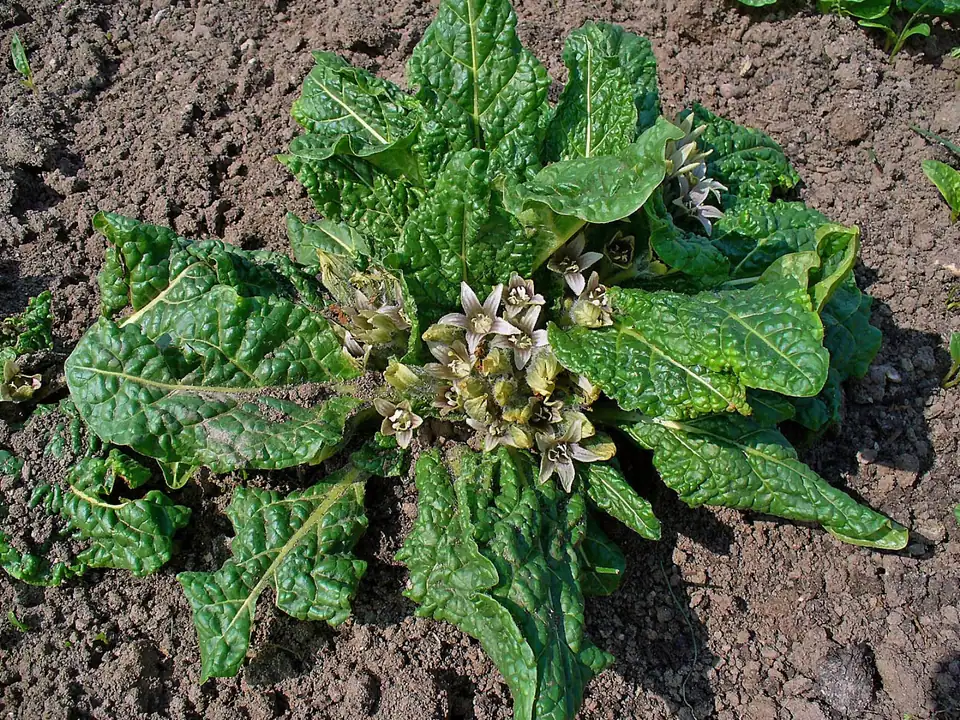
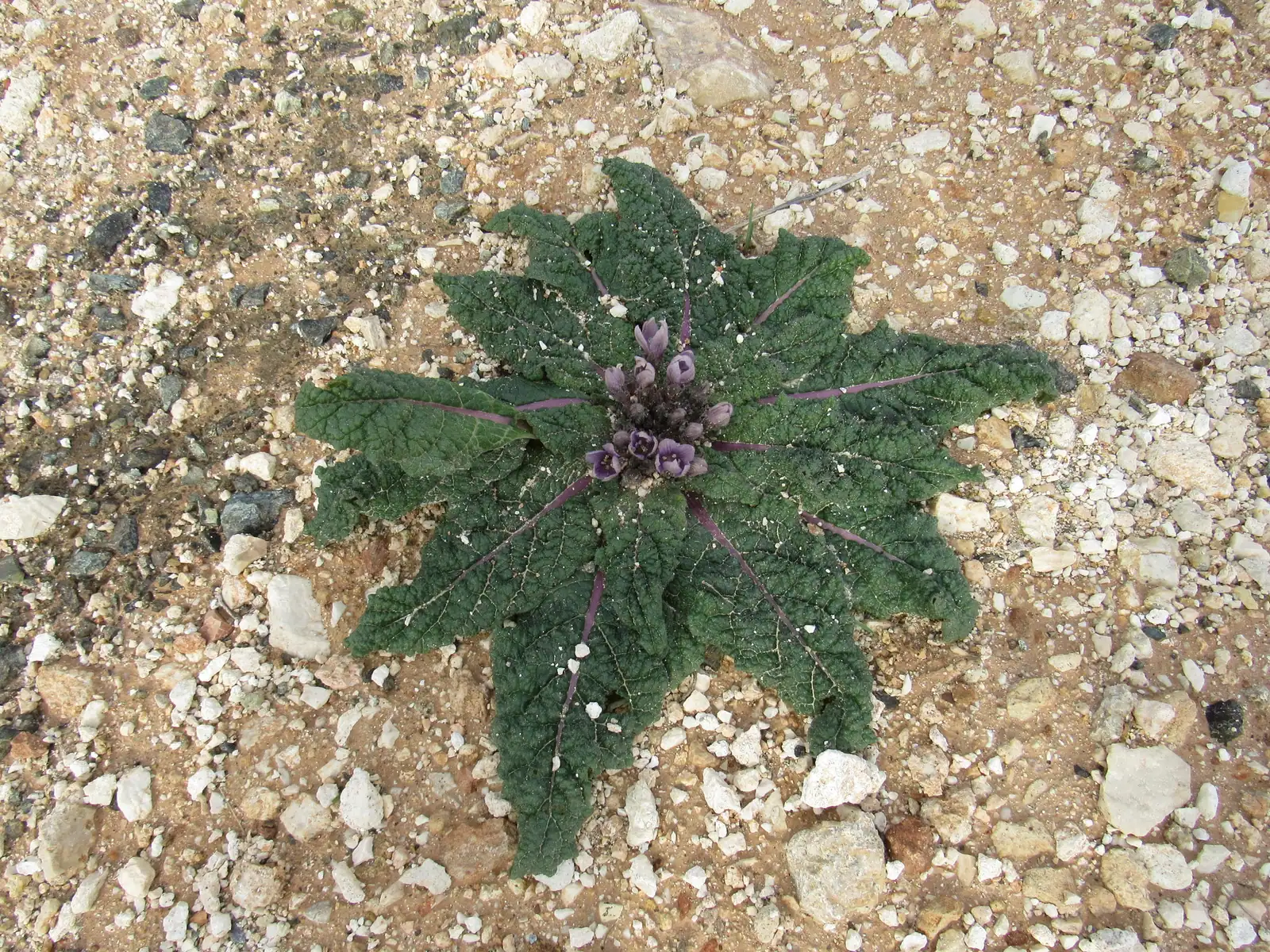
Mandragora officinarum is a nearly stemless herbaceous perennial forming a leaf rosette from a deep taproot. [1] All parts of the plant, especially the roots, contain poisonous alkaloids. [1] It prefers a sheltered position in full sun and is liable to rot in wet or ill-draining soils. [1]
This record is incomplete: the sources we read do not cover every field yet.
Not yet covered by our sources: Watering, Hardiness, warmest zone, Pruning
Mandrake care
How to water Mandrake
Watering
Not stated in the sources we read.
Watering notes
Plants are liable to rot in wet or ill-draining soils
What the sources say (1)
Plants are liable to rot in wet or ill-draining soilsHow much light Mandrake needs
Full sun; tolerates some shade
What the sources say (3)
Prefers a deep humus-rich light soil and a sheltered position in full sunIt also tolerates some shadeShade tolerance
light shadeHow much cold Mandrake can take
Hardiness, coldest zone
7 [winter low −17.8 to −12.2 °C (0 to 10 °F)]
What the sources say (1)
Hardiness
Zone 7+Hardiness, warmest zone
Not stated in the sources we read.
How to propagate Mandrake
Seed; root cuttings in winter; division (difficult, plants resent root disturbance)
What the sources say (3)
Root cuttings in winter [5] .Division. This can be rather difficult since the plants resent root disturbance.Seed - best sown in a cold frame in the autumn [2] .Remedies
Each remedy shows what official sources say about it; traditional remedies without an official source are marked as such. Harmful ones are listed so you know to avoid them.
Treating the plant
slugs and snails
hand-picking Not verified
Traditional remedy, not verified by an official source.
How: You can pick them off by hand
beer, raw potato or cabbage leaf bait Not verified
Traditional remedy, not verified by an official source.
How: attract them away from plants by baiting them with beer, raw potatoes, or cabbage leaves
root rot
cutting away rotten root portions Not verified
Traditional remedy, not verified by an official source.
How: dig up and cut away black and rotten portions of the root
Is Mandrake poisonous?
Reported by the source, quoted verbatim. This is not medical or veterinary advice: if a person or an animal may have eaten this plant, contact a poison control centre or a veterinarian.
All parts of the plant, but especially the roots, contain a range of alkaloids and are poisonous
[1]The fresh or dried root contains highly poisonous alkaloids and is cathartic, strongly emetic, hallucinogenic and narcotic
[2]Some caution is advised in the use of this fruit, it is quite possibly poisonous.
[1]- Poisonous parts
Some caution is advised in the use of this fruit, it is quite possibly poisonous.
[1]
Calendar
Planting
Late spring or early summer, after the last expected frosts
What the sources say (1)
Plant them out into their permanent positions in late spring or early summer, after the last expected frosts.Pruning
Not stated in the sources we read.
Months as given by the sources, which are mostly from the United States (northern hemisphere). In the southern hemisphere they shift by about six months.
Edibility
Reported by the source, quoted verbatim. Do not eat a plant on the basis of this page alone: identification mistakes can be dangerous.
Fruit - raw or cooked. A delicacy [11] .
[2]
Similar plants
- Mandrake Mandragora autumnalis
- Abies grandis Abies grandis
- Abraham Trachystemon orientalis
- Abyssinian banana Ensete ventricosum
- Acacia longifolia Acacia longifolia
- Acanthus hungaricus Acanthus hungaricus
- Aconite Aconitum napellus
- Adam's Needle Yucca flaccida
Sources
Every value above is quoted from these documents. Links lead to the original publisher.
- Mandragora officinarum - Useful Temperate Plants · temperate.theferns.info, consulted
- Mandrake (Mandragora officinarum) — Practical Plants · practicalplants.org, consulted
- How to Grow Mandrake | Gardener’s Path · gardenerspath.com, consulted
- Ethnobotanical Plant Mandragora officinarum | Dr. Duke's Phytochemical and Ethnobotanical Databases · phytochem.nal.usda.gov, consulted
Written by Emilio Marruso · last checked