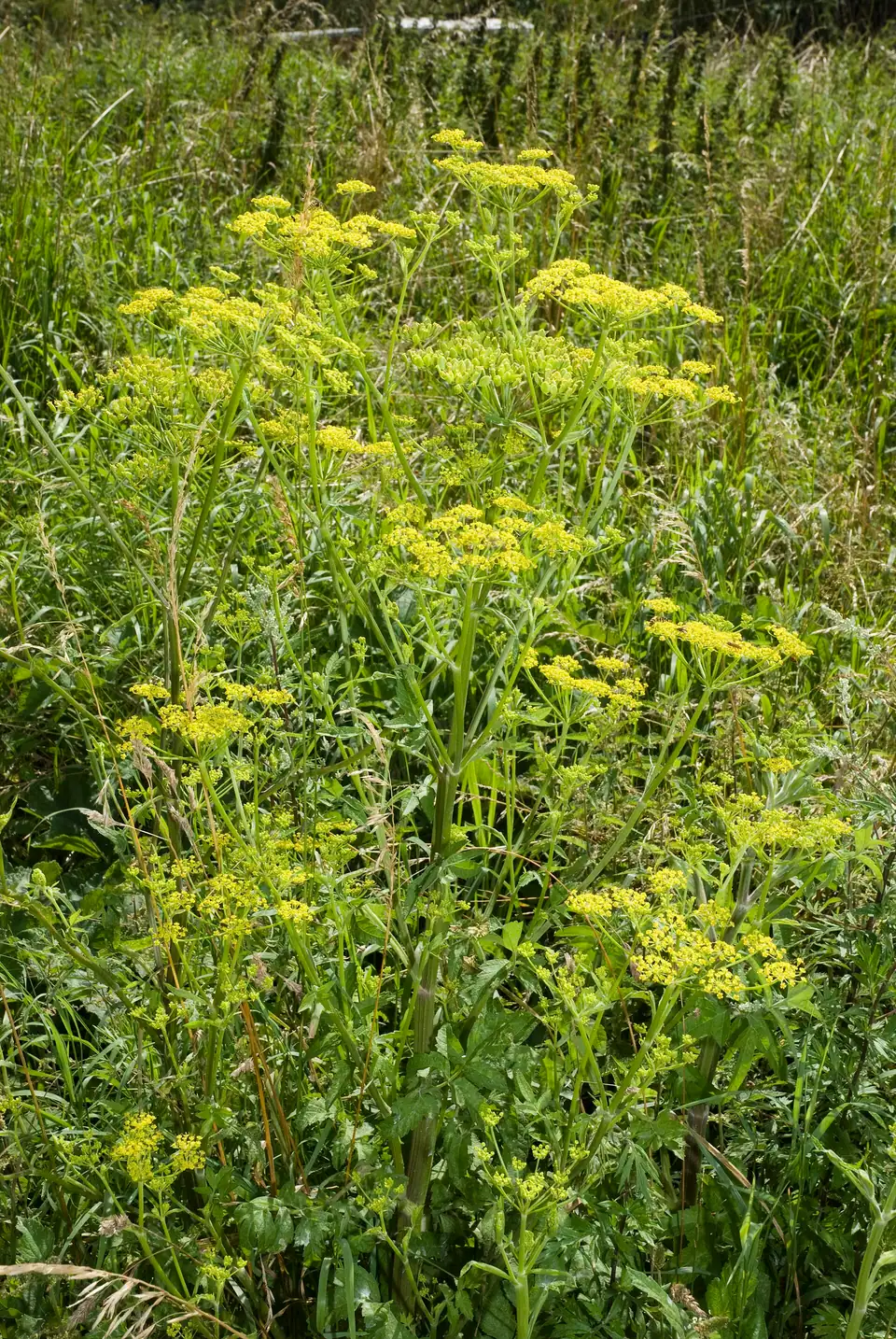
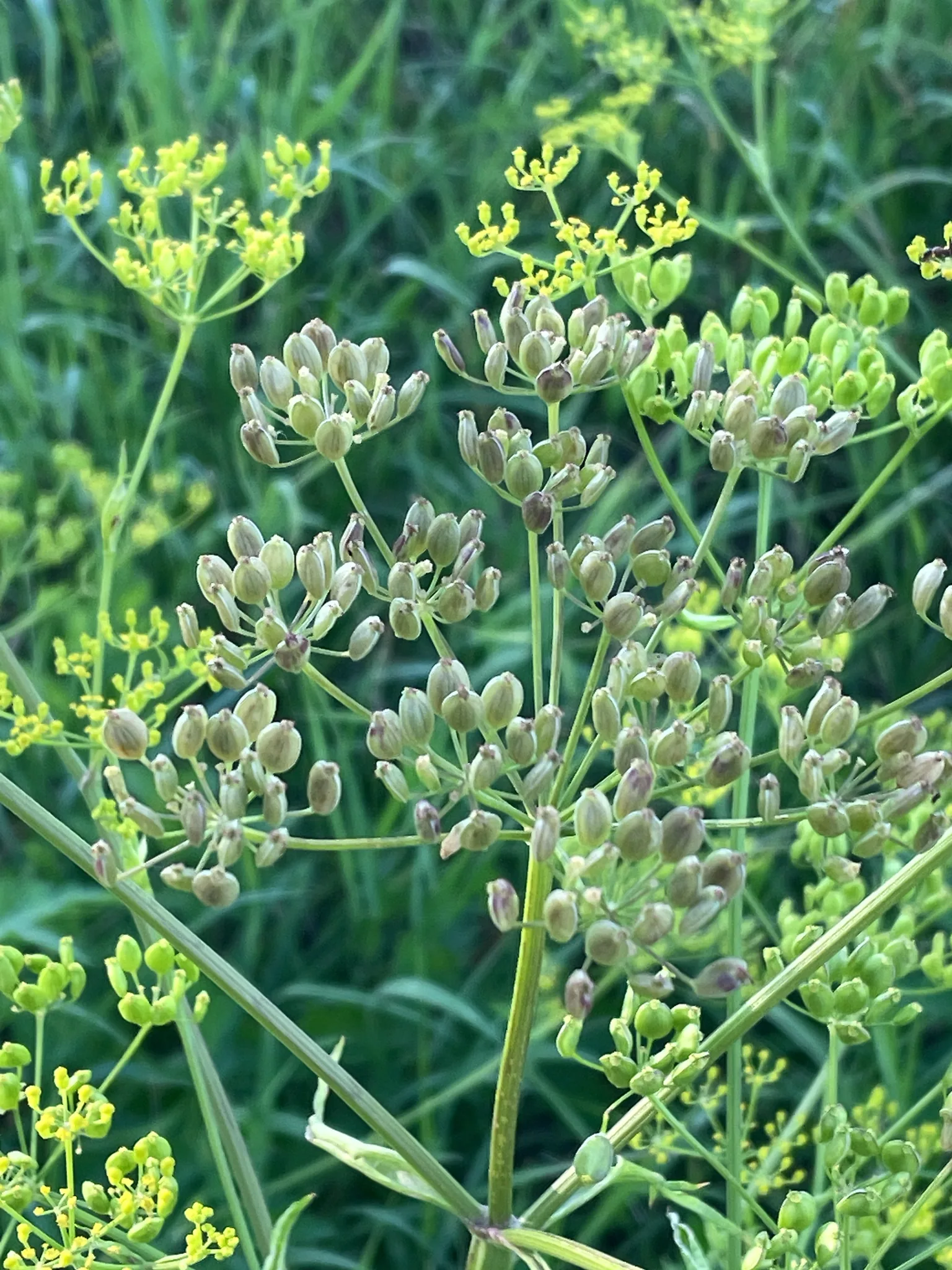

How to Grow and Care for Wild parsnip
Pastinaca sativa
Written by Emilio Marruso · last checked
Toxic to: Cats, Dogs, People · Why
At a glance
Parsnips are a patient gardener's treat: sow the seeds straight into the ground in early spring, 3–5 weeks before the last frost. Give them full sun and 1 inch of water a week, then dig up the sweet roots in fall after the first light frosts, or leave them until the following spring. Enjoy them raw, roasted, mashed or fried.
- Sun
Full sun
What the sources say (2)
Light: Full sun
Full sun (6 or more hours of direct sunlight a day)
— Pastinaca sativa (Parsnip, Parsnips, Wild Parsnip, Wild Parsnips) | North Carolina Extension Gardener Plant Toolbox [1] Parsnips require full sun for optimum development but will tolerate some very light shade.
— Parsnip | Diseases and Pests, Description, Uses, Propagation [3] - Water
1 inch of water a week; mulch keeps the soil moist and stops weeds
What the sources say (2)
Watering: 2.5 cm (1 in) of water each week
Parsnips benefit from a plentiful moisture supply and should be provided with 2.5 cm (1 in) of water each week.
— Parsnip | Diseases and Pests, Description, Uses, Propagation [3] Watering notes: Mulching conserves moisture and reduces weeds
Mulching around the plants helps to conserve moisture and reduce weeds.
— Parsnip | Diseases and Pests, Description, Uses, Propagation [3] - Soil
Slightly acidic to slightly alkaline soil, pH 5.8–7.5
What the sources say (2)
Soil pH, minimum: 5.8
Parsnips grow best in a well-draining, loose, sandy soil which is free of large rocks and has a pH between 5.8 and 7.5.
— Parsnip | Diseases and Pests, Description, Uses, Propagation [3] Soil pH, maximum: 7.5
Parsnips grow best in a well-draining, loose, sandy soil which is free of large rocks and has a pH between 5.8 and 7.5.
— Parsnip | Diseases and Pests, Description, Uses, Propagation [3] - Spacing
2–4 in between plants after thinning
What the sources say (1)
Spacing: 5-10 cm (2-4 in) between plants, after thinning
thin them to a final spacing of 5–10 cm (2–4 in) between plants by snipping with scissors
— Parsnip | Diseases and Pests, Description, Uses, Propagation [3] - Feeding
Compost before planting, feed 5–6 weeks after sowing; no fresh manure, it forks the roots
What the sources say (5)
Natural fertilizers: Compost worked into the soil before planting
It is also beneficial to work some compost into the soil prior to planting. Avoid using fresh manure as it can cause forking of the roots.
— Parsnip | Diseases and Pests, Description, Uses, Propagation [3] When: 5–6 weeks after sowing
Any weeds growing around the plants should be carefully removed. The plants should be fertilized 5–6 weeks after the seeds are sown.
— Parsnip | Diseases and Pests, Description, Uses, Propagation [3] Avoid: Fresh manure, which can cause forked roots; over-fertilizing, which favours foliar diseases
It is also beneficial to work some compost into the soil prior to planting. Avoid using fresh manure as it can cause forking of the roots.
— Parsnip | Diseases and Pests, Description, Uses, Propagation [3] Some cultural practices can control the disease: avoid planting in fields/areas known to previously had carrot spot; do not over-fertilize plants
— Parsnip | Diseases and Pests, Description, Uses, Propagation [3] Plant tolerant varieties; avoid excess fertilization; protective fungicide applications provide adequate protection
— Parsnip | Diseases and Pests, Description, Uses, Propagation [3] - Harvest
Dig the sweet roots in fall after the first light frosts, or the next spring
What the sources say (4)
Harvest: Fall after the first light frosts, or the following spring
parsnips should not be harvested until after the first light frosts in Fall, when the tops of the plants have frozen.
— Parsnip | Diseases and Pests, Description, Uses, Propagation [3] Parsnips are cool-season crops which can be planted in early Spring and left in the ground all summer for harvest in the Fall or in the spring of the following year.
— Parsnip | Diseases and Pests, Description, Uses, Propagation [3] How to harvest: Dig gently around the plant to expose the top of the root, then pull the root firmly from the soil just above the root; harvest after the first light frosts in fall
Parsnips are harvested by gently digging around the plant to expose the top of the root and gently, but firmly pulling the root from the soil by grasping the top of the parsnip just above the root.
— Parsnip | Diseases and Pests, Description, Uses, Propagation [3] For best results, parsnips should not be harvested until after the first light frosts in Fall, when the tops of the plants have frozen.
— Parsnip | Diseases and Pests, Description, Uses, Propagation [3] - Pests
Carrot rust fly, aphids and cutworms; powdery and downy mildew
What the sources say (9)
Pests: willow-carrot aphid, beet armyworm, carrot rust fly, cutworms
willow-carrot aphid will also attack parnip, parsley and celery
— Parsnip | Diseases and Pests, Description, Uses, Propagation [3] Carrot rust fly also attacks carrot, celery and other Umbelliferous crops which will also need to be protected if carrot rust fly is a problem
— Parsnip | Diseases and Pests, Description, Uses, Propagation [3] Insect can go through 3–5 generations a year
— Parsnip | Diseases and Pests, Description, Uses, Propagation [3] Cutworms have a wide host range and attack vegetables including asparagus, bean, cabbage and other crucifers, carrot, celery, corn, lettuce, pea, pepper, potato and tomato
— Parsnip | Diseases and Pests, Description, Uses, Propagation [3] Diseases: cavity spot, damping-off, downy mildew, Itersonilia canker, powdery mildew
Fungi can persist in soil for several years and disease outbreaks are associated with wet soils; flooded soil increases the number of cavities formed
— Parsnip | Diseases and Pests, Description, Uses, Propagation [3] Damping-off diseases favor conditions which slow seed germination; fungi can be spread in water, contaminated soil or on equipment
— Parsnip | Diseases and Pests, Description, Uses, Propagation [3] Disease affects young, tender leaves; disease emergence and spread is favored by prolonged leaf wetness
— Parsnip | Diseases and Pests, Description, Uses, Propagation [3] Disease typically emerges late in growing season and emergence is favored by cool, wet weather conditions
— Parsnip | Diseases and Pests, Description, Uses, Propagation [3] Fungus can spread long distances in air; disease emergence is favored by high humidity and moderate temperatures; infection is most severe in shaded areas
— Parsnip | Diseases and Pests, Description, Uses, Propagation [3] - Size
3 to 6 ft tall
What the sources say (1)
Mature height: 90-180 cm (35-70 in)
The parsnip plant may grow to a height of 90–180 cm (35–70 in) in height and is usually grown as an annual for only one growing season.
— Parsnip | Diseases and Pests, Description, Uses, Propagation [3] - Propagation
Grown from seed sown straight in the ground
What the sources say (1)
Propagation: Direct seeding
Parsnip is usually direct seeded and should be planted 3–5 weeks before the last frost date.
— Parsnip | Diseases and Pests, Description, Uses, Propagation [3] - Sowing
Sow in early spring, 3–5 weeks before the last frost, ½–¾ inch deep
What the sources say (3)
Sowing: Early spring, 3-5 weeks before the last frost date
Parsnip is usually direct seeded and should be planted 3–5 weeks before the last frost date.
— Parsnip | Diseases and Pests, Description, Uses, Propagation [3] Parsnips are cool-season crops which can be planted in early Spring and left in the ground all summer
— Parsnip | Diseases and Pests, Description, Uses, Propagation [3] Sowing depth: 1.3-1.9 cm (0.5-0.75 in)
Sow seeds 1.3–1.9 cm (0.5–0.75 in) deep, planting 2–3 seeds per inch of row
— Parsnip | Diseases and Pests, Description, Uses, Propagation [3] - Containers
Grows in containers too
What the sources say (1)
In containers: Yes
parsnips do very well in raised beds and can also be grown in containers.
— Parsnip | Diseases and Pests, Description, Uses, Propagation [3] - Safety
Wear gloves: the sap makes skin burn and blister in sunlight; harmful to cats and dogs
Overview
Parsnip is a biennial cool-season root vegetable of the carrot family, grown for its edible taproot. [1] It is direct seeded in early spring and harvested in fall after the first light frosts or the following spring. [3] All parts contain furocoumarins that can cause severe light-sensitive skin burns. [1]
Wild parsnip care
How to water Wild parsnip
Watering
2.5 cm (1 in) of water each week
What the sources say (1)
Parsnips benefit from a plentiful moisture supply and should be provided with 2.5 cm (1 in) of water each week.Watering notes
Mulching conserves moisture and reduces weeds
What the sources say (1)
Mulching around the plants helps to conserve moisture and reduce weeds.How much light Wild parsnip needs
Full sun
What the sources say (2)
Full sun (6 or more hours of direct sunlight a day)Parsnips require full sun for optimum development but will tolerate some very light shade.Best soil for Wild parsnip
Soil pH, minimum
5.8
What the sources say (1)
Parsnips grow best in a well-draining, loose, sandy soil which is free of large rocks and has a pH between 5.8 and 7.5.Soil pH, maximum
7.5
What the sources say (1)
Parsnips grow best in a well-draining, loose, sandy soil which is free of large rocks and has a pH between 5.8 and 7.5.Where to grow Wild parsnip
In containers
Yes
What the sources say (1)
parsnips do very well in raised beds and can also be grown in containers.Spacing
5-10 cm (2-4 in) between plants, after thinning
What the sources say (1)
thin them to a final spacing of 5–10 cm (2–4 in) between plants by snipping with scissorsHow to propagate Wild parsnip
Direct seeding
What the sources say (1)
Parsnip is usually direct seeded and should be planted 3–5 weeks before the last frost date.How to grow Wild parsnip
The plant
Life cycle
biennial
What the sources say (2)
Wild parsnip is a biennial cool-season vegetable in the carrot (Apiaceae) family and is native to Eurasia.Parsnip, Pastinaca sativa , is an herbaceous biennial plant in the family Apiaceae grown for its edible taproot resembling a pale carrot.Family
Apiaceae
What the sources say (1)
Wild parsnip is a biennial cool-season vegetable in the carrot (Apiaceae) family and is native to Eurasia.Mature height
90-180 cm (35-70 in)
What the sources say (1)
The parsnip plant may grow to a height of 90–180 cm (35–70 in) in height and is usually grown as an annual for only one growing season.Sowing and growth
Sowing depth
1.3-1.9 cm (0.5-0.75 in)
What the sources say (1)
Sow seeds 1.3–1.9 cm (0.5–0.75 in) deep, planting 2–3 seeds per inch of rowHarvest and storage
How to harvest
Dig gently around the plant to expose the top of the root, then pull the root firmly from the soil just above the root; harvest after the first light frosts in fall
What the sources say (2)
Parsnips are harvested by gently digging around the plant to expose the top of the root and gently, but firmly pulling the root from the soil by grasping the top of the parsnip just above the root.For best results, parsnips should not be harvested until after the first light frosts in Fall, when the tops of the plants have frozen.Storage
Twist off the tops, wash the roots and refrigerate in airtight bags, or store in moist sand
What the sources say (1)
Parsnip tops should be twisted off and the roots washed prior to refrigeration in airtight bags. Parsnips may also be stored in moist sand to keep them fresh prior to use.Pests and diseases
Pests
willow-carrot aphid, beet armyworm, carrot rust fly, cutworms
What the sources say (4)
willow-carrot aphid will also attack parnip, parsley and celeryCarrot rust fly also attacks carrot, celery and other Umbelliferous crops which will also need to be protected if carrot rust fly is a problemInsect can go through 3–5 generations a yearCutworms have a wide host range and attack vegetables including asparagus, bean, cabbage and other crucifers, carrot, celery, corn, lettuce, pea, pepper, potato and tomatoDiseases
cavity spot, damping-off, downy mildew, Itersonilia canker, powdery mildew
What the sources say (5)
Fungi can persist in soil for several years and disease outbreaks are associated with wet soils; flooded soil increases the number of cavities formedDamping-off diseases favor conditions which slow seed germination; fungi can be spread in water, contaminated soil or on equipmentDisease affects young, tender leaves; disease emergence and spread is favored by prolonged leaf wetnessDisease typically emerges late in growing season and emergence is favored by cool, wet weather conditionsFungus can spread long distances in air; disease emergence is favored by high humidity and moderate temperatures; infection is most severe in shaded areasFertilizing
When
5–6 weeks after sowing
What the sources say (1)
Any weeds growing around the plants should be carefully removed. The plants should be fertilized 5–6 weeks after the seeds are sown.Natural fertilizers
Compost worked into the soil before planting
What the sources say (1)
It is also beneficial to work some compost into the soil prior to planting. Avoid using fresh manure as it can cause forking of the roots.Avoid
Fresh manure, which can cause forked roots; over-fertilizing, which favours foliar diseases
What the sources say (3)
It is also beneficial to work some compost into the soil prior to planting. Avoid using fresh manure as it can cause forking of the roots.Some cultural practices can control the disease: avoid planting in fields/areas known to previously had carrot spot; do not over-fertilize plantsPlant tolerant varieties; avoid excess fertilization; protective fungicide applications provide adequate protectionWild parsnip pests and problems
Damping-off
Symptom: Rotting seeds that fail to germinate and collapse of emerged seedlings
What to do: Avoid poorly draining, cool, wet soil; raised beds improve drainage
What the sources say (2)
Soft, rotting seeds which fail to germinate; rapid death of seedling prior to emergence from soil; collpase of seedlings after they have emerged from the soil caused by water-soaked reddish lesions girdling the stem at the soil line
— Parsnip | Diseases and Pests, Description, Uses, Propagation [3] Avoid planting parsnips in poorly draining, cool, wet soil; planting in raised beds will help with soil drainage
— Parsnip | Diseases and Pests, Description, Uses, Propagation [3] Powdery mildew
Symptom: Powdery growth on leaves and flower stalks, chlorotic leaves
What to do: Plant tolerant varieties; avoid excess fertilization
What the sources say (2)
Powdery growth on leaves, petioles flowers stalks and bracts; leaves becoming chlorotic
— Parsnip | Diseases and Pests, Description, Uses, Propagation [3] Plant tolerant varieties; avoid excess fertilization; protective fungicide applications provide adequate protection
— Parsnip | Diseases and Pests, Description, Uses, Propagation [3]
Remedies
Each remedy shows what official sources say about it; traditional remedies without an official source are marked as such. Harmful ones are listed so you know to avoid them.
First aid
First aid: not a substitute for a doctor
phytophotodermatitis from sap
wash the skin with soap and water and avoid sunlight Official source, not independently tested
If sap comes in contact with skin, avoid exposure to sunlight, immediately wash skin with soap and water, and seek medical attention.
— mda.state.mn.us [4] How: If sap comes in contact with skin, avoid exposure to sunlight and immediately wash the skin with soap and water.
If sap comes in contact with skin, avoid exposure to sunlight, immediately wash skin with soap and water, and seek medical attention.
— mda.state.mn.us [4]
Treating the plant
aphids
insecticidal soap or neem oil spray Works
How: Insecticidal soaps or oils such as neem or canola oil; check the product label for usage guidelines.
insecticidal soaps or oils such as neem or canola oil are usually the best method of control
— Parsnip | Diseases and Pests, Description, Uses, Propagation [3] What the evidence says insecticidal soaps or oils such as neem or canola oil are usually the best method of control
— Parsnip | Diseases and Pests, Description, Uses, Propagation [3] strong jet of water Works
How: Spray sturdy plants with a strong jet of water to knock aphids from the leaves.
sturdy plants can be sprayed with a strong jet of water to knock aphids from leaves
— Parsnip | Diseases and Pests, Description, Uses, Propagation [3] What the evidence says sturdy plants can be sprayed with a strong jet of water to knock aphids from leaves
— Parsnip | Diseases and Pests, Description, Uses, Propagation [3]
carrot rust fly
floating row covers Works
How: Install row covers before the adult fly lays eggs on the plants.
Use of row covers will help to protect plants from damage but they must be installed before adult fly lays eggs on plants
— Parsnip | Diseases and Pests, Description, Uses, Propagation [3] What the evidence says Use of row covers will help to protect plants from damage but they must be installed before adult fly lays eggs on plants
— Parsnip | Diseases and Pests, Description, Uses, Propagation [3]
powdery mildew
baking soda spray Not verified
Traditional remedy, not verified by an official source.
How: Remove infected leaves promptly and spray with a baking soda solution or neem oil.
slugs
beer traps Not verified
Traditional remedy, not verified by an official source.
How: Hand-pick at dawn or dusk and use beer traps or copper barriers.
itersonilia canker
keeping root shoulders covered with soil Partly works
How: Keep the shoulder of the parsnip roots covered with soil throughout the growing season.
The disease can be reduced by keeping the shoulder of parsnip roots covered with soil throughout the growing season
— Parsnip | Diseases and Pests, Description, Uses, Propagation [3] What the evidence says The disease can be reduced by keeping the shoulder of parsnip roots covered with soil throughout the growing season
— Parsnip | Diseases and Pests, Description, Uses, Propagation [3]
cutworms
plastic or foil collars Works
How: Fit collars around plant stems to cover the bottom 3 inches above the soil line, extending a couple of inches into the soil.
plastic or foil collars fitted around plant stems to cover the bottom 3 inches above the soil line and extending a couple of inches into the soil can prevent larvae severing plants
— Parsnip | Diseases and Pests, Description, Uses, Propagation [3] What the evidence says plastic or foil collars fitted around plant stems to cover the bottom 3 inches above the soil line and extending a couple of inches into the soil can prevent larvae severing plants
— Parsnip | Diseases and Pests, Description, Uses, Propagation [3]
Getting rid of it
wild parsnip
mowing before seed set Partly works
Mowing too early will allow secondary flowering stalks to develop, mowing too late will result in the formation of viable seed.
— crops.extension.iastate.edu [5] ALWAYS wear proper clothing and gloves that protect the skin from contact with the toxic plant sap of this plant .
— mda.state.mn.us [4] How: Mow or cut larger stands before flowering and repeat through the season and for several years; wash equipment afterwards.
Mowing or cutting stands larger stands prior to flowering in June will kill a majority of mature plants and significantly reduce seed production.
— mda.state.mn.us [4] What the evidence says To be effective, mowing should be made after the flower heads (umbels) have emerged, but before seeds have matured.
— crops.extension.iastate.edu [5] digging out rosettes with a spade Works
ALWAYS wear proper clothing and gloves that protect the skin from contact with the toxic plant sap of this plant .
— mda.state.mn.us [4] How: Sever the tap root 1-2 inches below the soil surface with a sharp spade or shovel, then check the site for re-sprouts.
Rosettes and recently bolted stems (prior to seed-set) may also be killed by using a sharp spade or shovel to sever the tap root 1- 2 inches below the soil surface.
— mda.state.mn.us [4] What the evidence says Management techniques to eradicate wild parsnip and poison hemlock include discouraging growth and development through dense competitive plantings of desirable plants, carefully pulling and digging, mowing to prevent seed set, and herbicides.
— yardandgarden.extension.iastate.edu [6] hand pulling with gloves Partly works
Hand pulling is not recommended as the sap is toxic to human skin.
— mda.state.mn.us [4] How: Small numbers of plants can be removed by hand with gloves and clothing that protect the skin from the sap.
Small numbers of plants can be removed by hand if using gloves and clothing to protect the skin from sap exposure.
— mda.state.mn.us [4] What the evidence says Control of this weed takes special care. It is important to reduce contact with these species by doing things like wearing good waterproof gloves, long sleeves & pants, protective eyewear, and closed-toed shoes.
— yardandgarden.extension.iastate.edu [6]
Is Wild parsnip toxic to pets?
Reported by the source, quoted verbatim. This is not medical or veterinary advice: if a person or an animal may have eaten this plant, contact a poison control centre or a veterinarian.
Animals
Resistance To Challenges: Deer Drought Dry Soil Problems: Poisonous to Humans Problem for Cats Problem for Children Problem for Dogs Weedy
[1]The source flags the risk for this animal but does not explain why.
People
Poison Severity: Medium Poison Symptoms: Causes skin to become light sensitive, leading to severe burns and blisters. Wear protective equipment when dealing with this plant
[1]- Poisonous parts
Poison Toxic Principle: Furanocoumarin Causes Contact Dermatitis: Yes Poison Part: Flowers Fruits Leaves Sap/Juice Seeds Stems
[1]- Toxic principle
Poison Toxic Principle: Furanocoumarin Causes Contact Dermatitis: Yes Poison Part: Flowers Fruits Leaves Sap/Juice Seeds Stems
[1]- Symptoms
Poison Severity: Medium Poison Symptoms: Causes skin to become light sensitive, leading to severe burns and blisters. Wear protective equipment when dealing with this plant
[1]- Severity
This plant has medium severity poison characteristics. See below
[1]
Calendar
Sowing
Early spring, 3-5 weeks before the last frost date
What the sources say (2)
Parsnip is usually direct seeded and should be planted 3–5 weeks before the last frost date.Parsnips are cool-season crops which can be planted in early Spring and left in the ground all summerHarvest
Fall after the first light frosts, or the following spring
What the sources say (2)
parsnips should not be harvested until after the first light frosts in Fall, when the tops of the plants have frozen.Parsnips are cool-season crops which can be planted in early Spring and left in the ground all summer for harvest in the Fall or in the spring of the following year.Months as given by the sources, which are mostly from the United States (northern hemisphere). In the southern hemisphere they shift by about six months.
Relative to frost
Less precise estimate: there is no weather station within 300 km.
Find frost dates by ZIP code or city
Sow outdoors: 3 to 5 weeks before the last frost
Parsnip is usually direct seeded and should be planted 3–5 weeks before the last frost date.
— Parsnip | Diseases and Pests, Description, Uses, Propagation [3]
Count from the average frost dates where you live.
Edibility
Reported by the source, quoted verbatim. Do not eat a plant on the basis of this page alone: identification mistakes can be dangerous.
Similar plants
- Alexanders Smyrnium olusatrum
- Angelica Angelica archangelica
- Appalachian Angelica Angelica triquinata
- Asiatic pennywort Centella asiatica
- Bishop's Weed Ammi majus
- Common Hedge Parsley Torilis arvensis
- Coriander Coriandrum sativum
- Cow Parsley Anthriscus sylvestris
Sources
Every value above is quoted from these documents. Links lead to the original publisher.
- Pastinaca sativa (Parsnip, Parsnips, Wild Parsnip, Wild Parsnips) | North Carolina Extension Gardener Plant Toolbox · plants.ces.ncsu.edu, consulted
- Wild Parsnip · u.osu.edu, consulted
- Parsnip | Diseases and Pests, Description, Uses, Propagation · plantvillage.psu.edu, consulted
- mda.state.mn.us · mda.state.mn.us
- crops.extension.iastate.edu · crops.extension.iastate.edu
- yardandgarden.extension.iastate.edu · yardandgarden.extension.iastate.edu
Written by Emilio Marruso · last checked