
How to Grow and Care for Tortoise shell bamboo
Phyllostachys edulis
Written by Emilio Marruso · last checked
Toxic to: Livestock, People · Why
At a glance
This bamboo loves sunshine but also grows in partial shade, and its young shoots are edible. Give it acidic soil, a mulch of garden compost after planting, and leave fallen leaves where they drop: the plant reuses their silica. It even grows in containers, a smart choice, because its underground runners spread fast and form dense thickets.
- Sun
Prefers sun; also grows in partial shade
What the sources say (1)
Light: Prefers sunshine; can grow in semi-shade
"hardy, aggressive spreading, can grow in semi-shade but prefers sunshine"
— TAXON: Phyllostachys edulis [1] - Water
Keep the soil from staying soggy in winter, while the plant rests
What the sources say (1)
Watering notes: Does not like water-saturated soil during the winter rest period
Does not like water-saturated soil during the rest period in winter.
— BAMBOOS OF THAILAND - Phyllostachys edulis [6] - Soil
Acidic soil, pH 5.5–6.5
- Feeding
Mulch with garden compost after planting; leave fallen leaves, the plant reuses their silica
What the sources say (2)
Natural fertilizers: Garden compost as a mulch after planting; fallen leaves left in place, as bamboo reuses their silica
Water thoroughly, then mulch the soil surface with garden compost
— [7] Don’t rake up fallen foliage, as it contains silica, which bamboo can re-use to boost its strength and stability.
— [7] - Harvest
The young bamboo shoots are edible
- Watch out
Invasive: underground runners quickly form dense thickets that are hard to remove
- Propagation
Divide pieces of the underground runners; seeds are rare
What the sources say (1)
Propagation: Seeds (rarely); rhizomes (vegetative)
Reproduces by seeds (rarely) and vegetatively by rhizomes
— Phyllostachys edulis | Plant Pono [5] - Containers
Grows in containers too
What the sources say (1)
In containers: Yes
In cold winter areas north of USDA Zone 6, plants may be grown in patio containers that are brought indoors for overwintering in a greenhouse, sunroom or sunny window.
— TAXON: Phyllostachys edulis [1] - Safety
Not toxic to people or animals
Overview
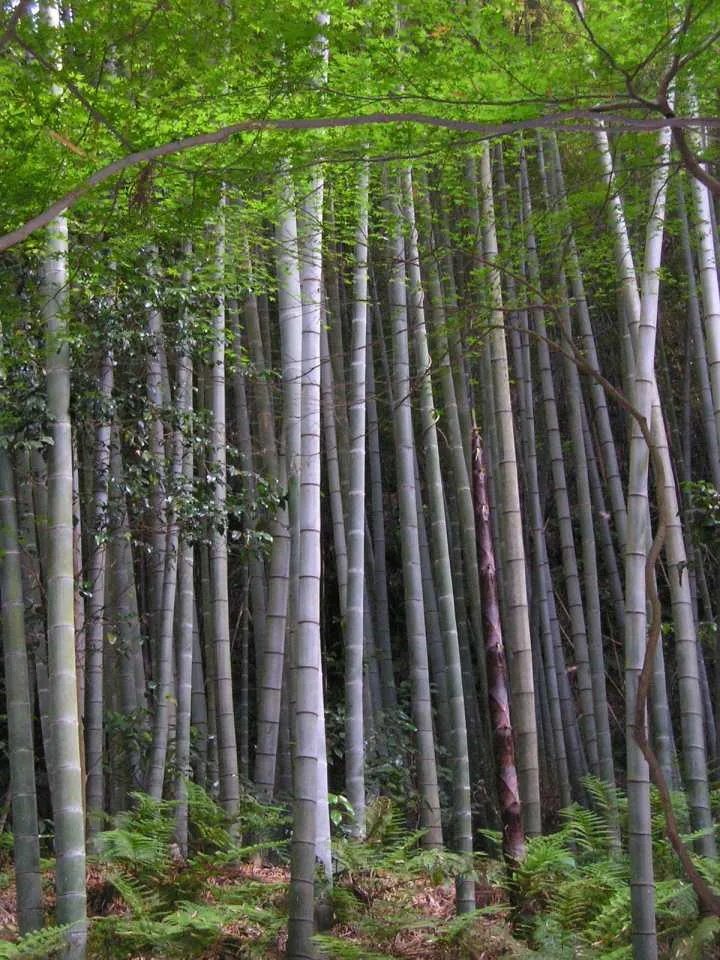
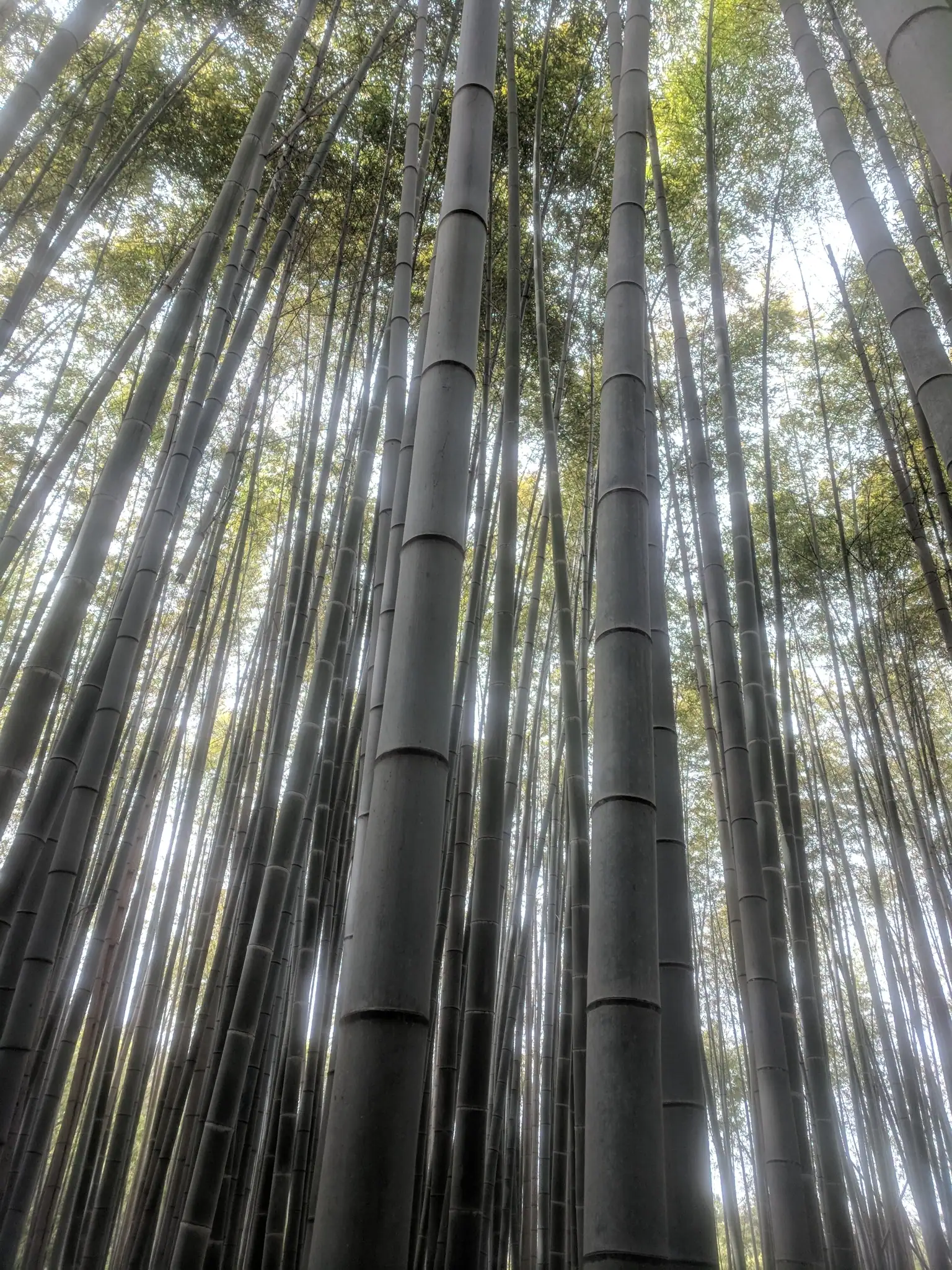
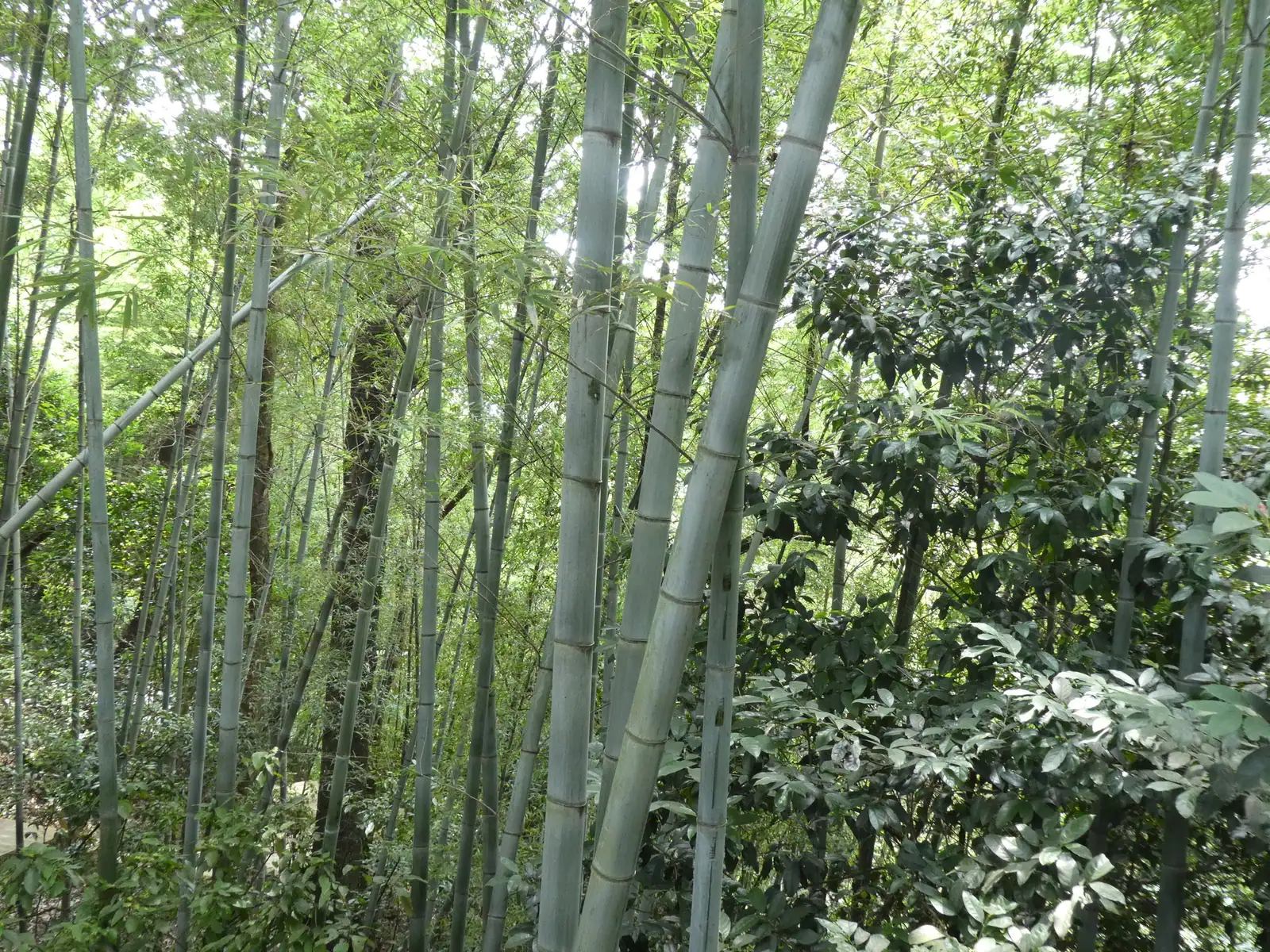
Moso bamboo is a giant running bamboo native to central and southern China and Taiwan. [5] It spreads aggressively through underground rhizomes and can form dense thickets. [5] It is grown for timber, edible shoots and ornamental landscaping. [5]
This record is incomplete: the sources we read do not cover every field yet.
Not yet covered by our sources: Watering, Hardiness, coldest zone, Hardiness, warmest zone, Pruning
Tortoise shell bamboo care
How to water Tortoise shell bamboo
Watering
Not stated in the sources we read.
Watering notes
Does not like water-saturated soil during the winter rest period
What the sources say (1)
Does not like water-saturated soil during the rest period in winter.How much light Tortoise shell bamboo needs
Prefers sunshine; can grow in semi-shade
What the sources say (1)
"hardy, aggressive spreading, can grow in semi-shade but prefers sunshine"How much cold Tortoise shell bamboo can take
Hardiness, coldest zone
Not stated in the sources we read.
Hardiness, warmest zone
Not stated in the sources we read.
Best soil for Tortoise shell bamboo
Soil pH, minimum
5.5
What the sources say (1)
Prefers acidic soil (5.5–6.5 pH).Soil pH, maximum
6.5
What the sources say (1)
Prefers acidic soil (5.5–6.5 pH).Where to grow Tortoise shell bamboo
Yes
What the sources say (1)
In cold winter areas north of USDA Zone 6, plants may be grown in patio containers that are brought indoors for overwintering in a greenhouse, sunroom or sunny window.How to propagate Tortoise shell bamboo
Seeds (rarely); rhizomes (vegetative)
What the sources say (1)
Reproduces by seeds (rarely) and vegetatively by rhizomesHow to grow Tortoise shell bamboo
Fertilizing
When
The sources give different values depending on region, zone or growing conditions.
What each source says
on poor, light soil: Spring
in containers: During the growing season, March to October
after the whole clump has flowered: Spring, after cutting the clump back to ground level
What the sources say (3)
on poor, light soil: If grown on a poor, light soil bamboos will benefit from a general purpose granular feed in spring.in containers: When grown in containers, bamboos will require additional feeding. Apply a general liquid feed during the growing season: March to October.after the whole clump has flowered: Then in spring, cut back the clump to ground level and feed with a high-nitrogen fertiliser , such as a spring lawn feed, to encourage new growth from the base.How often
The sources give different values depending on region, zone or growing conditions.
What each source says
after the whole clump has flowered: Regularly for the rest of the growing season
What the sources say (1)
after the whole clump has flowered: If the whole clump starts flowering, allow it to do so, even if the plant looks terrible. Feed and water it regularly for the rest of the growing season.Natural fertilizers
Garden compost as a mulch after planting; fallen leaves left in place, as bamboo reuses their silica
Mineral fertilizers
The sources give different values depending on region, zone or growing conditions.
What each source says
on poor, light soil: General-purpose granular fertilizer
in containers: General liquid fertilizer
after the whole clump has flowered: High-nitrogen fertilizer to encourage new growth from the base
What the sources say (3)
on poor, light soil: If grown on a poor, light soil bamboos will benefit from a general purpose granular feed in spring.in containers: When grown in containers, bamboos will require additional feeding. Apply a general liquid feed during the growing season: March to October.after the whole clump has flowered: Then in spring, cut back the clump to ground level and feed with a high-nitrogen fertiliser , such as a spring lawn feed, to encourage new growth from the base.Tortoise shell bamboo pests and problems
Invasive spread
Symptom: Underground rhizomes rapidly form dense thickets that crowd out native vegetation and are hard to remove once established
What to do: Not stated in the documents
What the sources say (1)
This species spreads aggressively through extensive underground rhizomes that can rapidly form dense thickets, crowding out native vegetation and altering habitat structure.
— Phyllostachys edulis | Plant Pono [5]
Remedies
The sources we checked give no remedies for this plant.
Is Tortoise shell bamboo toxic to pets?
Reported by the source, quoted verbatim. This is not medical or veterinary advice: if a person or an animal may have eaten this plant, contact a poison control centre or a veterinarian.
405 Toxic to animals y=1, n=0 n 406 Host for recognized pests and pathogens y=1, n=0 y 407 Causes allergies or is otherwise toxic to humans y=1, n=0 n
[1]The source flags the risk for this animal but does not explain why.
Calendar
Pruning
Not stated in the sources we read.
Months as given by the sources, which are mostly from the United States (northern hemisphere). In the southern hemisphere they shift by about six months.
Edibility
Reported by the source, quoted verbatim. Do not eat a plant on the basis of this page alone: identification mistakes can be dangerous.
Indicative values
Values from a secondary source, not checked word for word like the rest of this page. Use them as a starting point.
- Life cycle
- PerennialIndicative value, adapt it to your climate · Secondary source
- Mature height
- 762-1828.8 cm (25-60 ft)Indicative value, adapt it to your climate · Secondary source
- Hours of sun
- 6-8 hoursIndicative value, adapt it to your climate · Secondary source
- Watering
- AverageIndicative value, adapt it to your climate · Secondary source
- Drought tolerant
- yesIndicative value, adapt it to your climate · Secondary source
- USDA hardiness zones
- 7-10 [winter low −17.8 to 4.4 °C (0 to 40 °F)]Indicative value, adapt it to your climate · Secondary source
- Care level
- MediumIndicative value, adapt it to your climate · Secondary source
- Growth rate
- HighIndicative value, adapt it to your climate · Secondary source
- Pruning
- May, June, JulyIndicative value, adapt it to your climate · Secondary source
Similar plants
- Bamboo Phyllostachys aurea
- Black bamboo Phyllostachys nigra
- Yellow Groove Phyllostachys aureosulcata
- Aaron's Beard Hypericum calycinum
- Abies grandis Abies grandis
- Abraham Trachystemon orientalis
- Abyssinian banana Ensete ventricosum
- Acacia longifolia Acacia longifolia
Sources
Every value above is quoted from these documents. Links lead to the original publisher.
- TAXON: Phyllostachys edulis · plantpono.org, consulted
- Flora of New Zealand | Taxon Profile | Phyllostachys edulis · nzflora.info, consulted
- Phyllostachys spp · hellergarden.com, consulted
- How to Grow Phyllostachys -- Bamboo · harvesttotable.com, consulted
- Phyllostachys edulis | Plant Pono · plantpono.org, consulted
- BAMBOOS OF THAILAND - Phyllostachys edulis · sites.google.com, consulted
- rhs.org.uk · rhs.org.uk
Written by Emilio Marruso · last checked