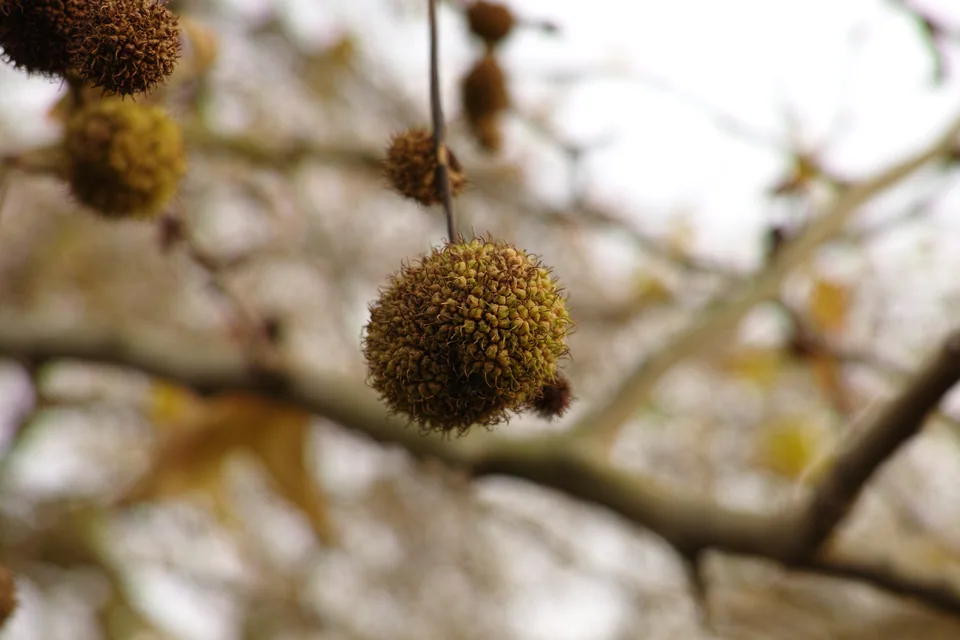
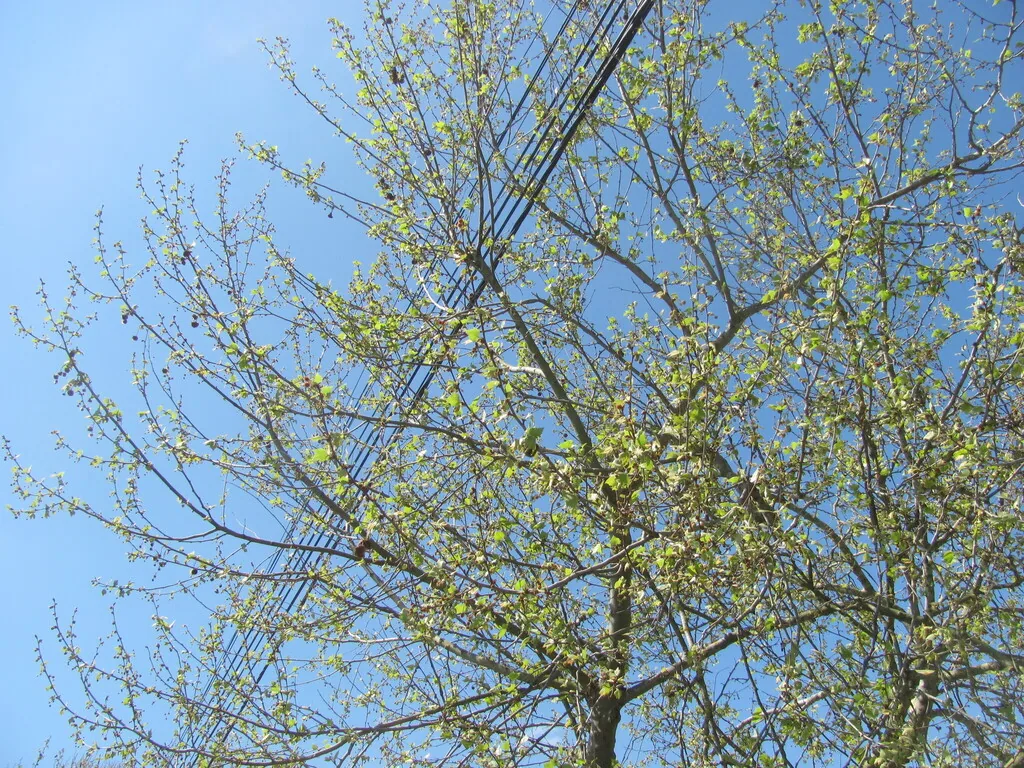

How to Grow and Care for London plane
Platanus acerifolia
Written by Emilio Marruso · last checked
At a glance
The London plane is a big, easygoing tree: it loves full sun, handles drought and even wet, sometimes flooded ground, and grows in soil from pH 5.0 to 8.0. Just water it through its first growing season while the roots settle in. Plant it in spring or fall and give it plenty of room, because it spreads 65–80 feet wide.
- Sun
Full sun
- Water
Water during the first growing season; after that it handles drought and wet ground
What the sources say (3)
Watering: Drought tolerant; tolerates wet and intermittently flooded sites
Tolerates wet and intermittently flooded sites; drought tolerant
— Woody Plants Database [3] This tree survives extended flooding and is highly drought tolerant
— Plane Tree Information - What Are London Plane Tree Growing Conditions | Gardening Know How [6] Watering notes: Water during the first growing season until the root system develops
you’ll need to provide water for the first growing season, until the root system develops
— Plane Tree Information - What Are London Plane Tree Growing Conditions | Gardening Know How [6] - Soil
Grows in soil from pH 5.0 to 8.0
- Planting
Plant in spring or fall
What the sources say (1)
Planting: Spring or fall (transplanting)
hybrid of P. orientalis x P. occidentalis; transplant in spring or fall
— Woody Plants Database [3] - Pests
Lace bugs, borers, powdery mildew; anthracnose may drop leaves early, but new ones grow back
What the sources say (2)
Pests: sycamore lace bug, American plum borer
Pests that can severely affect this species include sycamore anthracnose, cankerstain, Botryosphaeria canker, leaf spot, powdery mildew, sycamore lace bug, and American plum borer.
— Platanus × acerifolia (London Planetree) – Purdue Arboretum Explorer [5] Diseases: sycamore anthracnose, cankerstain, Botryosphaeria canker, leaf spot, powdery mildew
Pests that can severely affect this species include sycamore anthracnose, cankerstain, Botryosphaeria canker, leaf spot, powdery mildew, sycamore lace bug, and American plum borer.
— Platanus × acerifolia (London Planetree) – Purdue Arboretum Explorer [5] - Size
Spreads 65–80 ft wide
What the sources say (1)
Mature width: 1981.2-2438.4 cm (65-80 ft)
Ultimate Height: 70-100 feet Ultimate Spread: 65-80 feet Light Requirements: - Sun
— Platanus × acerifolia (London Planetree) – Purdue Arboretum Explorer [5] - Propagation
Grows from cuttings
What the sources say (1)
Propagation: Cuttings
The trees are easy to propagate from cuttings
— Plane Tree Information - What Are London Plane Tree Growing Conditions | Gardening Know How [6]
Overview
London planetree is a large hybrid tree that grows in full sun and tolerates wet sites and drought. [2][3] It can reach 70 to 100 feet [21.3–30.5 m] and can overgrow a small site and break sidewalks and curbs. [5][1]
This record is incomplete: the sources we read do not cover every field yet.
Not yet covered by our sources: Pruning
London plane care
Measurements in square brackets are our conversion into the other unit system; the quoted text is unchanged.
How to water London plane
Watering
Drought tolerant; tolerates wet and intermittently flooded sites
Watering notes
Water during the first growing season until the root system develops
What the sources say (1)
you’ll need to provide water for the first growing season, until the root system developsHow much light London plane needs
How much cold London plane can take
Hardiness, coldest zone
The sources give different values depending on region, zone or growing conditions.
What each source says
According to Utah State University Extension: 4 [winter low −34.4 to −28.9 °C (−30 to −20 °F)]
According to Cornell: 5b [winter low −26.1 to −23.3 °C (−15 to −10 °F)]
According to Gardening Know How: 5 [winter low −28.9 to −23.3 °C (−20 to −10 °F)]
What the sources say (3)
According to Utah State University Extension: Can overgrow a small site and break sidewalks and curbs, though less prone to this than some smaller trees like lindens and maples. Zones 4-9.According to Cornell: Hardy To Zone:
5bAccording to Gardening Know How: plant hardiness zones 5 through 9aHardiness, warmest zone
9 [winter low −6.7 to −1.1 °C (20 to 30 °F)]
What the sources say (2)
Can overgrow a small site and break sidewalks and curbs, though less prone to this than some smaller trees like lindens and maples. Zones 4-9.plant hardiness zones 5 through 9aBest soil for London plane
Soil pH, minimum
5.0
What the sources say (1)
Can tolerate acid to alkaline soil (pH 5.0 to 8.0)Soil pH, maximum
8.0
What the sources say (1)
Can tolerate acid to alkaline soil (pH 5.0 to 8.0)How to propagate London plane
Cuttings
What the sources say (1)
The trees are easy to propagate from cuttingsHow to grow London plane
The plant
Family
Platanaceae
What the sources say (1)
Platanus x acerifolia Platanaceae - Sycamore ## Description Leaves : Green, medium to dark, yellow-brown in fall, hairless when mature;Mature height
Mature width
1981.2-2438.4 cm (65-80 ft)
What the sources say (1)
Ultimate Height: 70-100 feet Ultimate Spread: 65-80 feet Light Requirements: - SunPests and diseases
Pests
sycamore lace bug, American plum borer
What the sources say (1)
Pests that can severely affect this species include sycamore anthracnose, cankerstain, Botryosphaeria canker, leaf spot, powdery mildew, sycamore lace bug, and American plum borer.Diseases
sycamore anthracnose, cankerstain, Botryosphaeria canker, leaf spot, powdery mildew
What the sources say (1)
Pests that can severely affect this species include sycamore anthracnose, cankerstain, Botryosphaeria canker, leaf spot, powdery mildew, sycamore lace bug, and American plum borer.London plane pests and problems
Anthracnose
Symptom: Early season leaf drop or twig dieback
What to do: Trees grow new leaves and usually are not severely affected
What the sources say (1)
Anthracnose is a fungal disease that can affect both of these species, causing early season leaf drop or twig dieback.
— Planetree, London | TreeBrowser | USU [1]
Remedies
Each remedy shows what official sources say about it; traditional remedies without an official source are marked as such. Harmful ones are listed so you know to avoid them.
Treating the plant
anthracnose
raking and disposing of fallen leaves Partly works
How: Rake and dispose of fallen leaves to reduce the chance of infection in the following season.
Fertilize trees in the spring, and water during drought to reduce stress. Rake and dispose of fallen leaves to reduce the chance of infection in the following season.
— portal.ct.gov [7] What the evidence says Fertilize trees in the spring, and water during drought to reduce stress. Rake and dispose of fallen leaves to reduce the chance of infection in the following season.
— portal.ct.gov [7] pruning out diseased branches Official source, not independently tested
How: Remove and destroy fallen leaves and infected twigs; prune out diseased branches.
Remove and destroy fallen leaves and infected twigs (reduces pathogenic spores) - Prune out diseased branches
— hgic.clemson.edu [8]
powdery mildew
raking leaves and improving air circulation Official source, not independently tested
How: Rake and remove fallen leaves, provide good air circulation around the tree, and avoid late day watering.
Rake and remove fallen leaves, provide good air circulation around the tree, and avoid late day watering. Fertilize trees in the spring and water during dry weather to maintain tree vigor.
— portal.ct.gov [7]
canker stain
pruning infected wood Official source, not independently tested
How: Pruning infected material well back of any discoloration in the wood may prevent further spread.
Pruning infected material well back of any discoloration in the wood may prevent further spread. Fertilize trees in the spring and water during dry weather to maintain tree vigor.
— portal.ct.gov [7]
sycamore lace bug
strong water spray Partly works
How: Spraying with a strong stream of water can control light infestations on small trees.
Spraying with a strong stream of water can control light infestations on small trees
— hgic.clemson.edu [8] What the evidence says Spraying with a strong stream of water can control light infestations on small trees
— hgic.clemson.edu [8] insecticidal soap Works
Imidacloprid applied as a systemic for root uptake will provide at least one season of control. Consult the labels for dosage rates and safety precautions.
— portal.ct.gov [7] How: Sprayed twice, ten days apart, in the spring.
Malathion, ultrafine horticultural oil or insecticidal soap, which are among the compounds registered for use against this pest in Connecticut, sprayed twice, ten days apart, in the spring will control this pest on shade trees.
— portal.ct.gov [7] What the evidence says Malathion, ultrafine horticultural oil or insecticidal soap, which are among the compounds registered for use against this pest in Connecticut, sprayed twice, ten days apart, in the spring will control this pest on shade trees.
— portal.ct.gov [7] horticultural oil Works
How: Sprayed twice, ten days apart, in the spring.
Malathion, ultrafine horticultural oil or insecticidal soap, which are among the compounds registered for use against this pest in Connecticut, sprayed twice, ten days apart, in the spring will control this pest on shade trees.
— portal.ct.gov [7] What the evidence says Malathion, ultrafine horticultural oil or insecticidal soap, which are among the compounds registered for use against this pest in Connecticut, sprayed twice, ten days apart, in the spring will control this pest on shade trees.
— portal.ct.gov [7]
aphids
insecticidal soap Works
How: Used as a contact spray against the large gray aphid found on the bark and twigs.
Insecticidal soap or malathion, which are among the compounds registered for use against this pest in Connecticut, will control this insect as a contact spray.
— portal.ct.gov [7] What the evidence says Insecticidal soap or malathion, which are among the compounds registered for use against this pest in Connecticut, will control this insect as a contact spray.
— portal.ct.gov [7]
whitemarked tussock moth
Bacillus thuringiensis Works
How: Sprays of Bacillus thuringiensis var. kurstaki.
This caterpillar can be controlled by sprays of malathion, carbaryl, spinosad or Bacillus thuringiensis var. kurstaki, which are among the compounds registered for use against this pest in Connecticut.
— portal.ct.gov [7] What the evidence says This caterpillar can be controlled by sprays of malathion, carbaryl, spinosad or Bacillus thuringiensis var. kurstaki, which are among the compounds registered for use against this pest in Connecticut.
— portal.ct.gov [7]
terrapin scale
horticultural oil Works
How: Horticultural oil may be applied in early spring to control overwintering eggs.
Horticultural oil may be applied in early spring to control overwintering eggs, or use a spray of malathion in April to kill crawlers.
— portal.ct.gov [7] What the evidence says Horticultural oil may be applied in early spring to control overwintering eggs, or use a spray of malathion in April to kill crawlers.
— portal.ct.gov [7]
Calendar
Planting
Spring or fall (transplanting)
What the sources say (1)
hybrid of P. orientalis x P. occidentalis; transplant in spring or fallPruning
Not stated in the sources we read.
Months as given by the sources, which are mostly from the United States (northern hemisphere). In the southern hemisphere they shift by about six months.
Indicative values
Values from a secondary source, not checked word for word like the rest of this page. Use them as a starting point.
- Life cycle
- PerennialIndicative value, adapt it to your climate · Secondary source
- Care level
- MediumIndicative value, adapt it to your climate · Secondary source
- Growth rate
- HighIndicative value, adapt it to your climate · Secondary source
- Pruning
- March, AprilIndicative value, adapt it to your climate · Secondary source
Similar plants
- Oriental Plane Platanus orientalis
- Sycamore Platanus occidentalis
- Abies grandis Abies grandis
- Abraham Trachystemon orientalis
- Abyssinian banana Ensete ventricosum
- Acacia longifolia Acacia longifolia
- Acanthus hungaricus Acanthus hungaricus
- Aconite Aconitum napellus
Sources
Every value above is quoted from these documents. Links lead to the original publisher.
- Planetree, London | TreeBrowser | USU · extension.usu.edu, consulted
- London Planetree | Drush Site-Install · selectors.extension.illinois.edu, consulted
- Woody Plants Database · woodyplants.cals.cornell.edu, consulted
- Plant Database · plantdatabase.uconn.edu, consulted
- Platanus × acerifolia (London Planetree) – Purdue Arboretum Explorer · arboretum.purdue.edu, consulted
- Plane Tree Information - What Are London Plane Tree Growing Conditions | Gardening Know How · gardeningknowhow.com, consulted
- portal.ct.gov · portal.ct.gov
- hgic.clemson.edu · hgic.clemson.edu
Written by Emilio Marruso · last checked