
How to Grow and Care for Singapore graveyard flower
Plumeria obtusa
Written by Emilio Marruso · last checked
Toxic to: Animals, People · Why
At a glance
This plumeria asks for simple care: moderate water and soil that stays moist but drains well. It grows happily in a container, and you can make new plants from cuttings to keep or share with friends. Just handle it with care, because its milky sap is irritating and the plant is toxic to people and animals.
- Water
Moderate water; keep the soil moist
What the sources say (1)
Watering: Moderate water; needs good drainage and moist soil
Watering Needs: Moderate water. Needs good drainage, and moist soil Propagation: Cuttings
— Singapore Plumeria, Frangipani (Plumeria obtusa) [3] - Cold
Survives winters down to 30 °F (−1.1 °C)
Half hardy: mild winters or an unheated greenhouse · USDA 10 · RHS H3 · Z10
What the sources say (2)
Hardiness, coldest zone: 10 [winter low −1.1 to 4.4 °C (30 to 40 °F)]
USDA: 10-11 Frost Tolerance: Singapore plumerias need protections below 40° F (4° C)
— Singapore Plumeria, Frangipani (Plumeria obtusa) [3] Hardiness, warmest zone: 11 [winter low 4.4 to 10 °C (40 to 50 °F)]
USDA: 10-11 Frost Tolerance: Singapore plumerias need protections below 40° F (4° C)
— Singapore Plumeria, Frangipani (Plumeria obtusa) [3] - Soil
Soil that drains well
What the sources say (1)
Watering: Moderate water; needs good drainage and moist soil
Watering Needs: Moderate water. Needs good drainage, and moist soil Propagation: Cuttings
— Singapore Plumeria, Frangipani (Plumeria obtusa) [3] - Propagation
Make new plants from cuttings
What the sources say (1)
Propagation: Cuttings
Watering Needs: Moderate water. Needs good drainage, and moist soil Propagation: Cuttings
— Singapore Plumeria, Frangipani (Plumeria obtusa) [3] - Containers
Grows in containers too
What the sources say (1)
In containers: Yes
## Plant Uses: - Container plant - Fragrant - Lei flower - Ornamental - Specimen
— Plumeria obtusa | Plant Pono [5] - Safety
Toxic to people and animals: the sap irritates and eating it upsets the stomach
Overview
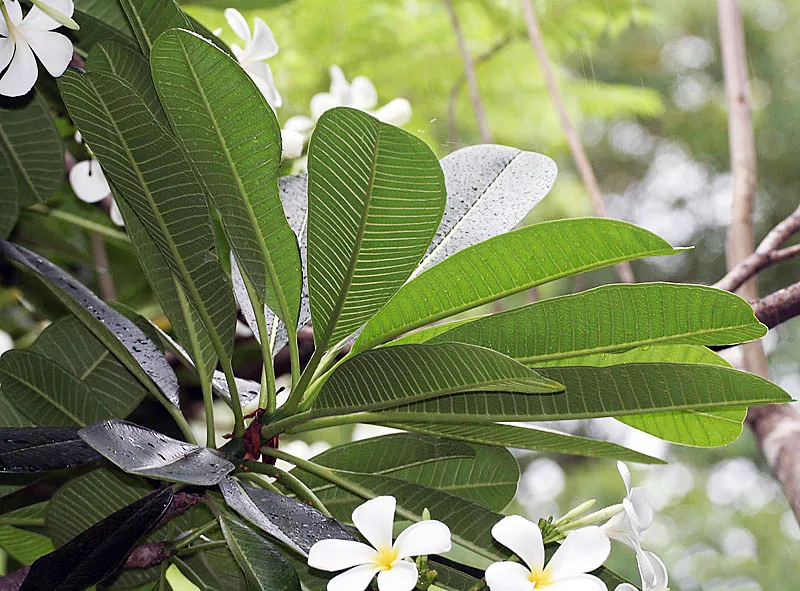
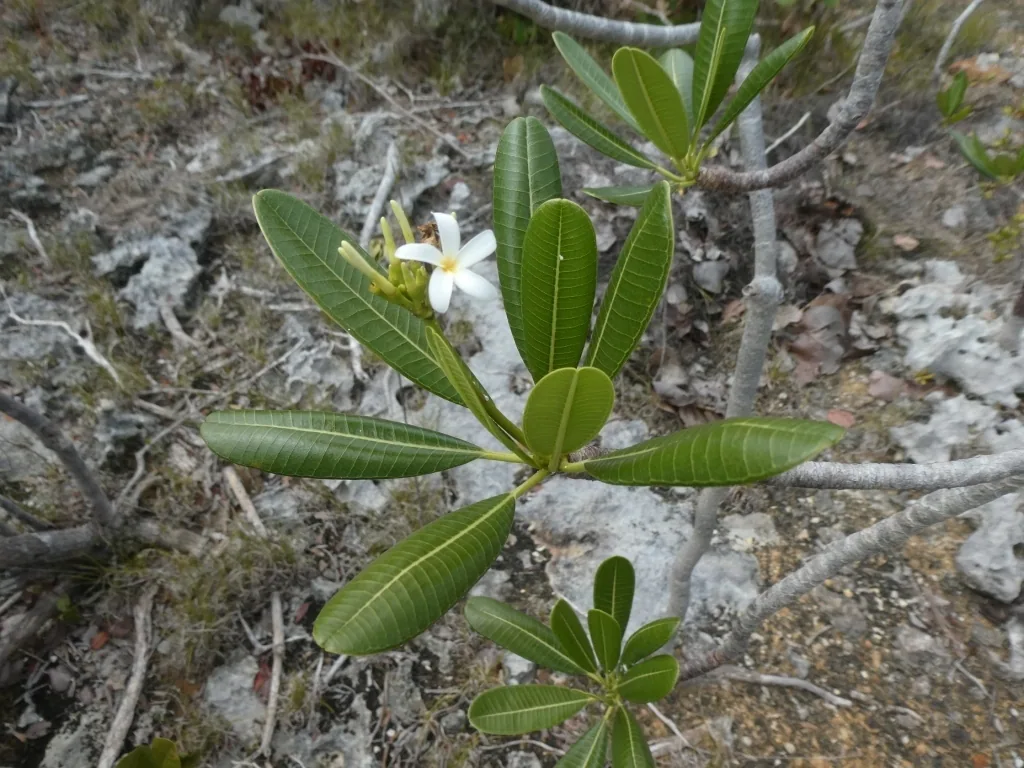
Plumeria obtusa is a small shrub or tree 0.9-6.1 meters [3–20 ft] tall with white flowers, native to the Bahamas and Greater Antilles. [1] It is grown as an ornamental and container plant, and its flowers are used for lei. [5] It is listed as toxic to animals and humans. [5]
This record is incomplete: the sources we read do not cover every field yet.
Not yet covered by our sources: Light, Pruning
Singapore graveyard flower care
Measurements in square brackets are our conversion into the other unit system; the quoted text is unchanged.
How to water Singapore graveyard flower
Moderate water; needs good drainage and moist soil
What the sources say (1)
Watering Needs: Moderate water. Needs good drainage, and moist soil
Propagation: CuttingsHow much light Singapore graveyard flower needs
Not stated in the sources we read.
How much cold Singapore graveyard flower can take
Hardiness, coldest zone
10 [winter low −1.1 to 4.4 °C (30 to 40 °F)]
What the sources say (1)
USDA: 10-11
Frost Tolerance: Singapore plumerias need protections below 40° F (4° C)Hardiness, warmest zone
11 [winter low 4.4 to 10 °C (40 to 50 °F)]
What the sources say (1)
USDA: 10-11
Frost Tolerance: Singapore plumerias need protections below 40° F (4° C)Where to grow Singapore graveyard flower
Yes
What the sources say (1)
## Plant Uses:
- Container plant
- Fragrant
- Lei flower
- Ornamental
- SpecimenHow to propagate Singapore graveyard flower
Cuttings
What the sources say (1)
Watering Needs: Moderate water. Needs good drainage, and moist soil
Propagation: CuttingsHow to grow Singapore graveyard flower
The plant
Family
Apocynaceae
What the sources say (1)
Family
APOCYNACEAE
Genus
Plumeria
Species
Plumeria obtusa L.Fertilizing
How often
The sources give different values depending on region, zone or growing conditions.
What each source says
Plumeria in general: Every 3 to 4 months
What the sources say (1)
Plumeria in general: Fertilize plumeria with 10-30-10 every three to four months at about 1
lb per inch of trunk diameter, distributing the fertilizer around the the plant
to 2 feet beyond the foliage line.Mineral fertilizers
The sources give different values depending on region, zone or growing conditions.
What each source says
Plumeria in general: 10-30-10, 454 g per 2.54 cm [1 in] of trunk diameter, spread to 61 cm [24 in] beyond the foliage line
cultivar 'Singapore White': High-phosphate fertilizer, 10-50-10
What the sources say (2)
Plumeria in general: Fertilize plumeria with 10-30-10 every three to four months at about 1
lb per inch of trunk diameter, distributing the fertilizer around the the plant
to 2 feet beyond the foliage line.cultivar 'Singapore White': Applying fertilizer with a high phosphate content (eg. NPK of 10-50-10) help to boost the plant growth.Remedies
Each remedy shows what official sources say about it; traditional remedies without an official source are marked as such. Harmful ones are listed so you know to avoid them.
First aid
First aid: not a substitute for a doctor
sap on skin
wash skin with plenty of running water and soap Official source, not independently tested
How: Wash the area thoroughly with plenty of running water and soap.
Wash the area thoroughly with plenty of running water and soap.
— poison.org [8] wash sap off quickly with running water Official source, not independently tested
How: If you know you have plant material, juices, or sap on your skin, wash quickly with plenty of running water.
If you know you have plant material, juices, or sap on your skin, wash quickly with plenty of running water.
— poison.org [8]
Treating the plant
spider mites
light horticultural oil spray Works
How: Spray a light horticultural oil (1% solution), covering all plant surfaces; keep plants well-watered and out of excessive heat and direct sunlight around the treatment.
A light horticultural oil spray (1% solution) can effectively control mites if care is taken to cover all plant surfaces.
— ipm.ucanr.edu [9] What the evidence says A light horticultural oil spray (1% solution) can effectively control mites if care is taken to cover all plant surfaces.
— ipm.ucanr.edu [9] insecticidal soap spray Partly works
How: Insecticidal soaps can be used as an alternative to oil; repeat applications may be needed.
Insecticidal soaps can be utilized as an alternative to oil but it’s more likely that repeat applications may be necessary.
— ipm.ucanr.edu [9] What the evidence says Insecticidal soaps can be utilized as an alternative to oil but it’s more likely that repeat applications may be necessary.
— ipm.ucanr.edu [9] sticky tape around the stem Partly works
How: Wrap double-sided sticky tape around the plant stem to stop overwintering mites from crawling up it.
Double-sided sticky tape wrapped around the plant stem may help prevent overwintering mites from crawling up the stem.
— ipm.ucanr.edu [9] What the evidence says Double-sided sticky tape wrapped around the plant stem may help prevent overwintering mites from crawling up the stem.
— ipm.ucanr.edu [9]
rust
removing and destroying infected leaves Partly works
How: Minor infections may be managed in the home landscape by removing infected leaves and destroying them.
Minor infections may be managed in the home landscape by removing infected leaves and destroying them.
— ask.ifas.ufl.edu [10] What the evidence says Minor infections may be managed in the home landscape by removing infected leaves and destroying them.
— ask.ifas.ufl.edu [10]
Is Singapore graveyard flower toxic to pets?
Reported by the source, quoted verbatim. This is not medical or veterinary advice: if a person or an animal may have eaten this plant, contact a poison control centre or a veterinarian.
Animals
## Plant Dangers: - Toxic to animals and humans ## High Risk Traits:
[5]The source flags the risk for this animal but does not explain why.
People
Toxic to humans (irritating latex, upset stomach if ingested) - Tolerates wide range of soil conditions (loamy, sandy,
[5]
Calendar
Pruning
Not stated in the sources we read.
Months as given by the sources, which are mostly from the United States (northern hemisphere). In the southern hemisphere they shift by about six months.
Indicative values
Values from a secondary source, not checked word for word like the rest of this page. Use them as a starting point.
- Life cycle
- PerennialIndicative value, adapt it to your climate · Secondary source
- Mature height
- 304.8-762 cm (10-25 ft)Indicative value, adapt it to your climate · Secondary source
- Light
- full sun, part sun/part shadeIndicative value, adapt it to your climate · Secondary source
- Hours of sun
- 6-8 hoursIndicative value, adapt it to your climate · Secondary source
- Drought tolerant
- yesIndicative value, adapt it to your climate · Secondary source
- Soil pH
- 6-7Indicative value, adapt it to your climate · Secondary source
- Care level
- MediumIndicative value, adapt it to your climate · Secondary source
- Growth rate
- LowIndicative value, adapt it to your climate · Secondary source
- Pruning
- March, AprilIndicative value, adapt it to your climate · Secondary source
Similar plants
- Nosegaytree Plumeria alba
- Plumeria Plumeria rubra
- Allamanda Allamanda cathartica
- Asiatic Jasmine Trachelospermum asiaticum
- Bladderflower Araujia sericifera
- Blue Star Amsonia ciliata
- Blue Star Amsonia hubrichtii
- Bush allamanda Allamanda schottii
Sources
Every value above is quoted from these documents. Links lead to the original publisher.
- Plumeria obtusa - Plant Detail - Tropical Plants Database - NTBG Database · ntbg.org, consulted
- Plumeria obtusa / [Species detail] / Plant Atlas · florida.plantatlas.usf.edu, consulted
- Singapore Plumeria, Frangipani (Plumeria obtusa) · desert-tropicals.com, consulted
- Growing Plumeria – How To Care For Plumeria Flowers | Gardening Know How · gardeningknowhow.com, consulted
- Plumeria obtusa | Plant Pono · plantpono.org, consulted
- ctahr.hawaii.edu · ctahr.hawaii.edu
- nparks.gov.sg · nparks.gov.sg
- poison.org · poison.org
- ipm.ucanr.edu · ipm.ucanr.edu
- ask.ifas.ufl.edu · ask.ifas.ufl.edu
Written by Emilio Marruso · last checked