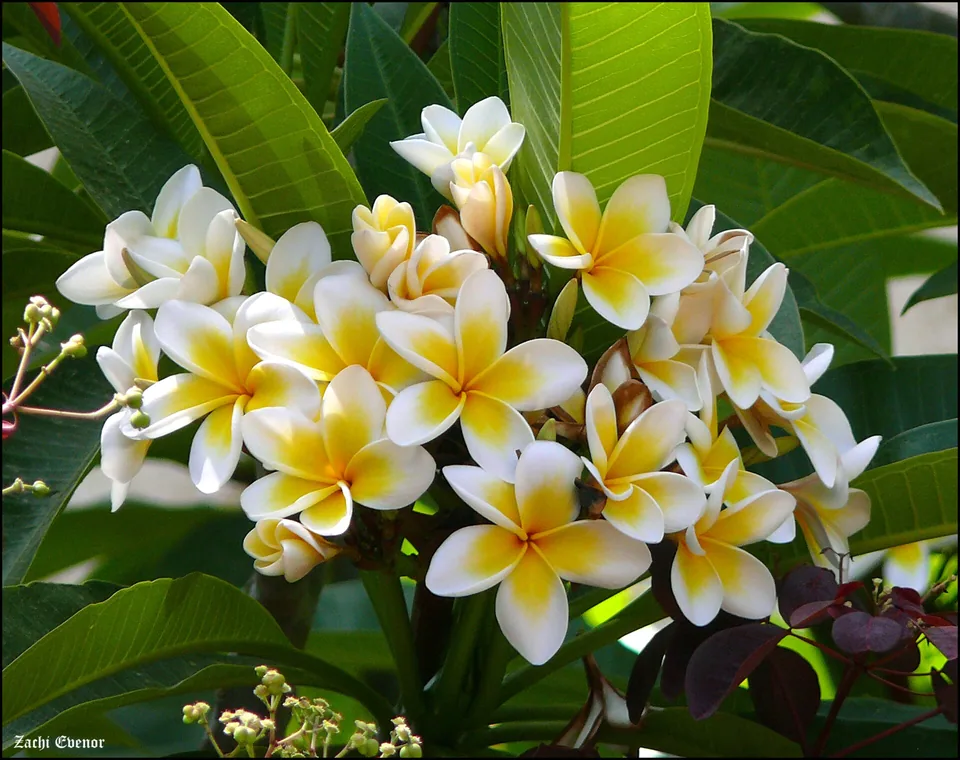
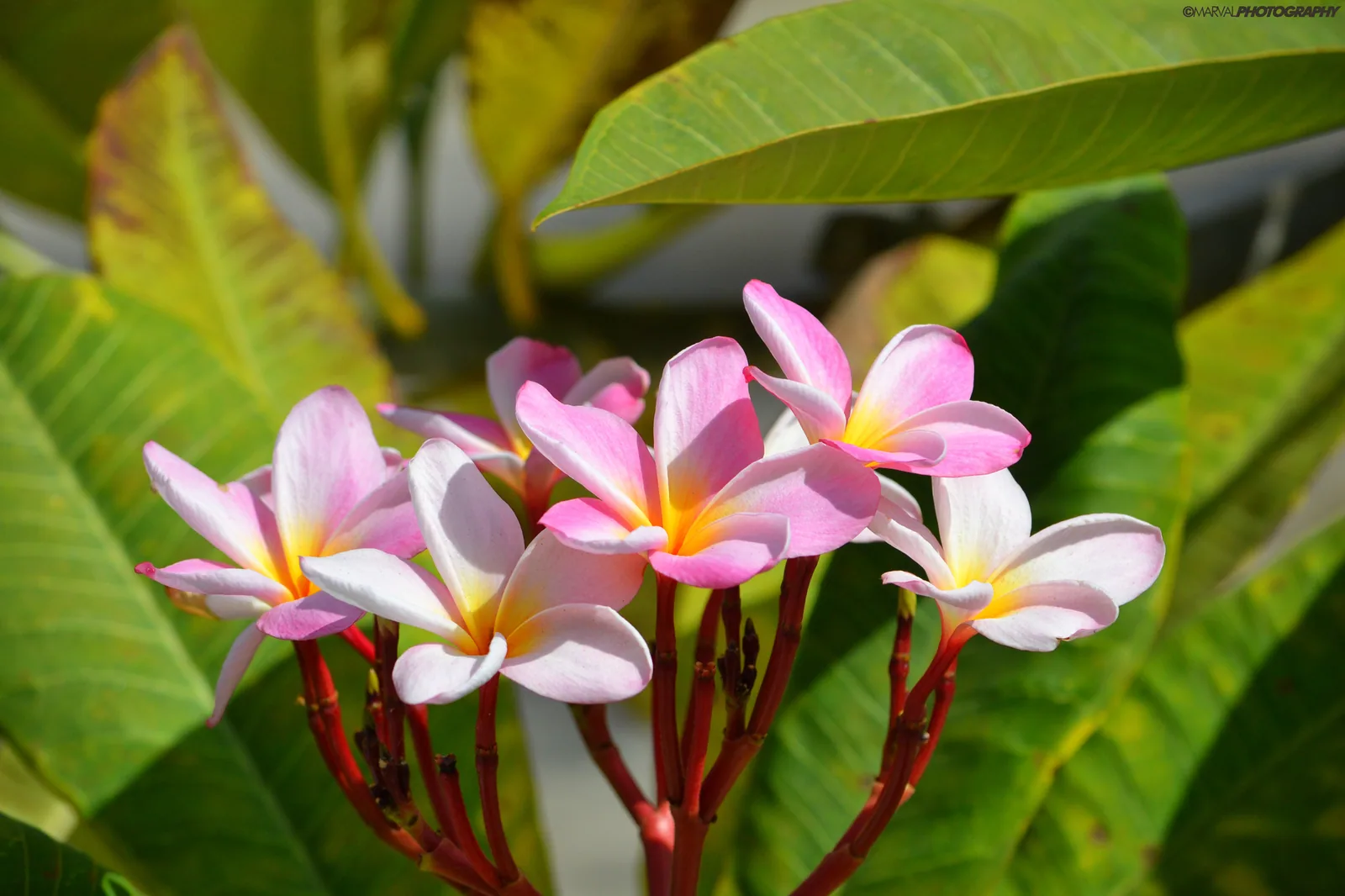

How to Grow and Care for Plumeria
Plumeria rubra
Written by Emilio Marruso · last checked
Toxic to: People · Why
At a glance
Plumeria rubra is a sun lover that can grow into a 25-foot tree, yet it is happy in a container too. Give it full sun, water generously when the soil is dry, and feed it often during the growing season with a high-phosphorus fertilizer to encourage flowers. It tolerates drought, and you can start new plants from cuttings in spring.
- Sun
Full sun, or at least half a day of sun
- Water
Water generously when the soil is dry, but don't overwater; it handles drought
What the sources say (4)
Watering: Moderate water; water generously when the soil is dry, but do not overwater
Light Preference | Full Sun | Water Preference | Moderate Water
— NParks | Plumeria rubra [3] generous watering when the soil is dry, but don't overwater or the trunks will rot.
— Plumeria rubra [4] Watering notes: Drought tolerant and tolerates well-drained and saline soils; root rot can infect plants in poorly-drained soils
Rootzone Tolerance | Well-Drained Soils, Saline Soils / Salt Spray, Drought Tolerant
— NParks | Plumeria rubra [3] Root rot can infect plants planted in poorly-drained soils.
— NParks | Plumeria rubra [3] - Soil
Well-drained soil, even salty soil; soggy soil causes root rot
What the sources say (2)
Watering notes: Drought tolerant and tolerates well-drained and saline soils; root rot can infect plants in poorly-drained soils
Rootzone Tolerance | Well-Drained Soils, Saline Soils / Salt Spray, Drought Tolerant
— NParks | Plumeria rubra [3] Root rot can infect plants planted in poorly-drained soils.
— NParks | Plumeria rubra [3] - Spacing
26–33 ft between plants
What the sources say (1)
Spacing: 800-1000 cm (8 m to 10 m [32.8 ft])
Planting Distance | 8 m to 10 m
— NParks | Plumeria rubra [3] - Feeding
Feed often, only in the growing season, with a high-phosphorus fertilizer for more flowers
What the sources say (4)
When: During the growing season only
Fertilize frequently during the growing season with a high phosphorus (blossom-booster) fertilizer to encourage flowering, and do not fertilize at other times of the year.
— Plumeria – Wisconsin Horticulture [1] How often: Frequently during the growing season
Fertilize frequently during the growing season with a high phosphorus (blossom-booster) fertilizer to encourage flowering, and do not fertilize at other times of the year.
— Plumeria – Wisconsin Horticulture [1] Mineral fertilizers: High-phosphorus (blossom-booster) fertilizer, to encourage flowering
Fertilize frequently during the growing season with a high phosphorus (blossom-booster) fertilizer to encourage flowering, and do not fertilize at other times of the year.
— Plumeria – Wisconsin Horticulture [1] Avoid: Fertilizing outside the growing season
Fertilize frequently during the growing season with a high phosphorus (blossom-booster) fertilizer to encourage flowering, and do not fertilize at other times of the year.
— Plumeria – Wisconsin Horticulture [1] - Pruning
Prune in spring to shape it
What the sources say (1)
Pruning: Spring (for shaping)
Plumerias normally require little pruning, but any shaping should be done in spring.
— Plumeria rubra [4] - Pests
Whiteflies, mealybugs and spider mites
What the sources say (1)
Pests: white flies, mealybugs, spider mites
Plumeria have few problems, but can be infested with common greenhouse pests such as white flies and mealybugs, and are very susceptible to spider mites.
— Plumeria – Wisconsin Horticulture [1] - Size
Grows 25 ft tall
What the sources say (1)
Mature height: 762 cm (25 ft)
The deciduous, elliptical leaves have pointed ends. They grow into rangy trees up to 25 feet tall.
— Plumeria – Wisconsin Horticulture [1] - Propagation
From seed or from cuttings in spring; let the cut end dry for several days
What the sources say (2)
Propagation: Seed; hardwood stem cuttings (cut end dried for several days) or leafy tip cuttings; cuttings in spring
Propagate by seeds, or hardwood cuttings (allow cut end to dry for several days before inserting into media).
— NParks | Plumeria rubra [3] Propagation: By cuttings in spring. "Plumeria" species are easily propagated by taking a cutting of leafless stem tips
— Plumeria rubra [4] - Containers
Grows in containers too
What the sources say (1)
In containers: Yes
Landscape Uses | General, Suitable for Roadsides, Skyrise / Balcony, Container Planting, Coastal Plant
— NParks | Plumeria rubra [3] - Safety
The milky sap from cuts is poisonous and irritating
Overview
Frangipani is a partially deciduous tree that is widely cultivated as an ornamental in tropical areas. [4][2] It grows in full sun in well-drained soil and its cut surfaces release a poisonous milky sap. [3]
This record is incomplete: the sources we read do not cover every field yet.
Not yet covered by our sources: Hardiness, coldest zone, Hardiness, warmest zone
Plumeria care
Measurements in square brackets are our conversion into the other unit system; the quoted text is unchanged.
How to water Plumeria
Watering
Moderate water; water generously when the soil is dry, but do not overwater
Watering notes
Drought tolerant and tolerates well-drained and saline soils; root rot can infect plants in poorly-drained soils
How much light Plumeria needs
How much cold Plumeria can take
Hardiness, coldest zone
Not stated in the sources we read.
Hardiness, warmest zone
Not stated in the sources we read.
Where to grow Plumeria
In containers
Yes
What the sources say (1)
Landscape Uses
| General, Suitable for Roadsides, Skyrise / Balcony, Container Planting, Coastal PlantSpacing
800-1000 cm (8 m to 10 m [32.8 ft])
What the sources say (1)
Planting Distance
| 8 m to 10 mHow to propagate Plumeria
Seed; hardwood stem cuttings (cut end dried for several days) or leafy tip cuttings; cuttings in spring
What the sources say (2)
Propagate by seeds, or hardwood cuttings (allow cut end to dry for several days before inserting into media).Propagation: By cuttings in spring. "Plumeria" species are easily propagated by taking a cutting of leafless stem tipsHow to grow Plumeria
The plant
Family
Apocynaceae
What the sources say (1)
Plumeria is a genus of eleven species of shrubs and small trees in the dogbane family (Apocynaceae) native to tropical America from Brazil to MexicoMature height
762 cm (25 ft)
What the sources say (1)
The deciduous, elliptical leaves have pointed ends. They grow into rangy trees up to 25 feet tall.Pests and diseases
Pests
white flies, mealybugs, spider mites
What the sources say (1)
Plumeria have few problems, but can be infested with common greenhouse pests such as white flies and mealybugs, and are very susceptible to spider mites.Fertilizing
When
During the growing season only
What the sources say (1)
Fertilize frequently during the growing season with a high phosphorus (blossom-booster) fertilizer to encourage flowering, and do not fertilize at other times of the year.How often
Frequently during the growing season
What the sources say (1)
Fertilize frequently during the growing season with a high phosphorus (blossom-booster) fertilizer to encourage flowering, and do not fertilize at other times of the year.Mineral fertilizers
High-phosphorus (blossom-booster) fertilizer, to encourage flowering
What the sources say (1)
Fertilize frequently during the growing season with a high phosphorus (blossom-booster) fertilizer to encourage flowering, and do not fertilize at other times of the year.Avoid
Fertilizing outside the growing season
What the sources say (1)
Fertilize frequently during the growing season with a high phosphorus (blossom-booster) fertilizer to encourage flowering, and do not fertilize at other times of the year.Remedies
Each remedy shows what official sources say about it; traditional remedies without an official source are marked as such. Harmful ones are listed so you know to avoid them.
First aid
First aid: not a substitute for a doctor
sap skin irritation
washing the skin with a lot of water Official source, not independently tested
Contact your provider if: - You have symptoms of contact dermatitis. - The skin reaction is severe.
— medlineplus.gov [7] How: Often, treatment includes washing the area with a lot of water to get rid of any traces of the irritant that are still on the skin.
Often, treatment includes washing the area with a lot of water to get rid of any traces of the irritant that are still on the skin.
— medlineplus.gov [7]
Treating the plant
whiteflies and mealybugs
Is Plumeria poisonous?
Reported by the source, quoted verbatim. This is not medical or veterinary advice: if a person or an animal may have eaten this plant, contact a poison control centre or a veterinarian.
Calendar
Pruning
Spring (for shaping)
What the sources say (1)
Plumerias normally require little pruning, but any shaping should be done in spring.Months as given by the sources, which are mostly from the United States (northern hemisphere). In the southern hemisphere they shift by about six months.
Indicative values
Values from a secondary source, not checked word for word like the rest of this page. Use them as a starting point.
- Life cycle
- PerennialIndicative value, adapt it to your climate · Secondary source
- Hours of sun
- 6-8 hoursIndicative value, adapt it to your climate · Secondary source
- Soil pH
- 6-7Indicative value, adapt it to your climate · Secondary source
- USDA hardiness zones
- 10-12 [winter low −1.1 to 15.6 °C (30 to 60 °F)]Indicative value, adapt it to your climate · Secondary source
- Care level
- HighIndicative value, adapt it to your climate · Secondary source
- Growth rate
- HighIndicative value, adapt it to your climate · Secondary source
Similar plants
- Nosegaytree Plumeria alba
- Singapore graveyard flower Plumeria obtusa
- Allamanda Allamanda cathartica
- Asiatic Jasmine Trachelospermum asiaticum
- Bladderflower Araujia sericifera
- Blue Star Amsonia ciliata
- Blue Star Amsonia hubrichtii
- Butterfly Weed Asclepias tuberosa
Sources
Every value above is quoted from these documents. Links lead to the original publisher.
- Plumeria – Wisconsin Horticulture · hort.extension.wisc.edu, consulted
- Plumeria rubra - Plant Detail - Tropical Plants Database - NTBG Database · ntbg.org, consulted
- NParks | Plumeria rubra · nparks.gov.sg, consulted
- Plumeria rubra · llifle.com, consulted
- How to Grow and Care for Plumeria (Frangipani) | BBC Gardeners World Magazine · gardenersworld.com, consulted
- Plumeria rubra - Botany Brisbane · botanybrisbane.com, consulted
- medlineplus.gov · medlineplus.gov
Written by Emilio Marruso · last checked