How to Grow and Care for St Lucie Cherry
Prunus mahaleb
Written by Emilio Marruso · last checked
Toxic to: People · Why
At a glance
Mahaleb is a tough, easygoing tree that grows 20–30 ft tall and handles drought with ease. Give it full sun or partial shade and well-drained soil that still holds some moisture, and it will thrive. Its seed kernels hold a lovely surprise: dried and ground, they become a spice for breads and pastries.
- Sun
Full sun to partial shade
- Water
Handles drought well
What the sources say (1)
Watering: Drought resistant
It is drought resistant and can grow in nutritionally poor soil.
— Mahaleb Cherry | Whitman County | Washington State University [1] - Cold
Survives winters down to −40 °F (−40 °C)
Very hardy · USDA 3 · RHS H7 · Z3
What the sources say (2)
Hardiness, coldest zone: 3 [winter low −40 to −34.4 °C (−40 to −30 °F)]
Presumably the seed source is fruit produced on sprouts growing from below sour and sweet cherry grafts. Zones 3-9.
— Cherry, Mahaleb | TreeBrowser | USU [2] Hardiness, warmest zone: 9 [winter low −6.7 to −1.1 °C (20 to 30 °F)]
Presumably the seed source is fruit produced on sprouts growing from below sour and sweet cherry grafts. Zones 3-9.
— Cherry, Mahaleb | TreeBrowser | USU [2] - Soil
Well-drained soil that still holds some moisture
What the sources say (1)
Watering notes: Thrives in well-drained, moisture-retentive soil
mahaleb cherry thrives in well-drained, moisture-retentive soil.
— Mahaleb Cherry | Whitman County | Washington State University [1] - Harvest
The seed kernels, dried and ground, are a spice for breads and pastries
- Size
20–30 ft tall
What the sources say (1)
Mature height: 609.6-914.4 cm (20-30 ft)
It is a deciduous tree or large shrub, typically growing 20 to 30 feet tall.
— Mahaleb Cherry | Whitman County | Washington State University [1] - Propagation
From seed given a cold period and sown in a cold frame, or from young, soft-stem cuttings
What the sources say (2)
Propagation: Seed (cold stratified, sown in a cold frame); softwood cuttings
Seed - requires 2 - 3 months cold stratification and is best sown in a cold frame as soon as it is ripe
— Prunus mahaleb - Useful Temperate Plants [5] Softwood cuttings from strongly growing plants in spring to early summer in a frame
— Prunus mahaleb - Useful Temperate Plants [5] - Safety
Never eat bitter seeds or fruits: they often contain toxins
Overview
Mahaleb cherry is a deciduous tree or large shrub that grows in full sun or partial shade and is drought resistant. [1] It is widely used as a rootstock for cultivated cherries and its seed kernel is used as a spice in the Mediterranean. [1]
This record is incomplete: the sources we read do not cover every field yet.
Not yet covered by our sources: Pruning
St Lucie Cherry care
How to water St Lucie Cherry
Watering
Drought resistant
What the sources say (1)
It is drought resistant and can grow in nutritionally poor soil.Watering notes
Thrives in well-drained, moisture-retentive soil
What the sources say (1)
mahaleb cherry thrives in well-drained, moisture-retentive soil.How much light St Lucie Cherry needs
How much cold St Lucie Cherry can take
Hardiness, coldest zone
3 [winter low −40 to −34.4 °C (−40 to −30 °F)]
What the sources say (1)
Presumably the seed source is fruit produced on sprouts growing from below sour and sweet cherry grafts. Zones 3-9.Hardiness, warmest zone
9 [winter low −6.7 to −1.1 °C (20 to 30 °F)]
What the sources say (1)
Presumably the seed source is fruit produced on sprouts growing from below sour and sweet cherry grafts. Zones 3-9.How to propagate St Lucie Cherry
Seed (cold stratified, sown in a cold frame); softwood cuttings
What the sources say (2)
Seed - requires 2 - 3 months cold stratification and is best sown in a cold frame as soon as it is ripeSoftwood cuttings from strongly growing plants in spring to early summer in a frameHow to grow St Lucie Cherry
The plant
Family
Rosaceae
What the sources say (1)
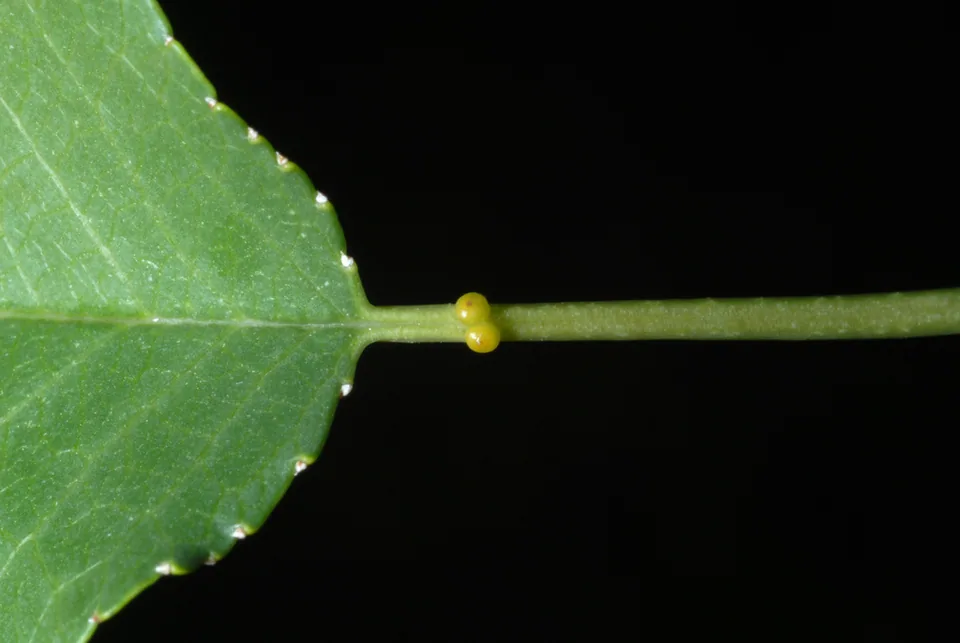
Prunus mahaleb Rosaceae - Rose ## Description Leaves : Alternate; simple; serrate; 3/4" to 1-1/2" long; deciduous; almost round;Mature height
609.6-914.4 cm (20-30 ft)
What the sources say (1)
It is a deciduous tree or large shrub, typically growing 20 to 30 feet tall.Remedies
Each remedy shows what official sources say about it; traditional remedies without an official source are marked as such. Harmful ones are listed so you know to avoid them.
First aid
First aid: not a substitute for a doctor
swallowed cherry pit
rinse mouth and drink water Official source, not independently tested
If someone swallows a stone fruit pit or if you have a question about stone fruit pit safety, use the web POISON CONTROL online tool to get help, or call your poison center at 1-800-222-1222 .
— poison.org [8] How: Wipe or rinse out the mouth. Give a serving size of water to drink.
Wipe or rinse out the mouth. - Give a serving size of water to drink. - Call 1-800-222-1222 for additional instructions.
— missouripoisoncenter.org [7]
Treating the plant
scale insects
picking off by hand Official source, not independently tested
How: Minor infestations may be picked off by hand.
Minor infestations may be picked off by hand. - Prune and destroy heavily infested branches.
— hortsense.cahnrs.wsu.edu [9] pruning infested branches Official source, not independently tested
How: Prune and destroy heavily infested branches.
Minor infestations may be picked off by hand. - Prune and destroy heavily infested branches.
— hortsense.cahnrs.wsu.edu [9] dormant oil spray Partly works
How: Oils should be applied during the delayed dormant period to scale species that overwinter as immatures.
Oils should be applied during the delayed dormant period to scale species that overwinter as immatures. Oils are not effective on oystershell scale.
— hortsense.cahnrs.wsu.edu [9] What the evidence says Oils should be applied during the delayed dormant period to scale species that overwinter as immatures. Oils are not effective on oystershell scale.
— hortsense.cahnrs.wsu.edu [9]
Getting rid of it
unwanted mahaleb cherry
digging out small trees Official source, not independently tested
How: Small trees can be dug out.
Little information is available about mahaleb cherry control since it is not widely recognized as an invasive plant. Small trees can be dug out.
— Mahaleb Cherry | Whitman County | Washington State University [1]
Is St Lucie Cherry poisonous?
Reported by the source, quoted verbatim. This is not medical or veterinary advice: if a person or an animal may have eaten this plant, contact a poison control centre or a veterinarian.
As a safety precaution, one should never eat bitter seeds or fruits as they often contain toxins.
[1]- Toxic principle
The plant (especially the seed and young shoots) contains cyanogenic glycosides, especially amygdalin and prunasin.
[5]- Symptoms
In larger concentrations, however, cyanide can cause gasping, weakness, excitement, pupil dilation, spasms, convulsions, coma and respiratory failure leading to death
[5]
Calendar
Pruning
Not stated in the sources we read.
Months as given by the sources, which are mostly from the United States (northern hemisphere). In the southern hemisphere they shift by about six months.
Edibility
Reported by the source, quoted verbatim. Do not eat a plant on the basis of this page alone: identification mistakes can be dangerous.
is dried, ground and used as a spice in breads and pastries
[1]
Similar plants
- Afghan Cherry Prunus jacquemontii
- American Plum Prunus americana
- Amur chokecherry Prunus maackii
- Apricot Prunus armeniaca
- Black Cherry Prunus serotina
- Carolina Cherry Laurel Prunus caroliniana
- Cherry Laurel Prunus laurocerasus
- Chickasaw Plum Prunus angustifolia
Sources
Every value above is quoted from these documents. Links lead to the original publisher.
- Mahaleb Cherry | Whitman County | Washington State University · extension.wsu.edu, consulted
- Cherry, Mahaleb | TreeBrowser | USU · extension.usu.edu, consulted
- Prunus mahaleb - EUFORGEN European forest genetic resources programme · euforgen.org, consulted
- Prunus mahaleb - Trees and Shrubs Online · treesandshrubsonline.org, consulted
- Prunus mahaleb - Useful Temperate Plants · temperate.theferns.info, consulted
- Mahaleb Cherry · ag.missouristate.edu, consulted
- missouripoisoncenter.org · missouripoisoncenter.org
- poison.org · poison.org
- hortsense.cahnrs.wsu.edu · hortsense.cahnrs.wsu.edu
Written by Emilio Marruso · last checked