
How to Grow and Care for Blackthorn
Prunus spinosa
Written by Emilio Marruso · last checked
Toxic to: People · Why
At a glance
Blackthorn grows in full sun to light shade, though it fruits best in a sunny spot. Plant it in spring or fall, water young plants generously and less once established. From the end of September you can pick its sloes for jams, jellies and wine, and you can even sugar the flowers or brew the leaves as a tea.
- Sun
Full sun to light shade; it fruits best in a sunny spot
What the sources say (2)
Light: Full sun to light shade (fruits better in a sunny position)
It thrives in sunny, open spaces and in well drained soils in hedgerows, woodland edges, and scrublands, but is adaptable to a variety of soil conditions.
— Prunus spinosa - EUFORGEN European forest genetic resources programme [2] Succeeds in light shade but fruits better in a sunny position
— Prunus spinosa - Useful Temperate Plants [7] - Water
Water young plants often without soaking the soil; less once established, more in pots
What the sources say (2)
Watering notes: Seedlings benefit from plenty of moisture as long as the soil is not waterlogged; water less often once established; potted plants need water more often
Blackthorn will grow quickly in good soil and both germination and growth benefit from plenty of moisture – as long as the soil/compost isn’t waterlogged.
— Grow Blackthorn From Seed - A Simple Recipe to Success [6] Once the seedlings are established and their roots have reached a little deeper, you can water less frequently.
— Grow Blackthorn From Seed - A Simple Recipe to Success [6] - Planting
Potted plants in spring or fall; bare-root in fall; hedges November to March
What the sources say (2)
Planting: Potted plants in spring and autumn; bare-root shrubs in autumn; hedge plants November to March
hedge planting (fonte: Peak District National Park): Planting should be carried out between November and March.
— Conservation Service [3] Planting should be carried out between November and March.
— Conservation Service [3] - Harvest
Pick sloes from late September; tart but great for jams, jellies and wine
What the sources say (1)
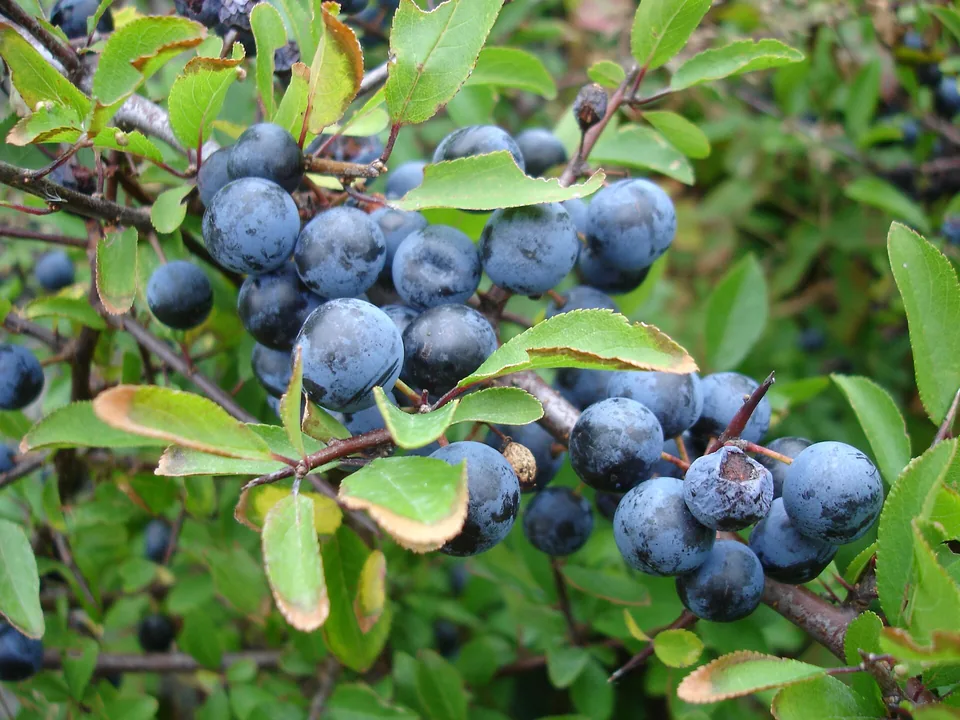
Harvest: Berries (sloes) can be picked from the end of September onwards
The berries or ‘sloes’ can be picked from the end of September onwards.
— How to Grow Blackthorn from Seed - a Simple Recipe from TCV [5] - Pests
Blossom wilt, a fungal disease, can damage the flowers and cut the fruit crop
- Size
3 to 16 ft tall
What the sources say (1)
Mature height: 100-500 cm (1-5 m)
The blackthorn, or sloe, (Prunus spinosa L.) is a spiny, deciduous shrub, growing 1-5 m tall.
— Prunus spinosa in Europe: distribution, habitat, usage and threats [1] - Sowing
Sow pretreated seeds in early March, when 10% of them start to sprout
What the sources say (1)
Sowing: Early March, when about 10% of the pretreated seeds show signs of germination
In early March check your seeds for signs of germination. If about 10% are showing signs of germination, they are ready to sow.
— Grow Blackthorn From Seed - A Simple Recipe to Success [6] - Safety
Seeds and young shoots are toxic: they contain compounds that release cyanide
Overview
Blackthorn (sloe) is a spiny deciduous shrub or small tree that thrives in sunny, open spaces and well-drained soils but adapts to many soil conditions. [2] Its fully ripe fruits are astringent but edible and are used for jams, wine and spirits, while the seed and young shoots contain cyanogenic glycosides. [1][7]
This record is incomplete: the sources we read do not cover every field yet.
Not yet covered by our sources: Watering, Spacing, Propagation
Blackthorn care
Measurements in square brackets are our conversion into the other unit system; the quoted text is unchanged.
How to water Blackthorn
Watering
Not stated in the sources we read.
Watering notes
Seedlings benefit from plenty of moisture as long as the soil is not waterlogged; water less often once established; potted plants need water more often
What the sources say (2)
Blackthorn will grow quickly in good soil and both germination and growth benefit from plenty of moisture – as long as the soil/compost isn’t waterlogged.Once the seedlings are established and their roots have reached a little deeper, you can water less frequently.How much light Blackthorn needs
Full sun to light shade (fruits better in a sunny position)
What the sources say (2)
It thrives in sunny, open spaces and in well drained soils in hedgerows, woodland edges, and scrublands, but is adaptable to a variety of soil conditions.Succeeds in light shade but fruits better in a sunny positionWhere to grow Blackthorn
The sources give different values depending on region, zone or growing conditions.
What each source says
double staggered row hedge (fonte: Peak District National Park): about 45 cm [18 in] (approximately 45cm [18 in]) in each row, rows about 25 cm [9.8 in] apart
What the sources say (1)
double staggered row hedge (fonte: Peak District National Park): This method uses 6 plants per metre, in two rows about 25cm apart with plants at approximately 45cm in each row.How to propagate Blackthorn
Not stated in the sources we read.
How to grow Blackthorn
The plant
Mature height
100-500 cm (1-5 m)
What the sources say (1)
The blackthorn, or sloe, (Prunus spinosa L.) is a spiny, deciduous shrub, growing 1-5 m tall.Blackthorn pests and problems
Fungal diseases (blossom wilt)
Symptom: Blossom wilt affecting fruit production
What to do: Not stated in the sources.
What the sources say (1)
It is, however, susceptible to several fungal diseases which can cause blossom wilt and, therefore, affect fruit production.
— Information About Blackthorn Plants - What Are Uses For Blackthorn Berries | Gardening Know How [4]
Remedies
The sources we checked give no remedies for this plant.
Is Blackthorn poisonous?
Reported by the source, quoted verbatim. This is not medical or veterinary advice: if a person or an animal may have eaten this plant, contact a poison control centre or a veterinarian.
The plant (especially the seed and young shoots) contains cyanogenic glycosides, especially amygdalin and prunasin.
[7]- Poisonous parts
The plant (especially the seed and young shoots) contains cyanogenic glycosides, especially amygdalin and prunasin.
[7]- Toxic principle
When injested, these compounds break down in the digestive tract to release cyanide.
[7]- Symptoms
cyanide can cause gasping, weakness, excitement, pupil dilation, spasms, convulsions, coma and respiratory failure leading to death
[7]
Calendar
Early March, when about 10% of the pretreated seeds show signs of germination
What the sources say (1)
In early March check your seeds for signs of germination. If about 10% are showing signs of germination, they are ready to sow.Potted plants in spring and autumn; bare-root shrubs in autumn; hedge plants November to March
What each source says
hedge planting (fonte: Peak District National Park): November to March
Berries (sloes) can be picked from the end of September onwards
What the sources say (1)
The berries or ‘sloes’ can be picked from the end of September onwards.Months as given by the sources, which are mostly from the United States (northern hemisphere). In the southern hemisphere they shift by about six months.
Edibility
Reported by the source, quoted verbatim. Do not eat a plant on the basis of this page alone: identification mistakes can be dangerous.
Similar plants
- Afghan Cherry Prunus jacquemontii
- American Plum Prunus americana
- Amur chokecherry Prunus maackii
- Apricot Prunus armeniaca
- Black Cherry Prunus serotina
- Carolina Cherry Laurel Prunus caroliniana
- Cherry Laurel Prunus laurocerasus
- Cherry Plum Prunus cerasifera
Sources
Every value above is quoted from these documents. Links lead to the original publisher.
- Prunus spinosa in Europe: distribution, habitat, usage and threats · ies-ows.jrc.ec.europa.eu, consulted
- Prunus spinosa - EUFORGEN European forest genetic resources programme · euforgen.org, consulted
- Conservation Service · peakdistrict.gov.uk, consulted
- Information About Blackthorn Plants - What Are Uses For Blackthorn Berries | Gardening Know How · gardeningknowhow.com, consulted
- How to Grow Blackthorn from Seed - a Simple Recipe from TCV · treegrowing.tcv.org.uk, consulted
- Grow Blackthorn From Seed - A Simple Recipe to Success · nativetreesfromseed.com, consulted
- Prunus spinosa - Useful Temperate Plants · temperate.theferns.info, consulted
Written by Emilio Marruso · last checked