
How to Grow and Care for Winter-flowering cherry
Prunus subhirtella
Written by Emilio Marruso · last checked
Toxic to: Cats, Dogs, Horses · Why
At a glance
This flowering cherry grows into a tree 20 to 40 feet tall, and it asks for very little in return. Give it moist, well-drained soil anywhere from pH 5.0 to 7.4, feed it in spring, and trim it right after it finishes flowering. Keep it free of stress and it will stay healthy, since a stressed tree attracts insects and diseases.
- Water
Likes soil that stays moist but drains well
What the sources say (1)
Watering notes: Prefers moist, well-drained soil
it prefers full sun, moist, well-drained soil
— Higan Cherry - Prunus x subhirtella | North Carolina Extension Gardener Plant Toolbox [1] - Soil
Moist, well-drained soil, from acidic to slightly alkaline: pH 5.0–7.4
What the sources say (3)
Soil pH, minimum: 5.0
Can tolerate acid to neutral soil (pH 5.0 to 7.4)
— Woody Plants Database [2] Soil pH, maximum: 7.4
Can tolerate acid to neutral soil (pH 5.0 to 7.4)
— Woody Plants Database [2] Watering notes: Prefers moist, well-drained soil
it prefers full sun, moist, well-drained soil
— Higan Cherry - Prunus x subhirtella | North Carolina Extension Gardener Plant Toolbox [1] - Feeding
Feed it in spring
What the sources say (1)
When: Spring
Reduce the chances of disease and insect pests by keeping the trees healthy with adequate irrigation during extended drought and by regular springtime fertilizer applications.
— [9] - Pruning
Prune in spring, right after it finishes flowering
What the sources say (1)
Pruning: After flowering in spring
Prune it after it flowers in spring.
— Higan cherry | Prunus × subhirtella | The Morton Arboretum [5] - Pests
A stressed tree gets many insects and diseases, so keep it healthy
- Watch out
Deer often damage this tree
- Size
20 to 40 ft tall
- Safety
Harmful to dogs, cats and horses
Overview
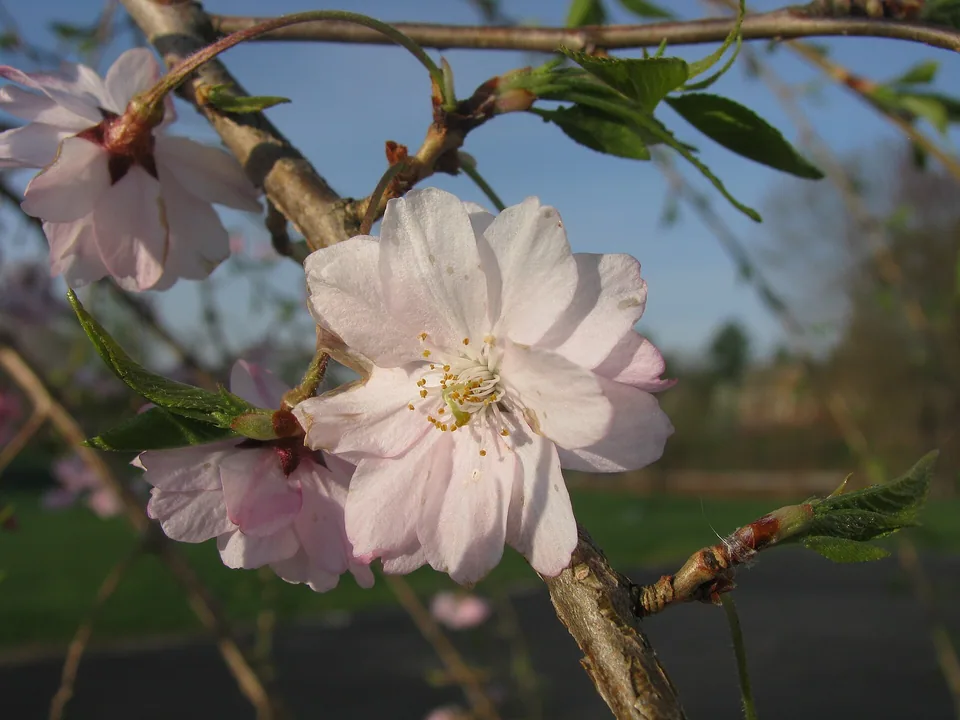
Higan cherry is a deciduous flowering tree with pink to white flowers that open in early spring before the leaves. [5][3]
This record is incomplete: the sources we read do not cover every field yet.
Not yet covered by our sources: Watering, Propagation
Winter-flowering cherry care
How to water Winter-flowering cherry
Watering
Not stated in the sources we read.
Watering notes
Prefers moist, well-drained soil
What the sources say (1)
it prefers full sun, moist, well-drained soilHow much light Winter-flowering cherry needs
How much cold Winter-flowering cherry can take
Hardiness, coldest zone
The sources give different values depending on region, zone or growing conditions.
What each source says
According to Cornell Woody Plants Database: 5b [winter low −26.1 to −23.3 °C (−15 to −10 °F)]
According to Utah State University Extension: 4 [winter low −34.4 to −28.9 °C (−30 to −20 °F)]
According to Oregon State University: 4 [winter low −34.4 to −28.9 °C (−30 to −20 °F)]
According to Morton Arboretum (Illinois): 5 [winter low −28.9 to −23.3 °C (−20 to −10 °F)]
What the sources say (8)
According to Cornell Woody Plants Database: Hardy To Zone:
5bAccording to Utah State University Extension: | Hardiness Zone
| 4-9According to Oregon State University: Hardy to USDA Zone 4According to Morton Arboretum (Illinois): Zone 5 (Northern Illinois), Zone 6 (City of Chicago), Zone 7, Zone 8Hardy To Zone:
5b| Hardiness Zone
| 4-9Hardy to USDA Zone 4Zone 5 (Northern Illinois), Zone 6 (City of Chicago), Zone 7, Zone 8Hardiness, warmest zone
The sources give different values depending on region, zone or growing conditions.
What each source says
According to Utah State University Extension: 9 [winter low −6.7 to −1.1 °C (20 to 30 °F)]
According to Morton Arboretum (Illinois): 8 [winter low −12.2 to −6.7 °C (10 to 20 °F)]
What the sources say (4)
According to Utah State University Extension: | Hardiness Zone
| 4-9According to Morton Arboretum (Illinois): Zone 5 (Northern Illinois), Zone 6 (City of Chicago), Zone 7, Zone 8| Hardiness Zone
| 4-9Zone 5 (Northern Illinois), Zone 6 (City of Chicago), Zone 7, Zone 8Best soil for Winter-flowering cherry
Soil pH, minimum
5.0
What the sources say (1)
Can tolerate acid to neutral soil (pH 5.0 to 7.4)Soil pH, maximum
7.4
What the sources say (1)
Can tolerate acid to neutral soil (pH 5.0 to 7.4)How to propagate Winter-flowering cherry
Not stated in the sources we read.
How to grow Winter-flowering cherry
The plant
Family
Rosaceae
What the sources say (1)
Family:
Rosaceae
Genus:
PrunusFertilizing
When
Spring
What the sources say (1)
Reduce the chances of disease and insect pests by keeping the trees healthy with adequate irrigation during extended drought and by regular springtime fertilizer applications.Winter-flowering cherry pests and problems
Insect and disease susceptibility
Symptom: Susceptible to many insects and diseases when stressed
What the sources say (1)
This is a short-lived tree which is susceptible to many insects and diseases when stressed.
— Higan cherry | Prunus × subhirtella | The Morton Arboretum [5] Deer damage
Symptom: Tree is frequently damaged by deer
What the sources say (1)
This tree is frequently damaged by deer.
— Higan Cherry - Prunus x subhirtella | North Carolina Extension Gardener Plant Toolbox [1]
Remedies
The sources we checked give no remedies for this plant.
Is Winter-flowering cherry toxic to pets?
Reported by the source, quoted verbatim. This is not medical or veterinary advice: if a person or an animal may have eaten this plant, contact a poison control centre or a veterinarian.
Calendar
Pruning
After flowering in spring
What the sources say (1)
Prune it after it flowers in spring.Months as given by the sources, which are mostly from the United States (northern hemisphere). In the southern hemisphere they shift by about six months.
Indicative values
Values from a secondary source, not checked word for word like the rest of this page. Use them as a starting point.
- Life cycle
- PerennialIndicative value, adapt it to your climate · Secondary source
- Hours of sun
- 6-8 hoursIndicative value, adapt it to your climate · Secondary source
- Watering
- AverageIndicative value, adapt it to your climate · Secondary source
- Drought tolerant
- yesIndicative value, adapt it to your climate · Secondary source
- Care level
- MediumIndicative value, adapt it to your climate · Secondary source
- Growth rate
- LowIndicative value, adapt it to your climate · Secondary source
- Propagation
- Air Layering Propagation, Grafting Propagation, Cutting, Budding, Seed PropagationIndicative value, adapt it to your climate · Secondary source
Similar plants
- Afghan Cherry Prunus jacquemontii
- American Plum Prunus americana
- Amur chokecherry Prunus maackii
- Apricot Prunus armeniaca
- Bird cherry Prunus padus
- Black Cherry Prunus serotina
- Canadian plum Prunus nigra
- Carolina Cherry Laurel Prunus caroliniana
Sources
Every value above is quoted from these documents. Links lead to the original publisher.
- Higan Cherry - Prunus x subhirtella | North Carolina Extension Gardener Plant Toolbox · plants.ces.ncsu.edu, consulted
- Woody Plants Database · woodyplants.cals.cornell.edu, consulted
- Cherry, Higan | TreeBrowser | USU · extension.usu.edu, consulted
- Prunus subhirtella | Landscape Plants | Oregon State University · landscapeplants.oregonstate.edu, consulted
- Higan cherry | Prunus × subhirtella | The Morton Arboretum · mortonarb.org, consulted
- Prunus subhirtella - Trees and Shrubs Online · treesandshrubsonline.org, consulted
- Prunus subhirtella - FNA · floranorthamerica.org, consulted
- Virginia Tech Dendrology Fact Sheet · dendro.cnre.vt.edu, consulted
- hgic.clemson.edu · hgic.clemson.edu
Written by Emilio Marruso · last checked