
How to Grow and Care for Black salsify
Pseudopodospermum hispanicum
Written by Emilio Marruso · last checked
At a glance
Black salsify is a cool-season crop grown for its long, brown-black roots, and its leaves make fresh greens for salads too. Sow it in full sun as soon as the soil can be worked in spring, or in fall, and keep the bed evenly moist. In 120 days you can dig roots that store for months.
- Sun
Full sun
What the sources say (1)
Light: Full sun
Plant salsify and scorzonera in full sun. - Sow seeds in soil rich in organic matter that is well-worked to the depth of 8 to 12 inches (20-30cm).
— How to Plant, Grow, and Harvest Salsify - Harvest to Table [2] - Water
Keep the soil evenly moist, or the roots turn stringy
What the sources say (1)
Watering notes: Keep the bed evenly moist to prevent stringy roots
Keep salsify and scorzonera planting bed evenly moist to prevent the roots from getting stringy.
— How to Plant, Grow, and Harvest Salsify - Harvest to Table [2] - Spacing
10–15 in between rows
What the sources say (1)
Row spacing: 25.4-38.1 cm (10-15 inches)
Seeds should be planted about ½ inch deep in rows 10-15 inches apart with plants spaced two inches apart within the row after thinning.
— How to Grow Black Salsify in Your Garden | USU [1] - Feeding
Feed with nitrogen in midsummer, placed beside the plants and watered in
What the sources say (5)
When: Midsummer (nitrogen); before planting, following a soil test, worked into the top 15.2 cm [6 in] of soil
Apply ½ cup of a nitrogen based fertilizer (21-0-0 or 34-0-0) per 25 foot of row in midsummer.
— How to Grow Black Salsify in Your Garden | USU [1] Before planting, determine fertilizer needs with a soil test and then follow the recommendations given with the test report.
— How to Grow Black Salsify in Your Garden | USU [1] If fertilizer applications are warranted, work the fertilizer into the top 6 inches of soil.
— How to Grow Black Salsify in Your Garden | USU [1] Mineral fertilizers: Nitrogen fertilizer (21-0-0 or 34-0-0): 118 mL per 7.62 m [25 ft] of row, placed beside the plants and watered in
Apply ½ cup of a nitrogen based fertilizer (21-0-0 or 34-0-0) per 25 foot of row in midsummer.
— How to Grow Black Salsify in Your Garden | USU [1] Place the fertilizer to the side of the plants and irrigate it into the soil.
— How to Grow Black Salsify in Your Garden | USU [1] - Harvest
Dig roots in fall or early spring: loosen the soil with a fork and lift them whole
What the sources say (2)
Harvest: Fall or early spring
Harvest roots in fall or early spring by carefully loosening soil with a fork and lifting entire roots to avoid damage
— How to Grow Black Salsify in Your Garden | USU [1] How to harvest: Harvest roots in fall or early spring by carefully loosening the soil with a fork and lifting the entire roots to avoid damage
Harvest roots in fall or early spring by carefully loosening soil with a fork and lifting entire roots to avoid damage—reserve tender leaves for salads while young.
— How to Grow Black Salsify in Your Garden | USU [1] - Pests
Watch for aphids and white rust (yellow spots on the leaves)
What the sources say (2)
Pests: aphids
Green or black soft-bodied insects that feed on the underside of leaves. Insects that reduce plant yield and vigor and are especially harmful to young plants.
— How to Grow Black Salsify in Your Garden | USU [1] Diseases: white rust
Yellow spots on upper side of leaves
— How to Grow Black Salsify in Your Garden | USU [1] - Propagation
Grows from seed
What the sources say (1)
Propagation: Seed
It is propagated via seed in fertile, well-draining soil that is fine textured for the development of long, straight roots.
— Black Salsify Growing - Learn About The Care Of Scorzonera Root Vegetables | Gardening Know How [3] - Sowing
Sow ½ inch deep as soon as the soil can be worked in spring, or in fall
What the sources say (5)
Sowing: As soon as the soil can be worked in spring, or in fall
According to Utah State University Extension: Sow black salsify seeds as soon as the soil can be worked in spring , or even in fall, since it needs a 120-day cool-season growing period.
— How to Grow Black Salsify in Your Garden | USU [1] According to Harvest to Table: Sow salsify and scorzonera 2 weeks before the last expected frost in spring when the soil temperature has reached about 40°F (4.4°C).
— How to Plant, Grow, and Harvest Salsify - Harvest to Table [2] According to Slovak University of Agriculture (Nitra): Hadomor is grown from direct sowing, ideally in March, as it has a longer vegetation period
— Black salsify | Encyklopedy FZKI [4] Sow black salsify seeds as soon as the soil can be worked in spring , or even in fall, since it needs a 120-day cool-season growing period.
— How to Grow Black Salsify in Your Garden | USU [1] Sowing depth: 1.27 cm [0.5 in] (½ inch)
Seeds should be planted about ½ inch deep in rows 10-15 inches apart with plants spaced two inches apart within the row after thinning.
— How to Grow Black Salsify in Your Garden | USU [1]
Overview
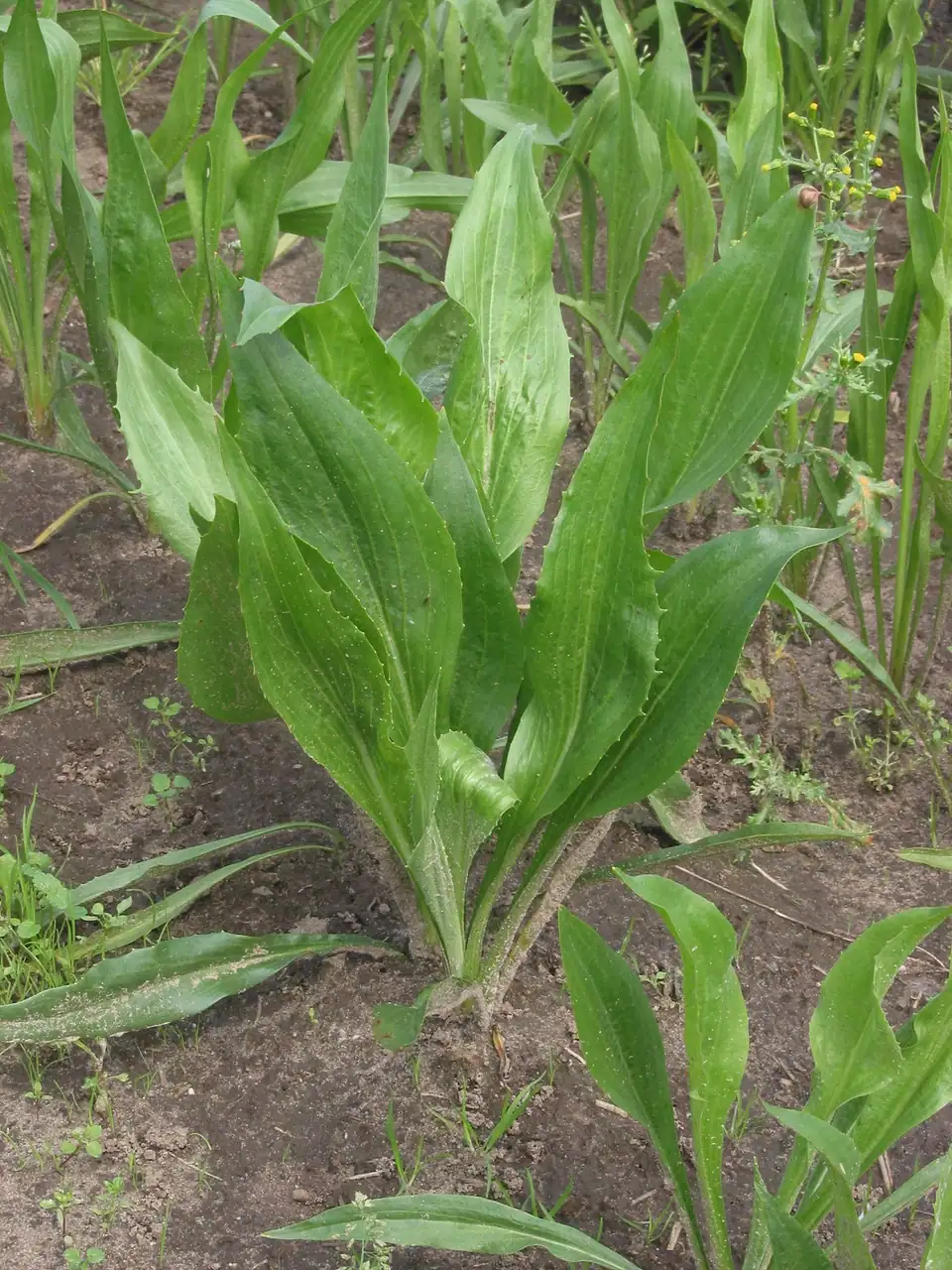
Black salsify (Scorzonera hispanica) is a cool-season root vegetable grown for its long, smooth taproots and tender salad greens. [1] It needs about a 120-day growing season and is sown shallowly in loose, deep, well-drained soil. [1] The roots tolerate freezing and can be dug and stored or left in the garden until needed. [1]
Black salsify care
Measurements in square brackets are our conversion into the other unit system; the quoted text is unchanged.
How to water Black salsify
Watering
The sources give different values depending on region, zone or growing conditions.
What each source says
According to Utah State University Extension: 1-2 in (2.5-5.1 cm) of water per week, moist but not wet soil
According to Slovak University of Agriculture (Nitra): Irrigation only during periods of persistent drought
What the sources say (2)
According to Utah State University Extension: Irrigate with 1-2 inches per week to maintain a moist, but not wet soil.According to Slovak University of Agriculture (Nitra): Hadomor requires irrigation only during periods of persistent drought.Watering notes
Keep the bed evenly moist to prevent stringy roots
What the sources say (1)
Keep salsify and scorzonera planting bed evenly moist to prevent the roots from getting stringy.How much light Black salsify needs
Full sun
What the sources say (1)
Plant salsify and scorzonera in full sun.
- Sow seeds in soil rich in organic matter that is well-worked to the depth of 8 to 12 inches (20-30cm).Where to grow Black salsify
The sources give different values depending on region, zone or growing conditions.
What each source says
According to Utah State University Extension: 5.1 cm (2 in) in the row; rows 25.4-38.1 cm (10-15 in) apart
According to Harvest to Table: 7.6-10.2 cm (3-4 in) between plants; rows 45.7-61.0 cm (18-24 in) apart
According to Slovak University of Agriculture (Nitra): 10 cm [3.9 in] in the row; rows 20 cm [7.9 in] apart
What the sources say (3)
According to Utah State University Extension: Seeds should be planted about ½ inch deep in rows 10-15 inches apart with plants spaced two inches apart within the row after thinning.According to Harvest to Table: Thin successful seedlings stand 3 to 4 inches (7-10cm) apart.
- Space rows 18 to 24 inches (45-61cm) apart.According to Slovak University of Agriculture (Nitra): it is recommended to sow more densely in rows 0.20 m apart, followed by uniting the plants at a distance of 0.10 m in the rowHow to propagate Black salsify
Seed
What the sources say (1)
It is propagated via seed in fertile, well-draining soil that is fine textured for the development of long, straight roots.How to grow Black salsify
Sowing and growth
Sowing depth
1.27 cm [0.5 in] (½ inch)
What the sources say (1)
Seeds should be planted about ½ inch deep in rows 10-15 inches apart with plants spaced two inches apart within the row after thinning.Row spacing
25.4-38.1 cm (10-15 inches)
What the sources say (1)
Seeds should be planted about ½ inch deep in rows 10-15 inches apart with plants spaced two inches apart within the row after thinning.Days to maturity
120 days (cool-season growing period from sowing)
What the sources say (1)
Sow black salsify seeds as soon as the soil can be worked in spring , or even in fall, since it needs a 120-day cool-season growing period.Harvest and storage
How to harvest
Harvest roots in fall or early spring by carefully loosening the soil with a fork and lifting the entire roots to avoid damage
What the sources say (1)
Harvest roots in fall or early spring by carefully loosening soil with a fork and lifting entire roots to avoid damage—reserve tender leaves for salads while young.Storage
Store like topped carrots at 0 °C (32 °F) and 95-98% relative humidity; correctly stored roots last about six months
What the sources say (1)
Store roots at 32°F and 95-98% relative humidity. High humidity is important for keeping roots from shriveling. When stored correctly black salsify roots should last about six months.Pests and diseases
Pests
aphids
What the sources say (1)
Green or black soft-bodied insects that feed on the underside of leaves. Insects that reduce plant yield and vigor and are especially harmful to young plants.Diseases
white rust
What the sources say (1)
Yellow spots on upper side of leavesFertilizing
When
Midsummer (nitrogen); before planting, following a soil test, worked into the top 15.2 cm [6 in] of soil
What the sources say (3)
Apply ½ cup of a nitrogen based fertilizer (21-0-0 or 34-0-0) per 25 foot of row in midsummer.Before planting, determine fertilizer needs with a soil test and then follow the recommendations given with the test report.If fertilizer applications are warranted, work the fertilizer into the top 6 inches of soil.Natural fertilizers
Well-composted organic matter: no more than 2.54 cm [1 in] per 9.29 m² of garden
What the sources say (1)
If you fertilize with compost, apply no more than 1 inch of well-composted organic matter per 100 square feet of garden area.Mineral fertilizers
Nitrogen fertilizer (21-0-0 or 34-0-0): 118 mL per 7.62 m [25 ft] of row, placed beside the plants and watered in
Black salsify pests and problems
Aphids
Symptom: Green or black soft-bodied insects that feed on the underside of leaves
What to do: Insecticides, insecticidal soaps or a strong water stream to dislodge insects
What the sources say (1)
Green or black soft-bodied insects that feed on the underside of leaves. Insects that reduce plant yield and vigor and are especially harmful to young plants. | Use appropriate insecticides, insecticidal soaps, or strong water stream to dislodge insects.
— How to Grow Black Salsify in Your Garden | USU [1] White rust
Symptom: Yellow spots on upper side of leaves
What to do: Fungicides; reduce moisture levels
What the sources say (1)
Yellow spots on upper side of leaves | Use appropriate fungicides; reduce moisture levels.
— How to Grow Black Salsify in Your Garden | USU [1] Root splitting
Symptom: Roots split; reasons and control are unknown, taste is not affected
What to do: Reduce plant stress
What the sources say (1)
This is a disorder salsify commonly contracts, but the reasons for it and control are actually unknown.
— How to Grow Black Salsify in Your Garden | USU [1]
Remedies
Each remedy shows what official sources say about it; traditional remedies without an official source are marked as such. Harmful ones are listed so you know to avoid them.
Treating the plant
aphids
insecticidal soap spray Works
How: Use insecticidal soaps against the aphids.
Use appropriate insecticides, insecticidal soaps, or strong water stream to dislodge insects.
— How to Grow Black Salsify in Your Garden | USU [1] What the evidence says Use appropriate insecticides, insecticidal soaps, or strong water stream to dislodge insects.
— How to Grow Black Salsify in Your Garden | USU [1] strong water stream Works
How: Use a strong water stream to dislodge the insects.
Use appropriate insecticides, insecticidal soaps, or strong water stream to dislodge insects.
— How to Grow Black Salsify in Your Garden | USU [1] What the evidence says Use appropriate insecticides, insecticidal soaps, or strong water stream to dislodge insects.
— How to Grow Black Salsify in Your Garden | USU [1]
Calendar
Sowing
As soon as the soil can be worked in spring, or in fall
What each source says
According to Utah State University Extension: As soon as the soil can be worked in spring, or in fall
According to Harvest to Table: 2 weeks before the last expected frost in spring, soil at 40 F (4.4 C); early autumn in mild winter regions
According to Slovak University of Agriculture (Nitra): Ideally in March
What the sources say (4)
According to Utah State University Extension: Sow black salsify seeds as soon as the soil can be worked in spring , or even in fall, since it needs a 120-day cool-season growing period.According to Harvest to Table: Sow salsify and scorzonera 2 weeks before the last expected frost in spring when the soil temperature has reached about 40°F (4.4°C).According to Slovak University of Agriculture (Nitra): Hadomor is grown from direct sowing, ideally in March, as it has a longer vegetation periodSow black salsify seeds as soon as the soil can be worked in spring , or even in fall, since it needs a 120-day cool-season growing period.Harvest
Fall or early spring
What the sources say (1)
Harvest roots in fall or early spring by carefully loosening soil with a fork and lifting entire roots to avoid damageMonths as given by the sources, which are mostly from the United States (northern hemisphere). In the southern hemisphere they shift by about six months.
Edibility
Reported by the source, quoted verbatim. Do not eat a plant on the basis of this page alone: identification mistakes can be dangerous.
Similar plants
- Abyssinian banana Ensete ventricosum
- Agretti Soda inermis
- Alexanders Smyrnium olusatrum
- Allium triquetrum Allium triquetrum
- Alpine dock Rumex alpinus
- Amaranth pigweed Amaranthus hybridus
- American hogpeanut Amphicarpaea bracteata
- American Yellow Rocket Barbarea orthoceras
Sources
Every value above is quoted from these documents. Links lead to the original publisher.
- How to Grow Black Salsify in Your Garden | USU · extension.usu.edu, consulted
- How to Plant, Grow, and Harvest Salsify - Harvest to Table · harvesttotable.com, consulted
- Black Salsify Growing - Learn About The Care Of Scorzonera Root Vegetables | Gardening Know How · gardeningknowhow.com, consulted
- Black salsify | Encyklopedy FZKI · hortiedu.uniag.sk, consulted
Written by Emilio Marruso · last checked