
How to Grow and Care for Whorled clary
Salvia verticillata
Written by Emilio Marruso · last checked
At a glance
This easygoing perennial sage asks for very little: give it full sun and well-drained soil, and once it is established it shrugs off drought. It stays a tidy 1–2 ft tall, fits into any sunny bed, and you can start it from seed in spring, divide it, or take cuttings to share with friends.
- Sun
Full sun
What the sources say (1)
Light: Full sun
Grows best in a sunny position and a well-drained, humus-rich, friable soil[ 678 Title
— Salvia verticillata - Useful Temperate Plants [2] - Water
Handles drought once established
What the sources say (1)
Watering: Drought tolerant once established
Established plants are drought tolerant[ 352 Title KemperCentreForHomeGardeningPlantFinder Publication Author Website
— Salvia verticillata - Useful Temperate Plants [2] - Soil
Well-drained soil; dry soil is fine
What the sources say (2)
Watering notes: Tolerates dry soils; prefers well-drained soil
Tolerates dry soils[ 352 Title KemperCentreForHomeGardeningPlantFinder Publication Author Website http://www.mobot.org/gardeninghelp/plantfinder/
— Salvia verticillata - Useful Temperate Plants [2] Grows best in a sunny position and a well-drained, humus-rich, friable soil[ 678 Title
— Salvia verticillata - Useful Temperate Plants [2] - Planting
Plant in early summer; in colder areas, wait until late spring of the next year
What the sources say (3)
Planting: Early summer; near the limits of hardiness, late spring of the following year
According to Useful Temperate Plants: Prick out the seedlings into individual pots when they are large enough to handle and plant them out in early summer.
— Salvia verticillata - Useful Temperate Plants [2] areas towards the limits of its hardiness: In areas where the plant is towards the limits of its hardiness, it is best to grow the plants on in a greenhouse for their first winter and plant them out in late spring of the following year.
— Salvia verticillata - Useful Temperate Plants [2] Prick out the seedlings into individual pots when they are large enough to handle and plant them out in early summer.
— Salvia verticillata - Useful Temperate Plants [2] - Size
1–2 ft tall
What the sources say (1)
Mature height: 30-60 cm [12–24 in]
30-60 cm hoch, behaart. Grundständige Blätter zur Blütezeit meist abgestorben.
— Salvia verticillata L. [1] - Propagation
Divide in spring, or take cuttings from the base in late spring or from tips in late summer
What the sources say (4)
Propagation: Seed, half-ripe wood cuttings, division in spring
Seed - sow early to mid spring in a greenhouse. Germination usually takes place within 2 weeks.
— Salvia verticillata - Useful Temperate Plants [2] Cuttings of half-ripe wood succeed at almost any time in the growing season[ 200 Title
— Salvia verticillata - Useful Temperate Plants [2] Division in spring. Cite as: Temperate Plants Database, Ken Fern. temperate.theferns.info.
— Salvia verticillata - Useful Temperate Plants [2] Cuttings: Basal stem cuttings in late spring; stem-tip cuttings in late summer or early autumn.
Take basal stem cuttings in late spring; stem-tip cuttings in late summer or in early autumn
— [6] - Sowing
Sow under cover in early to mid spring
What the sources say (1)
Sowing: Early to mid spring (under glass)
Seed - sow early to mid spring in a greenhouse. Germination usually takes place within 2 weeks.
— Salvia verticillata - Useful Temperate Plants [2]
Overview
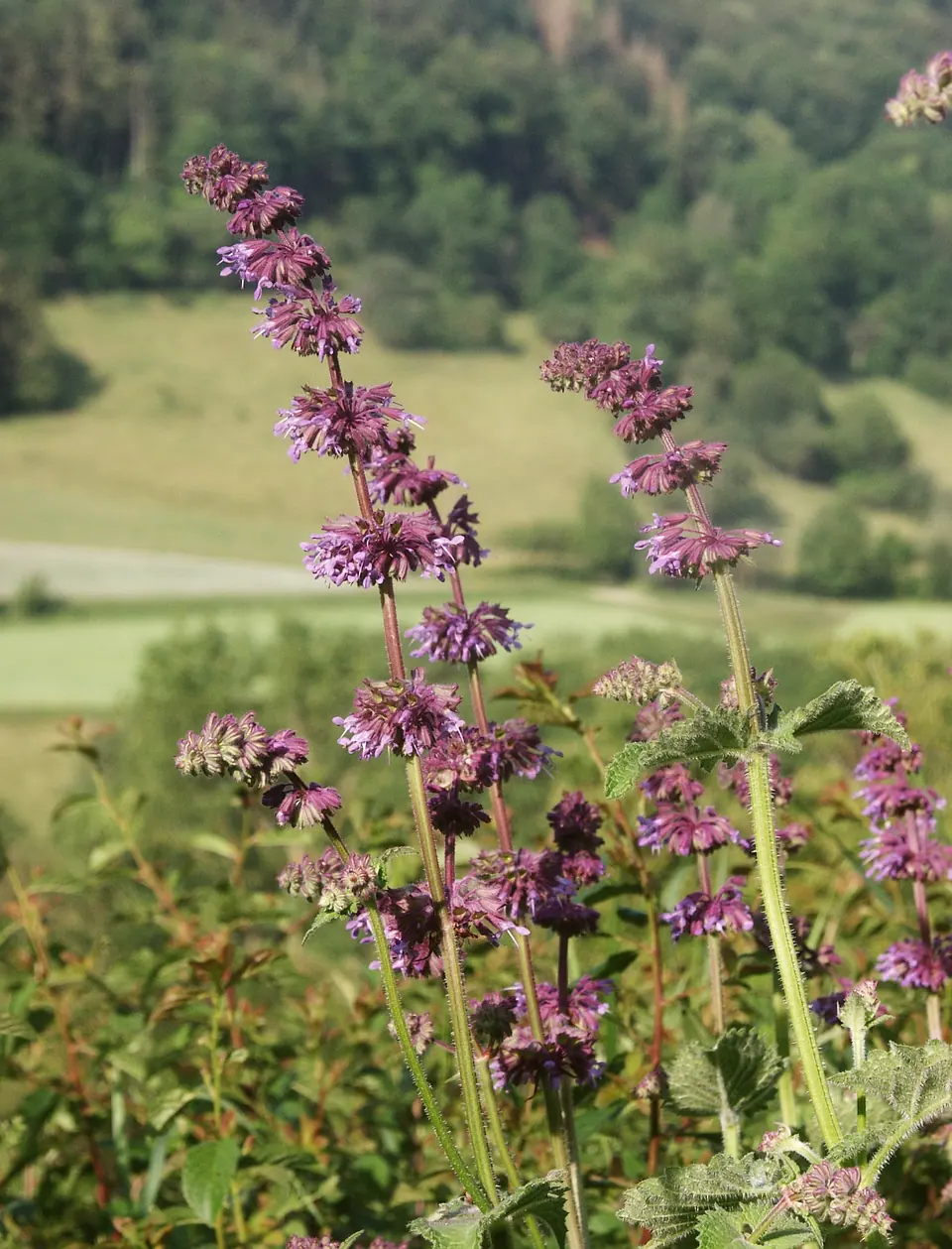
Salvia verticillata is a herbaceous perennial with a rhizomatous rootstock and stems up to 90 cm [35 in] tall, native from Europe east to Kazakhstan, southern Siberia and Iran. [2] It is grown as an ornamental in gardens and its flowers attract bees and butterflies. [2] In Switzerland it grows on embankments, rubble sites and railway areas, mainly in Valais and Graubünden. [1]
This record is incomplete: the sources we read do not cover every field yet.
Not yet covered by our sources: Hardiness, coldest zone, Hardiness, warmest zone, Pruning
Whorled clary care
Measurements in square brackets are our conversion into the other unit system; the quoted text is unchanged.
How to water Whorled clary
Watering
Drought tolerant once established
What the sources say (1)
Established plants are drought tolerant[ 352 Title KemperCentreForHomeGardeningPlantFinder Publication Author WebsiteWatering notes
Tolerates dry soils; prefers well-drained soil
What the sources say (2)
Tolerates dry soils[ 352 Title KemperCentreForHomeGardeningPlantFinder Publication Author Website http://www.mobot.org/gardeninghelp/plantfinder/Grows best in a sunny position and a well-drained, humus-rich, friable soil[ 678 TitleHow much light Whorled clary needs
Full sun
What the sources say (1)
Grows best in a sunny position and a well-drained, humus-rich, friable soil[ 678 TitleHow much cold Whorled clary can take
Hardiness, coldest zone
Not stated in the sources we read.
Hardiness, warmest zone
Not stated in the sources we read.
How to propagate Whorled clary
Seed, half-ripe wood cuttings, division in spring
What the sources say (3)
Seed - sow early to mid spring in a greenhouse. Germination usually takes place within 2 weeks.Cuttings of half-ripe wood succeed at almost any time in the growing season[ 200 TitleDivision in spring. Cite as: Temperate Plants Database, Ken Fern. temperate.theferns.info.How to grow Whorled clary
The plant
Life cycle
perennial
What the sources say (1)
## Ecology
## Life form
Perennial hemicryptophyte
## HabitatsFamily
Lamiaceae
What the sources say (1)
Checklist: 1041240
- Lamiaceae
- Salvia
- Salvia verticillata L.
Contains:Mature height
30-60 cm [12–24 in]
What the sources say (1)
30-60 cm hoch, behaart. Grundständige Blätter zur Blütezeit meist abgestorben.Fertilizing
When
The sources give different values depending on region, zone or growing conditions.
What each source says
Salvia in general: Each spring
What the sources say (1)
Salvia in general: Additionally, salvia will do best with an application of a balanced, slow-release fertilizer each spring.How often
The sources give different values depending on region, zone or growing conditions.
What each source says
Salvia in general: Once a year, in spring
What the sources say (1)
Salvia in general: Additionally, salvia will do best with an application of a balanced, slow-release fertilizer each spring.Mineral fertilizers
The sources give different values depending on region, zone or growing conditions.
What each source says
Salvia in general: Balanced, slow-release fertilizer
What the sources say (1)
Salvia in general: Additionally, salvia will do best with an application of a balanced, slow-release fertilizer each spring.Propagation
Cuttings
Basal stem cuttings in late spring; stem-tip cuttings in late summer or early autumn.
What the sources say (1)
Take basal stem cuttings in late spring; stem-tip cuttings in late summer or in early autumnHeat and drought
Drought
The sources give different values depending on region, zone or growing conditions.
What each source says
Salvia in general (garden plants): Drought tolerant, but water in prolonged dry spells during the first growing season
What the sources say (1)
Salvia in general (garden plants): After planting, water salvias thoroughly to settle them in. Although they’re drought tolerant, watering in prolonged dry spells in their first growing seasonRemedies
The sources we checked give no remedies for this plant.
Calendar
Sowing
Early to mid spring (under glass)
What the sources say (1)
Seed - sow early to mid spring in a greenhouse. Germination usually takes place within 2 weeks.Planting
Early summer; near the limits of hardiness, late spring of the following year
What each source says
According to Useful Temperate Plants: Early summer
areas towards the limits of its hardiness: Late spring of the following year
What the sources say (3)
According to Useful Temperate Plants: Prick out the seedlings into individual pots when they are large enough to handle and plant them out in early summer.areas towards the limits of its hardiness: In areas where the plant is towards the limits of its hardiness, it is best to grow the plants on in a greenhouse for their first winter and plant them out in late spring of the following year.Prick out the seedlings into individual pots when they are large enough to handle and plant them out in early summer.Pruning
Not stated in the sources we read.
Months as given by the sources, which are mostly from the United States (northern hemisphere). In the southern hemisphere they shift by about six months.
Similar plants
- Anise Sage Salvia guaranitica
- Arrowleaf Sage Salvia sagittata
- Autumn Sage Salvia greggii
- Blue Sage Salvia azurea
- Bog Sage Salvia uliginosa
- Cedar Sage Salvia roemeriana
- Clary Sage Salvia sclarea
- Little Leaf Sage Salvia microphylla
Sources
Every value above is quoted from these documents. Links lead to the original publisher.
- Salvia verticillata L. · infoflora.ch, consulted
- Salvia verticillata - Useful Temperate Plants · temperate.theferns.info, consulted
- Salvia verticillata · hardy-plant.org.uk, consulted
- Flora of New Zealand | Taxon Profile | Salvia verticillata · nzflora.info, consulted
- gardeningsolutions.ifas.ufl.edu · gardeningsolutions.ifas.ufl.edu
- rhs.org.uk · rhs.org.uk
- rhs.org.uk · rhs.org.uk
Written by Emilio Marruso · last checked