
How to Grow and Care for Heartleaf oxeye
Telekia speciosa
Written by Emilio Marruso · last checked
At a glance
Telekia is a member of the daisy family and a plant with real energy: it spreads on its own through a branching underground stem. Over time it quickly forms dense patches that can cover larger areas, so it is a vigorous choice for filling space. Give it room to roam, and keep an eye on where it wanders.
- Watch out
Spreads fast through underground stems and can take over large areas; give it room
What the sources say (3)
Suckers: Spreads vegetatively by a branching rhizome and quickly forms dominant stands over larger areas through its root system.
High seed production, quickly develops dominant stands on larger areas by its root system
— EUROPEAN AND MEDITERRANEAN PLANT PROTECTION ORGANIZATION [3] The rhizome branches out, the leaves develop their characteristic size and the first flowering shoots form.
— EUROPEAN AND MEDITERRANEAN PLANT PROTECTION ORGANIZATION [3] Natural spread Spreading occurs generatively as well as vegetatively.
— EUROPEAN AND MEDITERRANEAN PLANT PROTECTION ORGANIZATION [3]
Overview
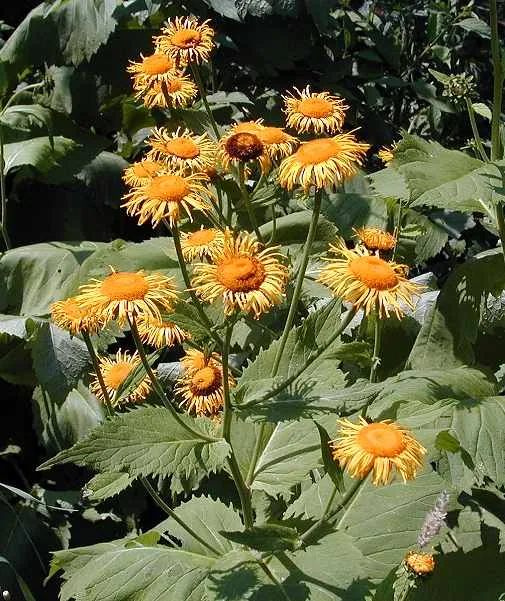
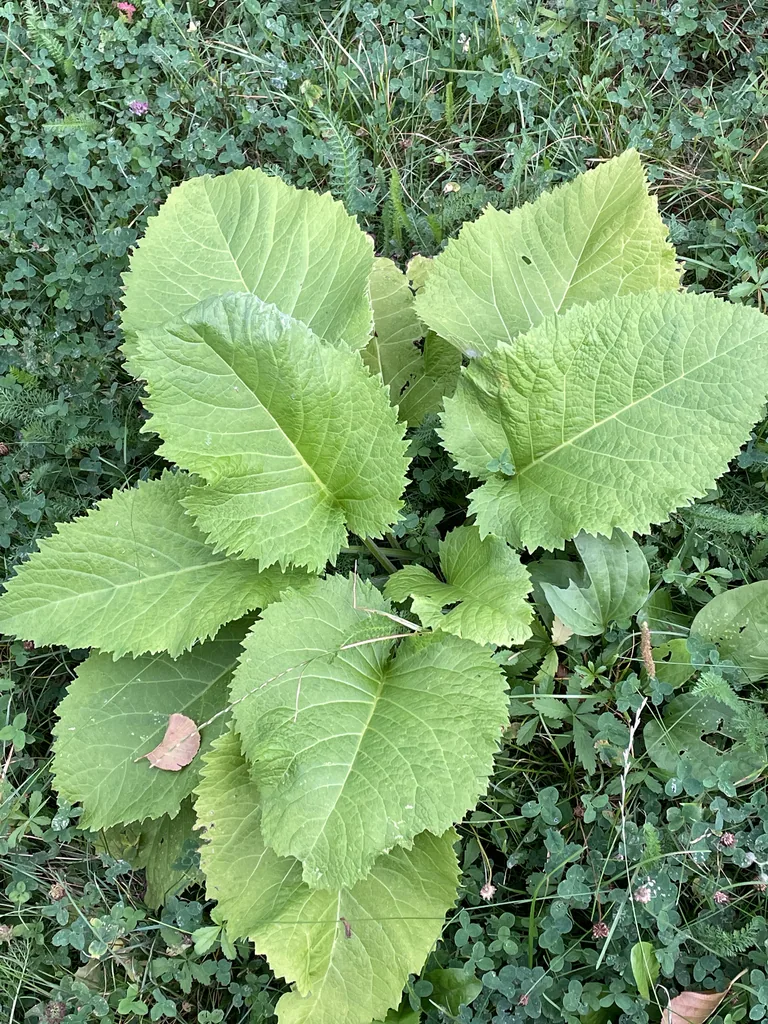
Telekia speciosa is a perennial of the daisy family 60-200 cm [24–79 in] tall, with yellowish flower heads 20-80 mm [0.8–3.1 in] across. [2] It is native to the Carpathians, the Balkan mountains, northern Anatolia and the Caucasus, and has become naturalized in many European countries. [3] Introduced mainly as an ornamental, it has been placed on the EPPO Observation List of invasive alien plants. [3]
This record is incomplete: the sources we read do not cover every field yet.
Not yet covered by our sources: Watering, Light, Hardiness, coldest zone, Hardiness, warmest zone, Pruning, Propagation
Heartleaf oxeye care
Measurements in square brackets are our conversion into the other unit system; the quoted text is unchanged.
How to water Heartleaf oxeye
Not stated in the sources we read.
How much light Heartleaf oxeye needs
Not stated in the sources we read.
How much cold Heartleaf oxeye can take
Hardiness, coldest zone
Not stated in the sources we read.
Hardiness, warmest zone
Not stated in the sources we read.
How to propagate Heartleaf oxeye
Not stated in the sources we read.
How to grow Heartleaf oxeye
The plant
Family
Asteraceae
What the sources say (1)
Order
Asterales (
1ASTO )
Family
Asteraceae (
1COMF )
Subfamily
Asteroideae (
1ASTS )Roots
Suckers
Spreads vegetatively by a branching rhizome and quickly forms dominant stands over larger areas through its root system.
What the sources say (3)
High seed production, quickly develops dominant stands on larger areas by its root systemThe rhizome branches out, the leaves develop their characteristic size and the first flowering shoots form.Natural spread Spreading occurs generatively as well as vegetatively.Remedies
The sources we checked give no remedies for this plant.
Calendar
Pruning
Not stated in the sources we read.
Months as given by the sources, which are mostly from the United States (northern hemisphere). In the southern hemisphere they shift by about six months.
Similar plants
- African Daisy Dimorphotheca pluvialis
- African Marigold Tagetes erecta
- Ageratum Ageratum houstonianum
- Alpine aster Aster alpinus
- American Burnweed Erechtites hieraciifolius
- Appalachian Blazing Star Liatris squarrulosa
- Appalachian Ironweed Vernonia glauca
- Appalachian Sunflower Helianthus atrorubens
Sources
Every value above is quoted from these documents. Links lead to the original publisher.
- Telekia speciosa (TEKSP)[Overview]| EPPO Global Database · gd.eppo.int, consulted
- Search for species - Große Telekie (Telekia speciosa (Schreb.) Baumg.) · i-flora.com, consulted
- EUROPEAN AND MEDITERRANEAN PLANT PROTECTION ORGANIZATION · gd.eppo.int, consulted
Written by Emilio Marruso · last checked