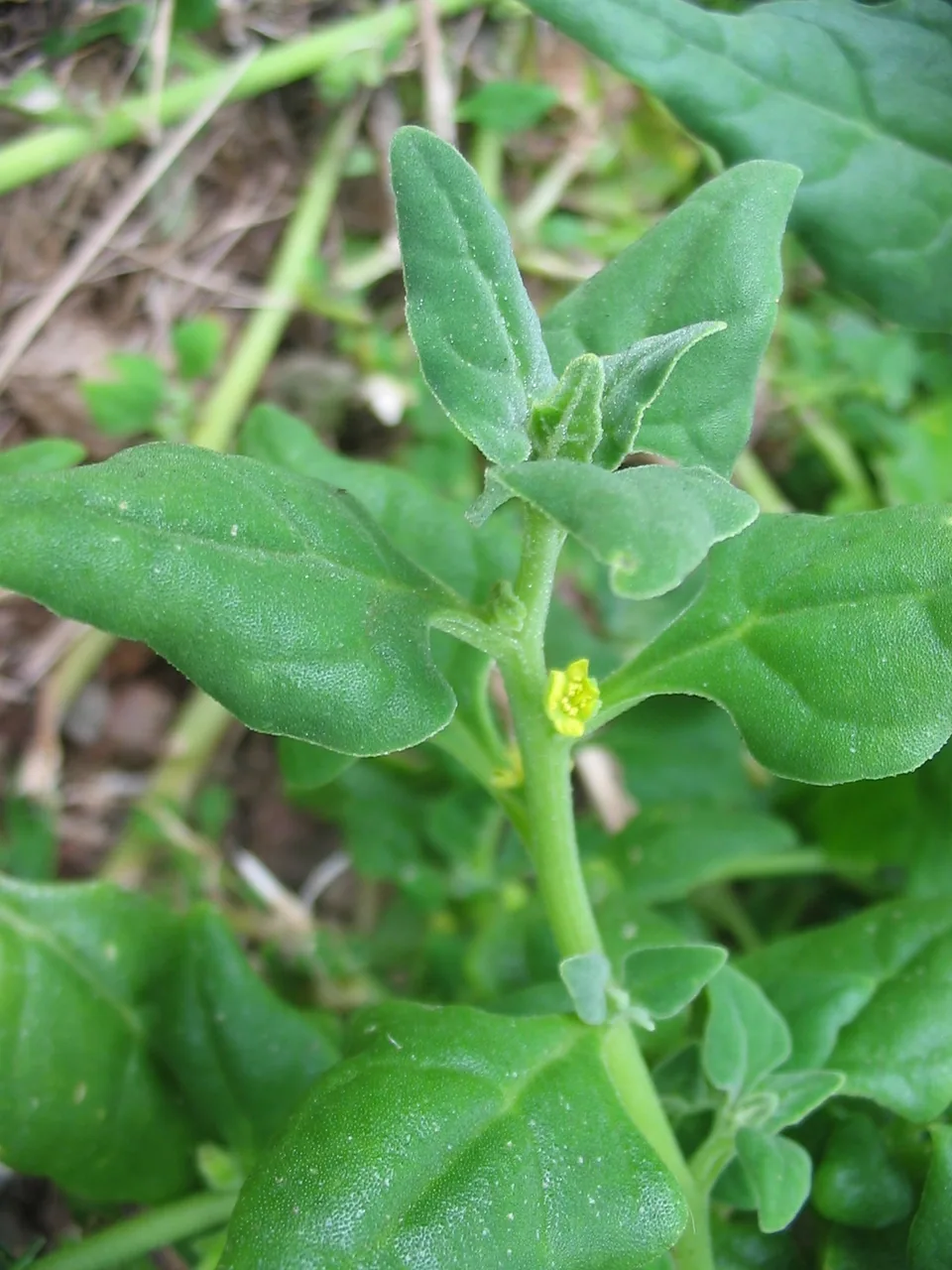
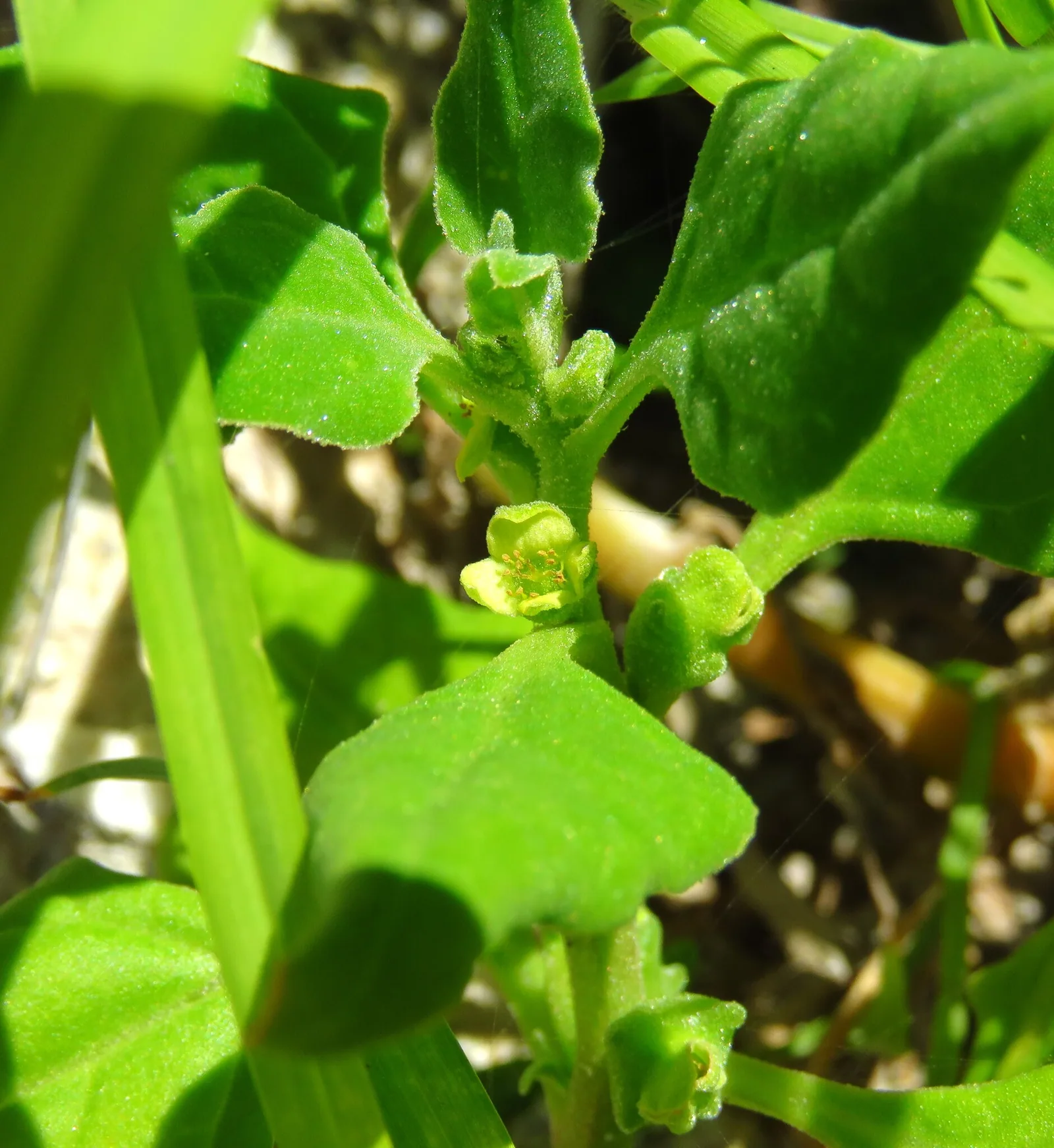

How to Grow and Care for New Zealand spinach
Tetragonia tetragonoides
Written by Emilio Marruso · last checked
Toxic to: People · Why
At a glance
New Zealand spinach is a generous green for sunny gardens: sow it once the danger of frost has passed and start picking 50–70 days later. It handles drought, but steady watering gives the best flavor and yield. Pick the young leaves and tips often, and new ones keep coming to replace them, ready to eat raw or steamed.
- Sun
Full sun
- Water
Handles drought, but steady watering means better flavor; keep soil moist until seedlings appear
What the sources say (2)
Watering: Drought tolerant; best flavor and yield with consistent watering
Although the flavor is best with consistent moisture, New Zealand spinach will still do well with little water without causing plants to bolt or producing a bitter taste.
— How to Grow New Zealand Spinach in Your Garden | USU [2] Watering notes: Keep the soil moist until the seedlings begin to emerge
The soil should be kept moist until the seedlings begin to emerge.
— How to Grow New Zealand Spinach in Your Garden | USU [2] - Cold
Survives winters down to 20 °F (−6.7 °C)
Hardy in average winters · USDA 9 · RHS H4 · Z9
What the sources say (1)
Hardiness, coldest zone: 9 [winter low −6.7 to −1.1 °C (20 to 30 °F)]
Shade tolerance no shade Water moderate Hardiness Zone 9+
— New Zealand Spinach (Tetragonia tetragonoides) — Practical Plants [3] - Spacing
3 ft between rows
What the sources say (1)
Row spacing: 91.44 cm (3 feet)
Plant in rows 3 feet apart, with seeds 2 inches apart within the row.
— How to Grow New Zealand Spinach in Your Garden | USU [2] - Planting
Plant out after the danger of frost has passed
What the sources say (1)
Planting: After the danger of frost has passed
Or plant seeds inside 3-4 weeks before the last frost date, and transplant after the danger of frost has passed.
— How to Grow New Zealand Spinach in Your Garden | USU [2] - Feeding
Feed monthly; if it flowers early and stops growing, it needs more food
What the sources say (3)
How often: Monthly
New Zealand spinach needs generous fertilization, otherwise it flowers early which stops growth. Fertilizing monthly, applying ¼ cup per 10 feet of row of a nitrogen-based fertilizer (21-0-0).
— How to Grow New Zealand Spinach in Your Garden | USU [2] Although New Zealand spinach is drought tolerant, water consistently for the best flavor. Fertilize frequently with a high nitrogen fertilizer.
— How to Grow New Zealand Spinach in Your Garden | USU [2] Signs of deficiency: Early flowering that stops growth
New Zealand spinach needs generous fertilization, otherwise it flowers early which stops growth. Fertilizing monthly, applying ¼ cup per 10 feet of row of a nitrogen-based fertilizer (21-0-0).
— How to Grow New Zealand Spinach in Your Garden | USU [2] - Harvest
Pick young leaves and tips 50–70 days after sowing; cut tips back at 4 inches
What the sources say (2)
Harvest: 50-70 days from seed; young leaves and tips picked frequently
From seed to harvest takes 50-70 days. Only the young leaves and tips are gathered for use.
— How to Grow New Zealand Spinach in Your Garden | USU [2] How to harvest: Gather only the young leaves and tips; cut the tips back at 4 inches (10.16 cm) so that new leaves replace the older ones.
Only the young leaves and tips are gathered for use. Regular trimming and good fertilization of the plants encourages lush growth. Cut the tips back at 4 inches and allow new leaves to replace the older leaves.
— How to Grow New Zealand Spinach in Your Garden | USU [2] - Pests
Beetles chew small holes, but it regrows fast; too much damp and shade bring mildew
What the sources say (1)
Pests: chewing beetles
It has been found that various chewing beetles may feed on the leaves, causing small, round holes to appear.
— How to Grow New Zealand Spinach in Your Garden | USU [2] - Propagation
From seed or cuttings
What the sources say (2)
Propagation: Seed; cuttings
Easily grown from seed and once established self-sows freely.
— Tetragonia tetragonoides • New Zealand Plant Conservation Network [5] Like the Betel Leaf , they can also be grown by propagation , that is by taking a cutting and rooting in water then transplanting it once roots have formed.
— Warrigal Greens Growing Guide - Bush Food - The Gourmantic Garden [4] - Sowing
Sow 1/2 inch deep after frost, or indoors 3–4 weeks before; sprouts in 2–3 weeks
What the sources say (4)
Sowing: After frost danger has passed outdoors; indoors 3-4 weeks before the last frost date
According to Practical Plants: Seed - sow early to mid spring in a greenhouse.
— New Zealand Spinach (Tetragonia tetragonoides) — Practical Plants [3] Seeds can be directly sown after frost danger has passed. Or plant seeds inside 3-4 weeks before the last frost date, and transplant after the danger of frost has passed.
— How to Grow New Zealand Spinach in Your Garden | USU [2] Sowing depth: 1.27 cm (1/2 inch)
Seeds should be planted ½ inch deep in fine soil. The soil should be kept moist until the seedlings begin to emerge.
— How to Grow New Zealand Spinach in Your Garden | USU [2] Days to germination: up to 14-21 (2-3 weeks)
Seeds take up to 2 or 3 weeks to emerge and do not emerge uniformly.
— How to Grow New Zealand Spinach in Your Garden | USU [2] - Safety
Rich in oxalates, which can be harmful in large amounts
Overview
New Zealand spinach is a warm-season alternative to regular spinach that does well in hot, dry conditions. [2] It is not hardy and is sown after the last frost or started indoors. [2] The leaves have a high oxalate content and blanching is recommended. [2]
This record is incomplete: the sources we read do not cover every field yet.
Not yet covered by our sources: Spacing
New Zealand spinach care
How to water New Zealand spinach
Watering
Drought tolerant; best flavor and yield with consistent watering
What the sources say (1)
Although the flavor is best with consistent moisture, New Zealand spinach will still do well with little water without causing plants to bolt or producing a bitter taste.Watering notes
Keep the soil moist until the seedlings begin to emerge
What the sources say (1)
The soil should be kept moist until the seedlings begin to emerge.How much light New Zealand spinach needs
How much cold New Zealand spinach can take
9 [winter low −6.7 to −1.1 °C (20 to 30 °F)]
What the sources say (1)
Shade tolerance
no shade
Water
moderate
Hardiness
Zone 9+Where to grow New Zealand spinach
The sources give different values depending on region, zone or growing conditions.
What each source says
According to Utah State University Extension: 30.5 cm (12 in) within rows; rows 91.4 cm (3 ft) apart
What the sources say (1)
According to Utah State University Extension: Plant in rows 3 feet apart, with seeds 2 inches apart within the row. When plants are 1-2 inches tall, thin to 12 inches apart.How to propagate New Zealand spinach
Seed; cuttings
What the sources say (2)
Easily grown from seed and once established self-sows freely.Like the Betel Leaf , they can also be grown by propagation , that is by taking a cutting and rooting in water then transplanting it once roots have formed.How to grow New Zealand spinach
Sowing and growth
Days to germination
up to 14-21 (2-3 weeks)
What the sources say (1)
Seeds take up to 2 or 3 weeks to emerge and do not emerge uniformly.Sowing depth
1.27 cm (1/2 inch)
What the sources say (1)
Seeds should be planted ½ inch deep in fine soil. The soil should be kept moist until the seedlings begin to emerge.Row spacing
91.44 cm (3 feet)
What the sources say (1)
Plant in rows 3 feet apart, with seeds 2 inches apart within the row.Days to maturity
50-70 days from seed to harvest
What the sources say (1)
From seed to harvest takes 50-70 days. Only the young leaves and tips are gathered for use.Harvest and storage
How to harvest
Gather only the young leaves and tips; cut the tips back at 4 inches (10.16 cm) so that new leaves replace the older ones.
What the sources say (1)
Only the young leaves and tips are gathered for use. Regular trimming and good fertilization of the plants encourages lush growth. Cut the tips back at 4 inches and allow new leaves to replace the older leaves.Storage
Store at 1.7 °C (35 °F) and 95-100% humidity for 2-3 weeks.
What the sources say (1)
Before the next harvest, store at 35º F and 95- 100% humidity for 2-3 weeks.Pests and diseases
Pests
chewing beetles
What the sources say (1)
It has been found that various chewing beetles may feed on the leaves, causing small, round holes to appear.Fertilizing
How often
Monthly
What the sources say (2)
New Zealand spinach needs generous fertilization, otherwise it flowers early which stops growth. Fertilizing monthly, applying ¼ cup per 10 feet of row of a nitrogen-based fertilizer (21-0-0).Although New Zealand spinach is drought tolerant, water consistently for the best flavor. Fertilize frequently with a high nitrogen fertilizer.Natural fertilizers
Well-composted organic matter, no more than 2.54 cm [1 in] per 9.29 m² of garden
What the sources say (1)
If fertilizer applications are warranted, work the fertilizer into the top 6 inches of soil. If you fertilize with compost, apply no more than 1 inch of well-composted organic matter per 100 square feet of garden area.Mineral fertilizers
21-0-0 nitrogen fertilizer, 59.3 mL per 3.05 m [10 ft] of row each month
What the sources say (1)
New Zealand spinach needs generous fertilization, otherwise it flowers early which stops growth. Fertilizing monthly, applying ¼ cup per 10 feet of row of a nitrogen-based fertilizer (21-0-0).Signs of deficiency
Early flowering that stops growth
What the sources say (1)
New Zealand spinach needs generous fertilization, otherwise it flowers early which stops growth. Fertilizing monthly, applying ¼ cup per 10 feet of row of a nitrogen-based fertilizer (21-0-0).New Zealand spinach pests and problems
Mildew
Symptom: Problems with mildew from excess moisture and shade
What to do: Grow in full sun and avoid excess moisture
What the sources say (1)
It prefers full sun - excess moisture and shade can result in problems with mildew.
— Plants of Tasmania Nursery & Gardens [1] Chewing beetles
Symptom: Small, round holes in the leaves
What to do: Control is generally not necessary because plants grow rapidly enough
What the sources say (1)
It has been found that various chewing beetles may feed on the leaves, causing small, round holes to appear. Generally plants grow rapidly enough that control is not necessary.
— How to Grow New Zealand Spinach in Your Garden | USU [2]
Remedies
The sources we checked give no remedies for this plant.
Is New Zealand spinach poisonous?
Reported by the source, quoted verbatim. This is not medical or veterinary advice: if a person or an animal may have eaten this plant, contact a poison control centre or a veterinarian.
New Zealand spinach does have a high oxalate content, which can be dangerous at high concentrations.
[2]
Calendar
Sowing
After frost danger has passed outdoors; indoors 3-4 weeks before the last frost date
What each source says
According to Practical Plants: Early to mid spring in a greenhouse
What the sources say (2)
According to Practical Plants: Seed - sow early to mid spring in a greenhouse.Seeds can be directly sown after frost danger has passed. Or plant seeds inside 3-4 weeks before the last frost date, and transplant after the danger of frost has passed.Planting
After the danger of frost has passed
What the sources say (1)
Or plant seeds inside 3-4 weeks before the last frost date, and transplant after the danger of frost has passed.Harvest
50-70 days from seed; young leaves and tips picked frequently
What the sources say (1)
From seed to harvest takes 50-70 days. Only the young leaves and tips are gathered for use.Months as given by the sources, which are mostly from the United States (northern hemisphere). In the southern hemisphere they shift by about six months.
Relative to frost
Less precise estimate: there is no weather station within 300 km.
Find frost dates by ZIP code or city
Sow indoors: 3 to 4 weeks before the last frost
Or plant seeds inside 3-4 weeks before the last frost date, and transplant after the danger of frost has passed.
— How to Grow New Zealand Spinach in Your Garden | USU [2] Sow outdoors: around the last frost
Seeds can be directly sown after frost danger has passed.
— How to Grow New Zealand Spinach in Your Garden | USU [2]
Count from the average frost dates where you live.
Edibility
Reported by the source, quoted verbatim. Do not eat a plant on the basis of this page alone: identification mistakes can be dangerous.
Similar plants
- Abyssinian banana Ensete ventricosum
- Agretti Soda inermis
- Alexanders Smyrnium olusatrum
- Allium triquetrum Allium triquetrum
- Alpine dock Rumex alpinus
- Amaranth pigweed Amaranthus hybridus
- American hogpeanut Amphicarpaea bracteata
- American Yellow Rocket Barbarea orthoceras
Sources
Every value above is quoted from these documents. Links lead to the original publisher.
- Plants of Tasmania Nursery & Gardens · potn.com.au, consulted
- How to Grow New Zealand Spinach in Your Garden | USU · extension.usu.edu, consulted
- New Zealand Spinach (Tetragonia tetragonoides) — Practical Plants · practicalplants.org, consulted
- Warrigal Greens Growing Guide - Bush Food - The Gourmantic Garden · thegourmanticgarden.com, consulted
- Tetragonia tetragonoides • New Zealand Plant Conservation Network · nzpcn.org.nz, consulted
- Tetragonia tetragonoides - Useful Temperate Plants · temperate.theferns.info, consulted
Written by Emilio Marruso · last checked