
How to Grow and Care for Small cranberry
Vaccinium oxycoccos
Written by Emilio Marruso · last checked
At a glance
This little cranberry stays under 18 inches tall and loves moist or even wet, very acid soil. Give it full sun for the best fruit, and bumblebees and honeybees will do the rest. Its tart berries are usually cooked into preserves, and they even help low-pectin fruits set when you make jam.
- Sun
Full sun or light shade; full sun gives more fruit
What the sources say (1)
Light: Full sun or light shade; fruits better in full sun
Succeeds in full sun or light shade though it fruits better in a sunny position
— Vaccinium oxycoccos - Useful Temperate Plants [1] - Water
Keep the soil moist or wet; it can't stand drought
What the sources say (2)
Watering: Requires moist or wet soil; drought intolerant
Requires a moist or wet lime free soil, preferring one that is rich in peat or a light loamy soil with added leaf-mould
— Vaccinium oxycoccos - Useful Temperate Plants [1] Soil pH very acid, acid Tolerates Nutritionally Poor Soil No Drought intolerant
— Small Cranberry (Vaccinium oxycoccos) — Practical Plants [6] - Cold
Survives winters down to −50 °F (−45.6 °C)
Very hardy · USDA 2 · RHS H7 · Z2
What the sources say (1)
Hardiness, coldest zone: 2 [winter low −45.6 to −40 °C (−50 to −40 °F)]
Water high Hardiness Zone 2+ Soil textures sandy, loamy
— Small Cranberry (Vaccinium oxycoccos) — Practical Plants [6] - Soil
Very acid, lime-free soil, pH 4.5–6; lime turns the leaves yellow
What the sources say (2)
Soil pH, minimum: 4.5
Prefers a very acid soil with a pH in the range of 4.5 to 6, plants soon become chlorotic when lime is present.
— Vaccinium oxycoccos - Useful Temperate Plants [1] Soil pH, maximum: 6
Prefers a very acid soil with a pH in the range of 4.5 to 6, plants soon become chlorotic when lime is present.
— Vaccinium oxycoccos - Useful Temperate Plants [1] - Spacing
3 ft between plants
What the sources say (1)
Spacing: 100 cm (1 m)
Plants can be grown as a ground cover when planted about 1 metre apart each way
— Vaccinium oxycoccos - Useful Temperate Plants [1] - Planting
Late spring or early summer, after the last frosts
What the sources say (1)
Planting: Late spring or early summer, after the last expected frosts
Plant them out into their permanent positions in late spring or early summer, after the last expected frosts.
— Vaccinium oxycoccos - Useful Temperate Plants [1] - Harvest
Tart berries, usually cooked into preserves; they help jams set
- Pollination
Self-fertile, but it needs bumblebees and honeybees to set fruit
What the sources say (4)
Fruit set: Self-fertile: sets fruit with its own pollen
Vaccinium oxycoccos is pollinated by insects but the species is also highly self-compatible.
— Vaccinium oxycoccos [4] the outcomes of both studies affirmed self-compatibility, demonstrating no significant difference in fruit production rates between plants
— Vaccinium oxycoccos [4] What it needs: Insect visits are needed: no seeds formed when insects were completely excluded, despite the high self-compatibility.
Despite the high level of self-compatibility demonstrated by Reader (1977) the author noted that Vaccinium oxycoccos did not produce any seeds when insects were completely excluded.
— Vaccinium oxycoccos [4] Pollinators: bumblebees, honeybees
The primary pollinators recorded by Jacquemart (1997b) were bumblebees (Bombus and Pyrobombus spp.) and honeybees (Apis mellifera).
— Vaccinium oxycoccos [4] - Size
Up to 18 in tall
What the sources say (1)
Mature height: up to 46 cm (18 in)
Form: A creeping, prostrate sprawling shrub up to 18 inches tall.
— Virginia Tech Dendrology Fact Sheet [5] - Propagation
Cuttings in late spring or early summer, layering or dividing suckers
What the sources say (3)
Propagation: Seed, half-ripe cuttings with a heel, layering, division of suckers
Cuttings of half-ripe wood, 5 - 8cm with a heel, August in a frame
— Vaccinium oxycoccos - Useful Temperate Plants [1] Seed - sow late winter in a greenhouse in a lime-free potting mix and only just cover the seed
— Vaccinium oxycoccos - Useful Temperate Plants [1] Cuttings: Softwood cuttings in late spring or semi-ripe cuttings in early summer.
Propagate by taking softwood cuttings in late spring or semi-ripe cuttings in early summer
— [7] - Sowing
Sow in a greenhouse in late winter, or as soon as the seed is ripe
What the sources say (2)
Sowing: Late winter in a greenhouse, or as soon as the seed is ripe
Seed - sow late winter in a greenhouse in a lime-free potting mix and only just cover the seed
— Vaccinium oxycoccos - Useful Temperate Plants [1] Another report says that it is best to sow the seed in a greenhouse as soon as it is ripe
— Vaccinium oxycoccos - Useful Temperate Plants [1]
Overview
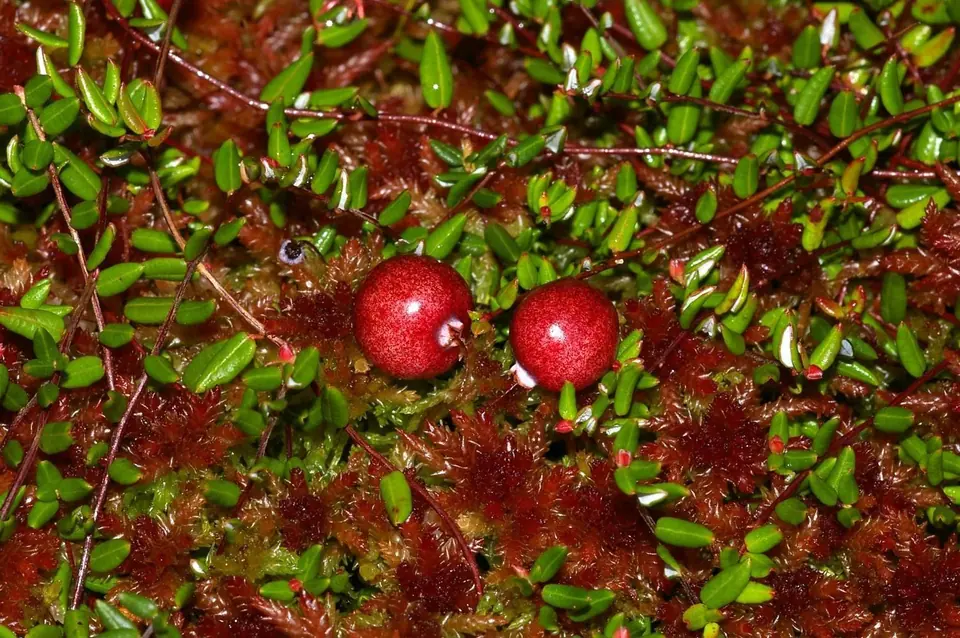
Small cranberry is a creeping evergreen shrub of acid bogs with red edible berries. [3][5] It needs moist or wet, lime-free, very acid soil and succeeds in full sun or light shade. [1]
This record is incomplete: the sources we read do not cover every field yet.
Not yet covered by our sources: Harvest
Small cranberry care
How to water Small cranberry
Requires moist or wet soil; drought intolerant
What the sources say (2)
Requires a moist or wet lime free soil, preferring one that is rich in peat or a light loamy soil with added leaf-mouldSoil pH
very acid, acid
Tolerates Nutritionally Poor Soil
No
Drought
intolerantHow much light Small cranberry needs
Full sun or light shade; fruits better in full sun
What the sources say (1)
Succeeds in full sun or light shade though it fruits better in a sunny positionHow much cold Small cranberry can take
2 [winter low −45.6 to −40 °C (−50 to −40 °F)]
What the sources say (1)
Water
high
Hardiness
Zone 2+
Soil textures
sandy, loamyBest soil for Small cranberry
Soil pH, minimum
4.5
What the sources say (1)
Prefers a very acid soil with a pH in the range of 4.5 to 6, plants soon become chlorotic when lime is present.Soil pH, maximum
6
What the sources say (1)
Prefers a very acid soil with a pH in the range of 4.5 to 6, plants soon become chlorotic when lime is present.Where to grow Small cranberry
100 cm (1 m)
What the sources say (1)
Plants can be grown as a ground cover when planted about 1 metre apart each wayHow to propagate Small cranberry
Seed, half-ripe cuttings with a heel, layering, division of suckers
How to grow Small cranberry
The plant
Family
Ericaceae
What the sources say (1)
small cranberry Ericaceae Vaccinium oxycoccos L. symbol: VAOXMature height
up to 46 cm (18 in)
What the sources say (1)
Form: A creeping, prostrate sprawling shrub up to 18 inches tall.Propagation
Cuttings
Softwood cuttings in late spring or semi-ripe cuttings in early summer.
What the sources say (1)
Propagate by taking softwood cuttings in late spring or semi-ripe cuttings in early summerPollination
Fruit set
Self-fertile: sets fruit with its own pollen
What the sources say (2)
Vaccinium oxycoccos is pollinated by insects but the species is also highly self-compatible.the outcomes of both studies affirmed self-compatibility, demonstrating no significant difference in fruit production rates between plantsWhat it needs
Insect visits are needed: no seeds formed when insects were completely excluded, despite the high self-compatibility.
What the sources say (1)
Despite the high level of self-compatibility demonstrated by Reader (1977) the author noted that Vaccinium oxycoccos did not produce any seeds when insects were completely excluded.Carried by
Insects
What the sources say (1)
Vaccinium oxycoccos is pollinated by insects but the species is also highly self-compatible.Pollinators
bumblebees, honeybees
What the sources say (1)
The primary pollinators recorded by Jacquemart (1997b) were bumblebees (Bombus and Pyrobombus spp.) and honeybees (Apis mellifera).Small cranberry pests and problems
Lime-induced chlorosis
Symptom: Plants become chlorotic when lime is present
What to do: Grow in very acid, lime-free soil (pH 4.5-6)
What the sources say (1)
Prefers a very acid soil with a pH in the range of 4.5 to 6, plants soon become chlorotic when lime is present.
— Vaccinium oxycoccos - Useful Temperate Plants [1]
Remedies
The sources we checked give no remedies for this plant.
Calendar
Sowing
Late winter in a greenhouse, or as soon as the seed is ripe
What the sources say (2)
Seed - sow late winter in a greenhouse in a lime-free potting mix and only just cover the seedAnother report says that it is best to sow the seed in a greenhouse as soon as it is ripePlanting
Late spring or early summer, after the last expected frosts
What the sources say (1)
Plant them out into their permanent positions in late spring or early summer, after the last expected frosts.Harvest
Not stated in the sources we read.
Months as given by the sources, which are mostly from the United States (northern hemisphere). In the southern hemisphere they shift by about six months.
Edibility
Reported by the source, quoted verbatim. Do not eat a plant on the basis of this page alone: identification mistakes can be dangerous.
Similar plants
- Bilberry Vaccinium myrtillus
- Black Highbush Blueberry Vaccinium fuscatum
- Cranberry Vaccinium macrocarpon
- Creeping Blueberry Vaccinium crassifolium
- Deerberry Vaccinium stamineum
- Elliott's Blueberry Vaccinium elliottii
- Highbush blueberry Vaccinium corymbosum
- Highbush Blueberry Vaccinium formosum
Sources
Every value above is quoted from these documents. Links lead to the original publisher.
- Vaccinium oxycoccos - Useful Temperate Plants · temperate.theferns.info, consulted
- Vaccinium oxycoccos (Small Cranberry): Minnesota Wildflowers · minnesotawildflowers.info, consulted
- Flora of the Burren and Southeast Connemara: Vaccinium oxycoccos · flora-burren.linnaeus.naturalis.nl, consulted
- Vaccinium oxycoccos · nj.gov, consulted
- Virginia Tech Dendrology Fact Sheet · dendro.cnre.vt.edu, consulted
- Small Cranberry (Vaccinium oxycoccos) — Practical Plants · practicalplants.org, consulted
- rhs.org.uk · rhs.org.uk
Written by Emilio Marruso · last checked