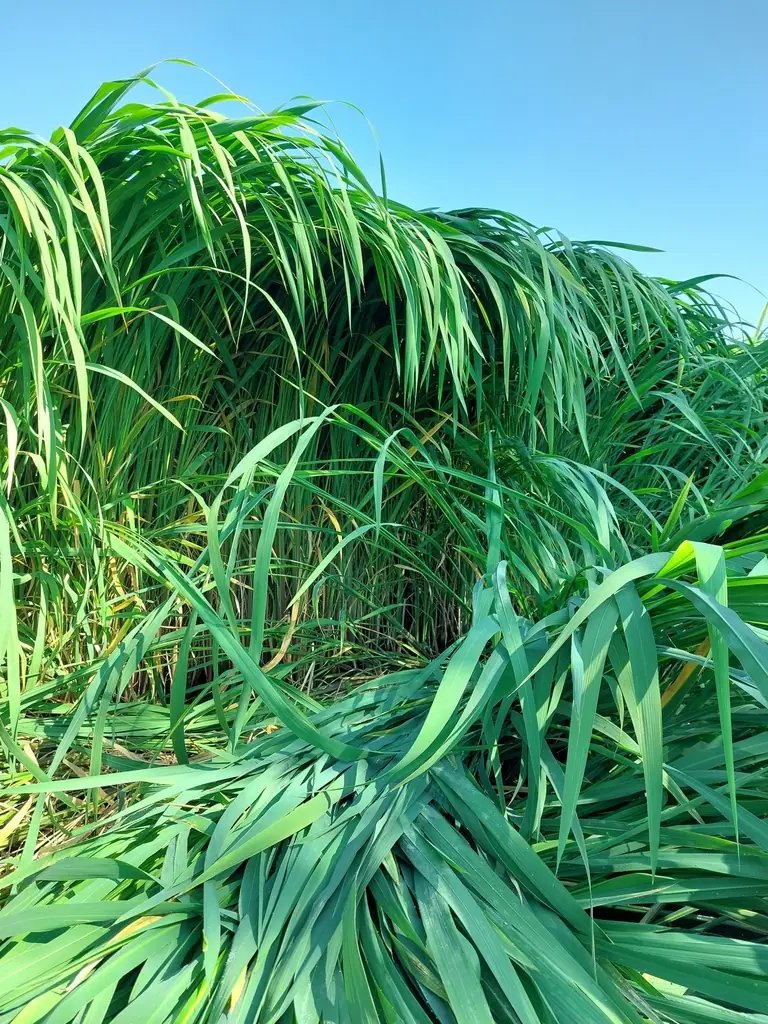
How to Grow and Care for Manchurian wild rice
Zizania latifolia
Written by Emilio Marruso · last checked
At a glance
This marsh plant thrives in shallow, still or slow-moving water, yet it also handles drought. In return it fills your kitchen: the swollen stem bases are sautéed for a nutty, coconut-like flavor, the seed cooks like rice, and young shoots taste pleasantly sweet, raw or cooked. Just keep an eye on it, because it can form dense, invasive stands.
- Water
Grows in shallow, still or slow-moving water; also handles drought
What the sources say (4)
Watering: Grows in shallow stagnant or slowly flowing water (marsh or water plant)
A marsh or water plant requiring shallow stagnant or slowly flowing water, it is easily grown in most soils in a sunny position
— Zizania latifolia - Useful Temperate Plants [1] A marsh or water plant requiring shallow stagnant or slowly flowing water, it is easily grown in most soils in a sunny position
— Zizania latifolia - Useful Tropical Plants [5] Watering notes: Highly tolerant of poor drainage; can grow in shallow water once established; also tolerant of drought
Tolerant of drought and frost; highly tolerant of poor drainage and intolerant of shade.
— Zizania latifolia • New Zealand Plant Conservation Network [2] It is adaptable to many soil types and can even grow in shallow water once established.
— Manchurian Wild Rice | Zizania latifolia | Pest Rating Proposals and Final Ratings [4] - Cold
Plant seedlings out only after the last frosts
What the sources say (2)
Planting: Seedlings: late spring or early summer, after the last expected frosts; small divisions: summer or the following spring
Plant them out into their permanent positions in late spring or early summer, after the last expected frosts.
— Zizania latifolia - Useful Temperate Plants [1] grow them on in light shade in a greenhouse or cold frame until they are growing away well. Plant them out in the summer or the following spring.
— Zizania latifolia - Useful Temperate Plants [1] - Soil
Tolerates acidic soil, down to pH 4.5
What the sources say (3)
Soil pH, minimum: 4.5
According to Useful Tropical Plants (preferred range): It prefers a pH in the range 5.5 - 6, but tolerates 4.5 - 7
— Zizania latifolia - Useful Tropical Plants [5] According to Useful Tropical Plants (tolerated range): It prefers a pH in the range 5.5 - 6, but tolerates 4.5 - 7
— Zizania latifolia - Useful Tropical Plants [5] It prefers a pH in the range 5.5 - 6, but tolerates 4.5 - 7
— Zizania latifolia - Useful Tropical Plants [5] - Planting
Seedlings in late spring or early summer; small divisions in summer or the next spring
What the sources say (2)
Planting: Seedlings: late spring or early summer, after the last expected frosts; small divisions: summer or the following spring
Plant them out into their permanent positions in late spring or early summer, after the last expected frosts.
— Zizania latifolia - Useful Temperate Plants [1] grow them on in light shade in a greenhouse or cold frame until they are growing away well. Plant them out in the summer or the following spring.
— Zizania latifolia - Useful Temperate Plants [1] - Harvest
Pick swollen stem bases before the fungus in them makes spores; the seed cooks like rice
What the sources say (1)
Harvest: Swollen stem bases: before the smut fungus starts to produce spores
They must be harvested before the fungus starts to produce spores, as the stems deteriorate once the smut reaches reproductive maturity.
— Manchurian Wild Rice | Zizania latifolia | Pest Rating Proposals and Final Ratings [4] - Watch out
Invasive: dense stands crowd out other plants and turn fields into swamp; dig out small patches
- Propagation
By seed that must not dry out, or by dividing it in spring
What the sources say (3)
Propagation: Seed (must not dry out); division in spring; rhizomes and tillers
Division in spring. Larger divisions can be planted out direct into their permanent positions.
— Zizania latifolia - Useful Temperate Plants [1] Seed - it must not be allowed to dry out or it will quickly lose its viability, usually within 4 weeks
— Zizania latifolia - Useful Temperate Plants [1] Large amounts of seed is produced which germinated quickly. Reproduces through seed or vegetatively through tailoring and rhizome extension.
— Zizania latifolia • New Zealand Plant Conservation Network [2] - Sowing
Sow in spring in a greenhouse, in pots sitting under 2 in (5 cm) of water
What the sources say (1)
Sowing: Spring, in a greenhouse, in pots immersed under about 5 cm [2 in] of water
Sow the seed in a greenhouse in spring. Immerse the pots so that they are covered by about 5cm of water.
— Zizania latifolia - Useful Temperate Plants [1]
Overview
Zizania latifolia is a perennial aquatic grass that grows in shallow standing or slow-moving water and spreads by rhizomes. [6][1] In East Asia it is grown as a vegetable for its stem bases, which swell when infected by the smut fungus Ustilago esculenta. [4] Outside its native range it is regarded as a serious invasive weed of wetlands and waterways. [4]
This record is incomplete: the sources we read do not cover every field yet.
Not yet covered by our sources: Spacing
Manchurian wild rice care
Measurements in square brackets are our conversion into the other unit system; the quoted text is unchanged.
How to water Manchurian wild rice
Watering
Grows in shallow stagnant or slowly flowing water (marsh or water plant)
What the sources say (2)
A marsh or water plant requiring shallow stagnant or slowly flowing water, it is easily grown in most soils in a sunny positionA marsh or water plant requiring shallow stagnant or slowly flowing water, it is easily grown in most soils in a sunny positionWatering notes
Highly tolerant of poor drainage; can grow in shallow water once established; also tolerant of drought
What the sources say (2)
Tolerant of drought and frost; highly tolerant of poor drainage and intolerant of shade.It is adaptable to many soil types and can even grow in shallow water once established.How much light Manchurian wild rice needs
The sources give different values depending on region, zone or growing conditions.
What each source says
According to Useful Temperate Plants: Sunny position
According to New Zealand Plant Conservation Network: Full sun (intolerant of shade)
According to Global Invasive Species Database: Full sun or semi-shade
According to California Department of Food and Agriculture: Tolerates moderate shade
What the sources say (4)
According to Useful Temperate Plants: A marsh or water plant requiring shallow stagnant or slowly flowing water, it is easily grown in most soils in a sunny positionAccording to New Zealand Plant Conservation Network: Tolerant of drought and frost; highly tolerant of poor drainage and intolerant of shade.According to Global Invasive Species Database: It does well in sandy, loamy or clayey soils; in acid, neutral or alkaline soils and can grow in full sun or semi-shadeAccording to California Department of Food and Agriculture: It is extremely tolerant of damage, grazing, cold or heat, wind, fire, different soil types, moderate shade and moderate salinity.Best soil for Manchurian wild rice
Soil pH, minimum
4.5
What each source says
According to Useful Tropical Plants (preferred range): 5.5
According to Useful Tropical Plants (tolerated range): 4.5
What the sources say (3)
According to Useful Tropical Plants (preferred range): It prefers a pH in the range 5.5 - 6, but tolerates 4.5 - 7According to Useful Tropical Plants (tolerated range): It prefers a pH in the range 5.5 - 6, but tolerates 4.5 - 7It prefers a pH in the range 5.5 - 6, but tolerates 4.5 - 7Soil pH, maximum
The sources give different values depending on region, zone or growing conditions.
What each source says
According to Useful Tropical Plants (preferred range): 6
According to Useful Tropical Plants (tolerated range): 7
According to Global Invasive Species Database: Acid, neutral or alkaline
What the sources say (3)
According to Useful Tropical Plants (preferred range): It prefers a pH in the range 5.5 - 6, but tolerates 4.5 - 7According to Useful Tropical Plants (tolerated range): It prefers a pH in the range 5.5 - 6, but tolerates 4.5 - 7According to Global Invasive Species Database: It does well in sandy, loamy or clayey soils; in acid, neutral or alkaline soils and can grow in full sun or semi-shadeWhere to grow Manchurian wild rice
Not stated in the sources we read.
How to propagate Manchurian wild rice
Seed (must not dry out); division in spring; rhizomes and tillers
What the sources say (3)
Division in spring. Larger divisions can be planted out direct into their permanent positions.Seed - it must not be allowed to dry out or it will quickly lose its viability, usually within 4 weeksLarge amounts of seed is produced which germinated quickly. Reproduces through seed or vegetatively through tailoring and rhizome extension.Manchurian wild rice pests and problems
Invasive spread
Symptom: Dense stands overtop other marginal plants, block drainage and turn pasture into swamp
What to do: Dig out small infestations or treat with herbicide; larger areas need repeated treatments
What the sources say (1)
Where only a few plants are established they can be carefully dug out and disposed of, or can be treated with herbicide.
— GISD [6]
Remedies
Each remedy shows what official sources say about it; traditional remedies without an official source are marked as such. Harmful ones are listed so you know to avoid them.
Getting rid of it
invasive spread
digging out Not verified
Traditional remedy, not verified by an official source.
Do not attempt to control the plants yourself. This pest plant is under an active national eradication programme, and any attempt to get rid of it could accidentally spread the pest.
— weedbusters.org.nz [7] How: Digging out plants for very small sites; rhizomes persist for years and the seed bank may re-infest bare areas, so ongoing control is important.
spader tillage to dry out rhizomes Not verified
Traditional remedy, not verified by an official source.
Do not attempt to control the plants yourself. This pest plant is under an active national eradication programme, and any attempt to get rid of it could accidentally spread the pest.
— weedbusters.org.nz [7] How: A spader towed behind a tractor rips roots apart and flicks them out, leaving the rhizomes to dry out in the sun; a second run in summer after new sprouting, then the paddock is re-sown.
rotary hoeing Not verified
Traditional remedy, not verified by an official source.
Do not attempt to control the plants yourself. This pest plant is under an active national eradication programme, and any attempt to get rid of it could accidentally spread the pest.
— weedbusters.org.nz [7] How: A rotary hoe brought rhizomes to the surface, but clumps left covered in dirt kept on growing.
mulching the grass Not verified
Traditional remedy, not verified by an official source.
Do not attempt to control the plants yourself. This pest plant is under an active national eradication programme, and any attempt to get rid of it could accidentally spread the pest.
— weedbusters.org.nz [7] How: Mulching the grass did not suppress growth.
Calendar
Sowing
Spring, in a greenhouse, in pots immersed under about 5 cm [2 in] of water
What the sources say (1)
Sow the seed in a greenhouse in spring. Immerse the pots so that they are covered by about 5cm of water.Planting
Seedlings: late spring or early summer, after the last expected frosts; small divisions: summer or the following spring
What the sources say (2)
Plant them out into their permanent positions in late spring or early summer, after the last expected frosts.grow them on in light shade in a greenhouse or cold frame until they are growing away well. Plant them out in the summer or the following spring.Harvest
Swollen stem bases: before the smut fungus starts to produce spores
What the sources say (1)
They must be harvested before the fungus starts to produce spores, as the stems deteriorate once the smut reaches reproductive maturity.Months as given by the sources, which are mostly from the United States (northern hemisphere). In the southern hemisphere they shift by about six months.
Edibility
Reported by the source, quoted verbatim. Do not eat a plant on the basis of this page alone: identification mistakes can be dangerous.
The swollen stem bases, infected with the smut fungus Ustilago esculenta , are eaten as a vegetable by the Chinese.
[4]They are parboiled then sautéed with other vegetables and have a nutty flavour reminiscent of coconut
[1]The seed can be cooked. It can be used like rice in sweet or savoury dishes. The seed can also be ground into a flour and used in making cakes, biscuits etc.
[6]Young inflorescences can be cooked and used as a vegetable. Young shoots can be eaten either raw or cooked and have a pleasant sweet taste.
[6]
Similar plants
- Abraham Trachystemon orientalis
- Abyssinian banana Ensete ventricosum
- Acacia longifolia Acacia longifolia
- African Blue Lily Agapanthus praecox
- African lily Dietes bicolor
- African lovegrass Eragrostis curvula
- African tuliptree Spathodea campanulata
- Agretti Soda inermis
Sources
Every value above is quoted from these documents. Links lead to the original publisher.
- Zizania latifolia - Useful Temperate Plants · temperate.theferns.info, consulted
- Zizania latifolia • New Zealand Plant Conservation Network · nzpcn.org.nz, consulted
- Wild Rice, Manchurian Wild Rice, Asian Wild Rice, Water Bamboo, Texas Wild Rice, Northern Wild Rice, Southern Wild Rice - Weeds Australia · weeds.org.au, consulted
- Manchurian Wild Rice | Zizania latifolia | Pest Rating Proposals and Final Ratings · blogs.cdfa.ca.gov, consulted
- Zizania latifolia - Useful Tropical Plants · tropical.theferns.info, consulted
- GISD · iucngisd.org, consulted
- weedbusters.org.nz · weedbusters.org.nz
Written by Emilio Marruso · last checked