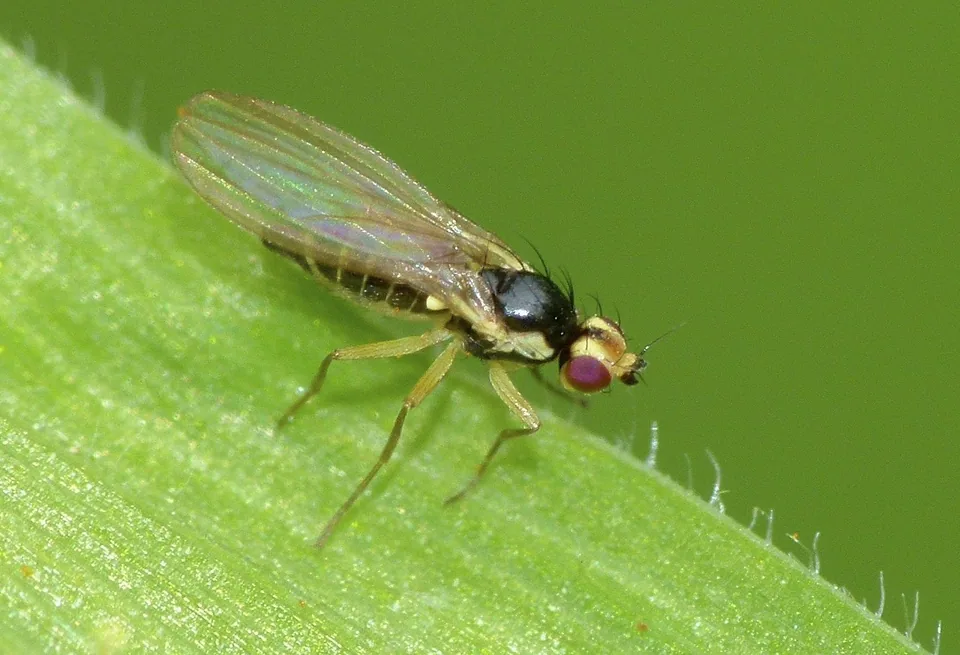
Insect
Leaf miners
Agromyzidae
Written by Emilio Marruso
Classification: Arthropoda › Hexapoda › Insecta › Diptera
Plants it attacks
Plants in our guide where this problem is reported. Open a plant to see the sources.
- Columbine
Symptom: Serpentine trails in the leaves; usually minor cosmetic damage on this species.
- White Arctotis
Symptom: Not described in the source.
- Japanese Cherry Birch
Symptom: Susceptible to aphids, leaf miner and birch skeletonizer; leaf spot problems
- Jacquemontii Birch Tree
Symptom: May occur; shallow roots and often short lived.
- Sweet Birch
Symptom: May occur; birches can become stressed by summer heat and humidity
- Monarch Birch
Symptom: Aphids, leaf miner and birch skeletonizer may occur; leaf spot problems are possible
- Cinnamon
Symptom: The cinnamon butterfly can defoliate young plants; beetles and leaf miners feed on the plant.
- Mistflower
Symptom: Leaf miners and aphids may visit and the plant is somewhat susceptible to powdery mildew.
- Silky Dogwood
Symptom: May be susceptible to scale; borers and leaf miners are potential pests
- Red-Twig Dogwood
Symptom: Potential insect pests
- Slender Deutzia
Symptom: Occasional insect pests.
- Coneflower
Symptom: Insect and disease problems; vine weevils may feed on roots
Also reported on: American Arborvitae, Angelica, Barberton Daisy, Black Gum, Bunchberry, Bush Clematis, Chick pea, Chinese Tupelo, Darlington oak, Dogfennel, Downy Thorn-Apple, European Hornbeam, Fringed Loosestrife, Garden lovage, Golden Chain Tree, Japanese Hornbeam, Longstalk Holly, Morning Glory, Prince's Feather, Red Buckeye, Rigid Verbena, Roughleaf Dogwood, Sorrel, Spinach, Stinking Hellebore, Sweet bay, Watermelon, White Ash, White Snakeroot, Winter Flowering Clematis, Zinnia
Remedies
What our plant sheets report, with the outcome checked against official sources. Traditional remedies without an official source are flagged.
Treat
clipping infested leaves Works
How: Remove infested leaves promptly and dispose of them far from your garden.
Reported for 1 plant: Garden lovage
clipping off and disposing of damaged leaves Works
How: Prune off and destroy leaves with visible leaf miner damage.
Reported for 1 plant: Morning Glory
handpicking infested leaves Works
How: handpick and destroy infested leaves when the mines have just started
Reported for 1 plant: Rigid Verbena
handpicking mined leaves Works
How: Handpick affected leaves at the first sign of damage and dispose of them away from the garden area.
Reported for 1 plant: Columbine
picking off infested leaves Works
How: If larvae are still present inside the leaves, pick off those leaves and throw them away.
Reported for 1 plant: Sweet bay
neem oil Partly works
How: Applying neem oil will disrupt the miners life cycle and reduce infestations.
Reported for 1 plant: Angelica
handpicking infested leaves Official source, not independently tested
How: Hand-pick and destroy infested leaves in the fall.
Reported for 1 plant: Longstalk Holly
pick and destroy infested leaves Official source, not independently tested
How: Pinch, or pick and destroy, infested leaves to kill larvae .
Reported for 1 plant: White Arctotis
pinching leaves Official source, not independently tested
How: Pinch leaves to kill leafminers inside the mines.
Reported for 1 plant: Longstalk Holly
removing mined leaves and floating row covers Official source, not independently tested
How: Remove leaves with eggs or mines; cover plants with floating row covers after thinning.
Reported for 1 plant: Spinach
crushing larvae by hand Not verified
How: Crush the larvae by pinching the affected leaves.
Reported for 1 plant: Golden Chain Tree
cutting off and destroying damaged leaves Not verified
How: Cut off the damaged leaves and destroy them to prevent the larvae from pupating and producing another generation of adult flies.
Reported for 1 plant: Stinking Hellebore
destroy leaves with white lines Not verified
How: To reduce miner damage, destroy any leaves with white lines on them.
Reported for 1 plant: Sorrel
diluted infusion of tansy or garlic Not verified
How: An organic repellent treatment, applying a diluted infusion of tansy or garlic.
Reported for 1 plant: European Hornbeam
diluted tansy or garlic infusion Not verified
How: To prevent infestation by the miner, you can opt for an organic repellent treatment, such as applying a diluted infusion of tansy or garlic.
Reported for 1 plant: Japanese Hornbeam
fall and winter cleanup of fallen leaves Not verified
How: Regular fall and winter cleanup of fallen leaves.
Reported for 1 plant: Red Buckeye
13 more remedies are reported in single plant sheets.
Where it is found
No distribution data.