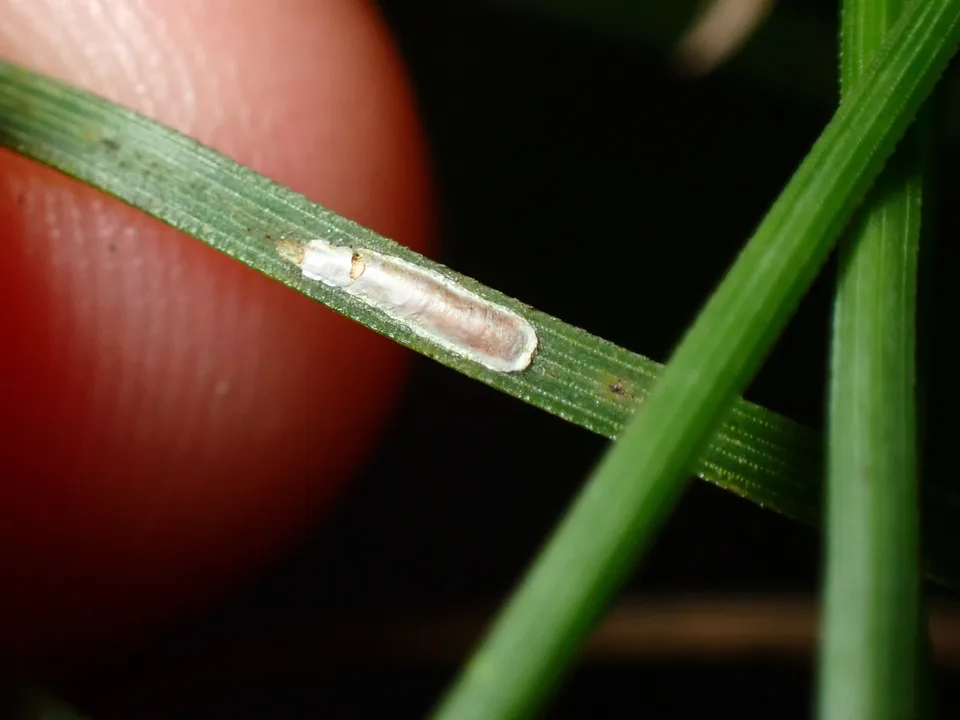
Insect
Pine leaf scale
Chionaspis pinifoliae
Written by Emilio Marruso
Classification: Arthropoda › Hexapoda › Insecta › Hemiptera › Sternorrhyncha › Diaspididae › Chionaspis
Plants it attacks
Plants in our guide where this problem is reported. Open a plant to see the sources.
- Atlas Cedar
Symptom: Heavy snowfall can damage or break the branches; may be affected by pine needle scale.
Also reported on: Abies grandis, Armand Pine, Austrian Pine, Balsam Fir, Black Spruce, Blue spruce, California Incense Cedar, Carolina Hemlock, Cedar of Lebanon, Chinese Pine, Deodar Cedar, Douglas fir, Eastern Hemlock, Eastern Redcedar, Fraser fir, Himalayan Pine, Jack pine, Japanese Black Pine, Japanese Red Pine, Japanese White Pine, Jeffrey's Pine, Korean Pine, Limber Pine, Lodgepole Pine, Mugo Pine, Norway Spruce, Oriental Spruce, Pacific Yew, Pinyon Pine, Pitch Pine, Pond Pine, Ponderosa Pine, Red Spruce, Sand Pine, Scots Pine, Shortleaf Pine, Silver Fir, Slash Pine, Spruce Pine, Stone Pine, Swiss Stone Pine, Table mountain pine, Virginia Pine, Western Hemlock, Western white pine, White Fir, White Pine
Remedies
What our plant sheets report, with the outcome checked against official sources. Traditional remedies without an official source are flagged.
Treat
dormant oil spray Works
How: Apply dormant oil sprays to smother overwintering scales in late spring before new growth develops on infested conifers.
Reported for 3 plants: Cedar of Lebanon, Armand Pine, Chinese Pine
insecticidal soap on crawlers Works
How: Spray the crawlers with insecticidal soap, with thorough coverage.
Reported for 2 plants: Armand Pine, Chinese Pine
soapy water spray on crawlers Works
How: Spray soapy water when the crawlers are active, timed to the egg hatch.
Reported for 2 plants: Mugo Pine, Table mountain pine
insecticidal soap Works
How: Spray directed at crawlers, which are susceptible while the scale armor resists contact insecticides.
Reported for 1 plant: Atlas Cedar
insecticidal soap spray Works
How: Spray the crawlers with insecticidal soap; thorough spray coverage is needed for control.
Reported for 1 plant: Jeffrey's Pine
hand-wiping scales Partly works
How: Hand-wipe scales to control minor infestations on small trees.
Reported for 1 plant: Pond Pine
pruning and destroying infested branches Official source, not independently tested
How: Prune and destroy heavily infested branches, when possible.
Reported for 1 plant: Pond Pine
pruning infested branches Official source, not independently tested
How: Prune out and destroy heavily infested branches when possible.
Reported for 1 plant: Swiss Stone Pine
pruning out infested branches Official source, not independently tested
How: Clip and prune out light infestations and destroy the infested material.
Reported for 1 plant: Cedar of Lebanon
scraping scale by hand Official source, not independently tested
How: Scale pests with a protective shell are not reached by sprays: scrape them by hand or remove the infected areas.
Reported for 1 plant: Korean Pine
soapy water spray Official source, not independently tested
How: Spray the crawler stage (mid-May) with soapy water; timing to the egg hatch is important.
Reported for 1 plant: Himalayan Pine
horticultural oil Not verified
How: Spray directed at crawlers, promptly after the eggs hatch.
Reported for 1 plant: Atlas Cedar
horticultural oil or insecticidal soap on crawlers Not verified
How: Horticultural oils and insecticidal soaps directed at crawlers can be effective against pine needle scale, while having a low impact on beneficial insects.
Reported for 1 plant: Cedar of Lebanon
pruning off infested branches Not verified
How: Remove infested branches as soon as they are identified to avoid spread to the rest of the plant.
Reported for 1 plant: Atlas Cedar
pruning out infested branches Not verified
How: If you see an infested branch, prune it out to prevent the insects from spreading.
Reported for 1 plant: Mugo Pine
Where it is found
Present in 4 countries.
Regulated as a quarantine pest in: Chile, China.