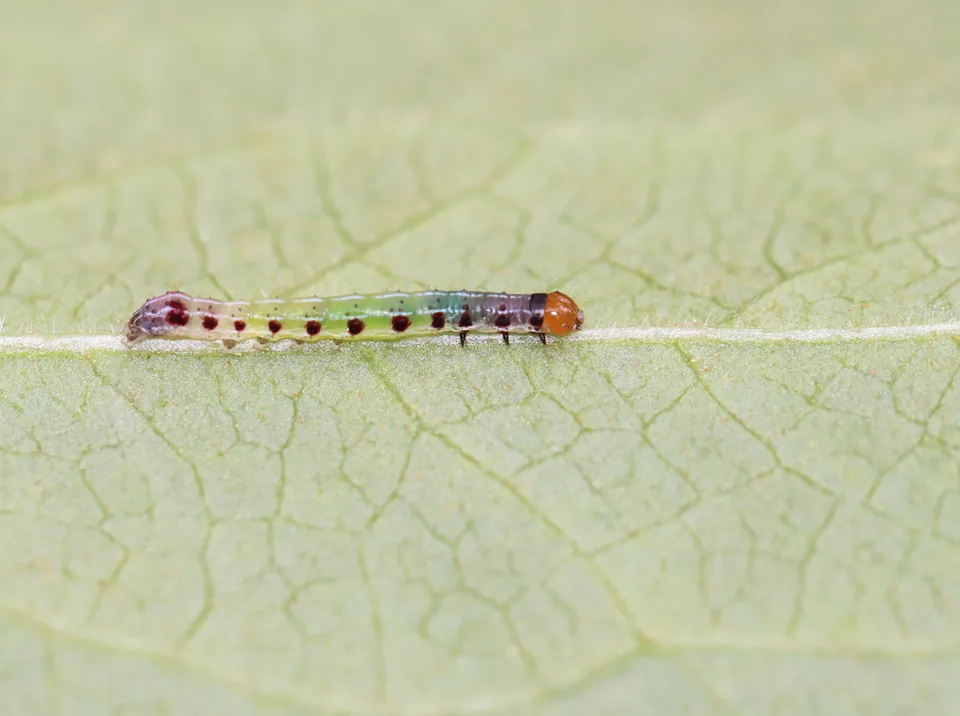
Insect
Cutworms
Noctuidae
Written by Emilio Marruso
Classification: Arthropoda › Hexapoda › Insecta › Lepidoptera
Plants it attacks
Plants in our guide where this problem is reported. Open a plant to see the sources.
- Black Cohosh
Symptom: Cutworms and blister beetles attack the plant; deer, opossum, rabbits, slugs and snails may eat foliage and seeds.
- Grecian Windflower
Symptom: Damage to foliage
- Cabbage
Symptom: May damage the plants, though late-season plants will likely have few pest problems compared to spring planted vegetable crops.
- Aji
Symptom: Common pests of peppers
- Safflower
Symptom: Stand loss early in the season by attacking germinating seed and young seedlings
- Chick pea
Symptom: Several cutworm species feed on chickpea in the northern Great Plains.
- Garden pea
Symptom: Cutworms sever young shoots and aphids spread disease, though the latter does not usually affect pods.
- Perennial Flax
Symptom: Occasional pests
- Common flax
Symptom: Cutworm larvae cut and consume seedlings at the soil level; armyworm larvae feed on foliage in midseason
Also reported on: Anise burnet saxifrage, Asparagus, Blackberry, Carolina Larkspur, Celery, Chinese yam, Common barley, Coriander, Corn, Dill, Dwarf Larkspur, Eggplant, Fennel, Flowering Flax, Garden lettuce, Mexican groundcherry, Poppy Anemone, Potato, Small Woodland Sunflower, Spearmint, Squash, Squash, Tea Camellia, Tomato, Watermelon, Winter Squash
Remedies
What our plant sheets report, with the outcome checked against official sources. Traditional remedies without an official source are flagged.
Treat
hand-picking Works
How: Hand-picking the caterpillars.
Reported for 2 plants: Coriander, Chinese yam
cardboard collars around plants Works
How: Encircle individual plants with cardboard or metal collars pressed an inch into the soil, to make fences that cutworms cannot cross.
Reported for 1 plant: Asparagus
collars around seedlings Works
How: Place collars around seedlings (cardboard, plastic, or foil).
Reported for 1 plant: Chick pea
foil collars around stems Works
How: Fit plastic or foil collars around plant stems, covering the bottom 3 inches above the soil line and extending a couple of inches into the soil.
Reported for 1 plant: Cabbage
hand-picking at night with a flashlight Works
How: Hand-pick cutworms at night with a flashlight.
Reported for 1 plant: Perennial Flax
hand-picking cutworms Works
How: Handpick any visible cutworms and dispose of them.
Reported for 1 plant: Celery
neem oil spray Partly works
How: Dilute neem oil in water and spray it all over the plant to keep armyworms and cutworms away.
Reported for 1 plant: Common flax
paper collar around the stem Partly works
How: place a 3-inch paper collar around the stem of the plant
Reported for 1 plant: Garden pea
diatomaceous earth barrier Official source, not independently tested
How: Spread diatomaceous earth around the base of the plants: it creates a sharp barrier that will cut the insects if they try to crawl over it.
Reported for 3 plants: Cabbage, Anise burnet saxifrage, Eggplant
bran and molasses bait with B.t. Official source, not independently tested
How: Mix a B.t. suspension with bran until the liquid is absorbed, add a small amount of molasses, and scatter crumbled pieces around the base of the plants.
Reported for 1 plant: Corn
cardboard collars Official source, not independently tested
How: Protect seedlings with cardboard collars, screen, or protective cloth.
Reported for 1 plant: Perennial Flax
collars around the stems Official source, not independently tested
How: Plastic or foil collars fitted around the stems, covering the bottom 3 inches above the soil line and reaching a couple of inches into the soil, prevent larvae severing plants.
Reported for 1 plant: Anise burnet saxifrage
foil collars Official source, not independently tested
How: Fit plastic or foil collars around the stems, covering the bottom 3 inches above the soil line and extending a couple of inches into the soil.
Reported for 1 plant: Eggplant
hand-picking cutworm larvae Official source, not independently tested
How: Hand-pick the larvae using a flashlight to find them; scratch the soil at the base of plants to find larvae in the daytime.
Reported for 1 plant: Blackberry
diatomaceous earth Not verified
How: use diatomaceous earth against cutworms and for prevention
Reported for 5 plants: Watermelon, Fennel, Flowering Flax, Common flax, Spearmint
paper collar around the stem Not verified
How: Place a 3-inch paper collar around the stem of the plant and keep the garden free of weeds.
Reported for 2 plants: Winter Squash, Squash
seedling collar Not verified
How: Put a collar made from cardboard, toilet paper rolls, or foil around the stem at soil level of young seedlings.
Reported for 2 plants: Tea Camellia, Fennel
cardboard or foil collars Not verified
How: Use cardboard or foil collars around seedlings
Reported for 1 plant: Mexican groundcherry
cardboard or newspaper collar Not verified
How: Wrap a 4-inch-wide collar made from cardboard or newspaper around each stem, sinking 2 inches into soil.
Reported for 1 plant: Garden lettuce
coffee grounds or crushed eggshells Not verified
How: Sprinkle coffee grounds or crumbled egg shells around the seedlings.
Reported for 1 plant: Tomato
23 more remedies are reported in single plant sheets.
Where it is found
No distribution data.